ADVERTISEMENT

Filipino families to face higher prices, lower incomes

Published Apr 6, 2026 12:00 am  |  Updated Apr 6, 2026 06:05 am

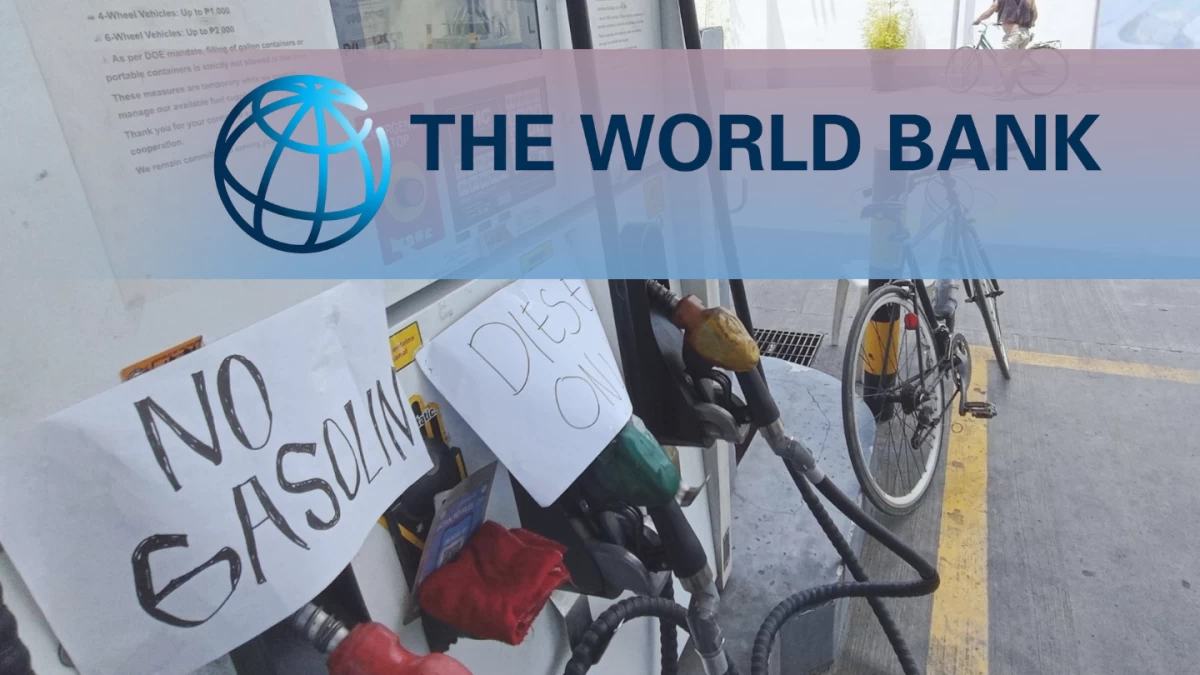
The Philippines is facing an inflationary shock that could spill over to slower economic growth, potential job losses, and more capital market outflows amid a prolonged Middle East conflict, according to the World Bank.

The global oil price and supply shock wrought by the war in Iran would “raise inflation and weaken economic activity, reducing household incomes through lower purchasing power and fewer earning opportunities” in the country, the Washington-based multilateral lender said in its Philippines Monthly Economic Developments report for March 2026, published last April 2.

The World Bank said domestic price pressures “are likely to intensify further” as the United States (US)-backed war waged by Israel against Iran “poses a negative terms-of-trade shock for the Philippines.”

The report noted that the Philippines’ heavy reliance on imported oil and fertilizers passing through the Strait of Hormuz makes it vulnerable to supply disruptions that could slow growth and fuel inflation.

World Bank estimates showed that a 10-percent increase in global oil prices could raise headline inflation by about 0.3 to 0.5 percentage point (ppt), with further upside risks from second-round effects such as higher transport fares and wage hikes.

Inflation is expected to jump to a 19- to 20-month high in March, when the war erupted. The Bangko Sentral ng Pilipinas (BSP) forecasts an average inflation rate of 5.1 percent for 2026, above the two- to four-percent target range deemed manageable and supportive to economic growth.

The World Bank warned that “if oil prices remain 60 percent above the 2025 average, nominal household incomes could fall by 3.3 percent.”

The lender anticipates that the forthcoming March inflation data, which will be out on Tuesday, April 7, “will reveal the magnitude of the impact of higher oil prices, shaping the inflation outlook” that reflects the pass-through of the global shock to domestic costs.

For the World Bank, the BSP’s upcoming monetary policy meeting on April 23 “will signal how it attempts to navigate between weakening domestic growth and increasing inflationary pressures.”

The BSP last month signaled potential interest rate hikes even as its policy-making Monetary Board (MB) maintained the policy rate at 4.25 percent during a rare and surprise off-cycle decision.

Despite government actions to address the crisis, including the state of national energy emergency declared by President Ferdinand R. Marcos Jr., the World Bank said the Middle East conflict has “dampened” investor sentiment in the Philippines, where risks stemming from the country’s external vulnerabilities are rising.

For instance, tourism prospects are hampered by flight disruptions in key aviation hubs and increasing travel costs, while “foreign investment flows will likely remain subdued given heightened uncertainty arising from geopolitical tensions,” the lender said.

The report noted that commodity market disruptions stoked fears of slower growth and higher inflation, prompting foreign investors to sell Philippine assets and driving a 5.7-percent drop in the Philippine Stock Exchange index (PSEi) between mid-February and mid-March, in line with regional market declines.

It added that the Philippine peso also weakened against a basket of its major trading partners’ currencies last February in real effective, or inflation-adjusted, terms, indicating that the domestic currency’s purchasing power relative to trading partners has declined. The oil-vulnerable peso eventually slid to record-low levels against the US dollar before March ended.

The World Bank also pointed to tighter domestic funding conditions in late March as long-term government bond yields increased amid softening investor demand. The Philippine government borrows more locally to fund, together with tax and non-tax revenue collections, its expenditures on public goods and services.

The latest Bureau of the Treasury (BTr) data showed that rates of five-year government securities (GS) climbed to 5.717 percent last month from 5.557 percent in February, while seven-year yields jumped to 6.473 percent from 5.859 percent a month ago.

Meanwhile, 10-year treasury bonds (T-bonds) fetched a higher 6.786-percent yield last March compared with February’s 5.893 percent, while 25-year bonds were issued with a high annual interest rate of 7.4 percent during the month.

The World Bank also cautioned that government plans to temporarily suspend oil excise taxes and pass a supplemental budget for 2026 “would have significant fiscal implications,” including foregone revenues equivalent to more than 0.5 percent of gross domestic product (GDP) if fuel taxes are reduced.

Related Tags

World Bank inflation rate unemployment Middle East war Strait of Hormuz Bangko Sentral ng Pilipinas (BSP) interest rates Monetary Board (MB) state of national energy emergency Ferdinand Marcos Jr. Philippine Stock Exchange index (PSEi) Philippine peso Bureau of the Treasury (BTr) government securities (GS) treasury bonds (T-bonds)
ADVERTISEMENT
.most-popular .layout-ratio{ padding-bottom: 79.13%; } @media (min-width: 768px) and (max-width: 1024px) { .widget-title { font-size: 15px !important; } }

{{ articles_filter_1561_widget.title }}

.most-popular .layout-ratio{ padding-bottom: 79.13%; } @media (min-width: 768px) and (max-width: 1024px) { .widget-title { font-size: 15px !important; } }

{{ articles_filter_1562_widget.title }}

.most-popular .layout-ratio{ padding-bottom: 79.13%; } @media (min-width: 768px) and (max-width: 1024px) { .widget-title { font-size: 15px !important; } }

{{ articles_filter_1563_widget.title }}

{{ articles_filter_1564_widget.title }}

.mb-article-details { position: relative; } .mb-article-details .article-body-preview, .mb-article-details .article-body-summary{ font-size: 17px; line-height: 30px; font-family: "Libre Caslon Text", serif; color: #000; } .mb-article-details .article-body-preview iframe , .mb-article-details .article-body-summary iframe{ width: 100%; margin: auto; } .read-more-background { background: linear-gradient(180deg, color(display-p3 1.000 1.000 1.000 / 0) 13.75%, color(display-p3 1.000 1.000 1.000 / 0.8) 30.79%, color(display-p3 1.000 1.000 1.000) 72.5%); position: absolute; height: 200px; width: 100%; bottom: 0; display: flex; justify-content: center; align-items: center; padding: 0; } .read-more-background a{ color: #000; } .read-more-btn { padding: 17px 45px; font-family: Inter; font-weight: 700; font-size: 18px; line-height: 16px; text-align: center; vertical-align: middle; border: 1px solid black; background-color: white; } .hidden { display: none; }
function initializeAllSwipers() { // Get all hidden inputs with cms_article_id document.querySelectorAll('[id^="cms_article_id_"]').forEach(function (input) { const cmsArticleId = input.value; const articleSelector = '#article-' + cmsArticleId + ' .body_images'; const swiperElement = document.querySelector(articleSelector); if (swiperElement && !swiperElement.classList.contains('swiper-initialized')) { new Swiper(articleSelector, { loop: true, pagination: false, navigation: { nextEl: '#article-' + cmsArticleId + ' .swiper-button-next', prevEl: '#article-' + cmsArticleId + ' .swiper-button-prev', }, }); } }); } setTimeout(initializeAllSwipers, 3000); const intersectionObserver = new IntersectionObserver( (entries) => { entries.forEach((entry) => { if (entry.isIntersecting) { const newUrl = entry.target.getAttribute("data-url"); if (newUrl) { history.pushState(null, null, newUrl); let article = entry.target; // Extract metadata const author = article.querySelector('.author-section').textContent.replace('By', '').trim(); const section = article.querySelector('.section-info ').textContent.replace(' ', ' '); const title = article.querySelector('.article-title h1').textContent; // Parse URL for Chartbeat path format const parsedUrl = new URL(newUrl, window.location.origin); const cleanUrl = parsedUrl.host + parsedUrl.pathname; // Update Chartbeat configuration if (typeof window._sf_async_config !== 'undefined') { window._sf_async_config.path = cleanUrl; window._sf_async_config.sections = section; window._sf_async_config.authors = author; } // Track virtual page view with Chartbeat if (typeof pSUPERFLY !== 'undefined' && typeof pSUPERFLY.virtualPage === 'function') { try { pSUPERFLY.virtualPage({ path: cleanUrl, title: title, sections: section, authors: author }); } catch (error) { console.error('ping error', error); } } // Optional: Update document title if (title && title !== document.title) { document.title = title; } } } }); }, { threshold: 0.1 } ); function showArticleBody(button) { const article = button.closest("article"); const summary = article.querySelector(".article-body-summary"); const body = article.querySelector(".article-body-preview"); const readMoreSection = article.querySelector(".read-more-background"); // Hide summary and read-more section summary.style.display = "none"; readMoreSection.style.display = "none"; // Show the full article body body.classList.remove("hidden"); } document.addEventListener("DOMContentLoaded", () => { let loadCount = 0; // Track how many times articles are loaded const offset = [1, 2, 3, 4, 5, 6, 7, 8, 9, 10]; // Offset values const currentUrl = window.location.pathname.substring(1); let isLoading = false; // Prevent multiple calls if (!currentUrl) { console.log("Current URL is invalid."); return; } const sentinel = document.getElementById("load-more-sentinel"); if (!sentinel) { console.log("Sentinel element not found."); return; } function isSentinelVisible() { const rect = sentinel.getBoundingClientRect(); return ( rect.top < window.innerHeight && rect.bottom >= 0 ); } function onScroll() { if (isLoading) return; if (isSentinelVisible()) { if (loadCount >= offset.length) { console.log("Maximum load attempts reached."); window.removeEventListener("scroll", onScroll); return; } isLoading = true; const currentOffset = offset[loadCount]; window.loadMoreItems().then(() => { let article = document.querySelector('#widget_1690 > div:nth-last-of-type(2) article'); intersectionObserver.observe(article) loadCount++; }).catch(error => { console.error("Error loading more items:", error); }).finally(() => { isLoading = false; }); } } window.addEventListener("scroll", onScroll); });

Sign up by email to receive news.