ADVERTISEMENT

Chronic illness drives Philippine hospital costs—PIDS

Published Apr 1, 2026 10:26 am  |  Updated Apr 1, 2026 01:49 pm
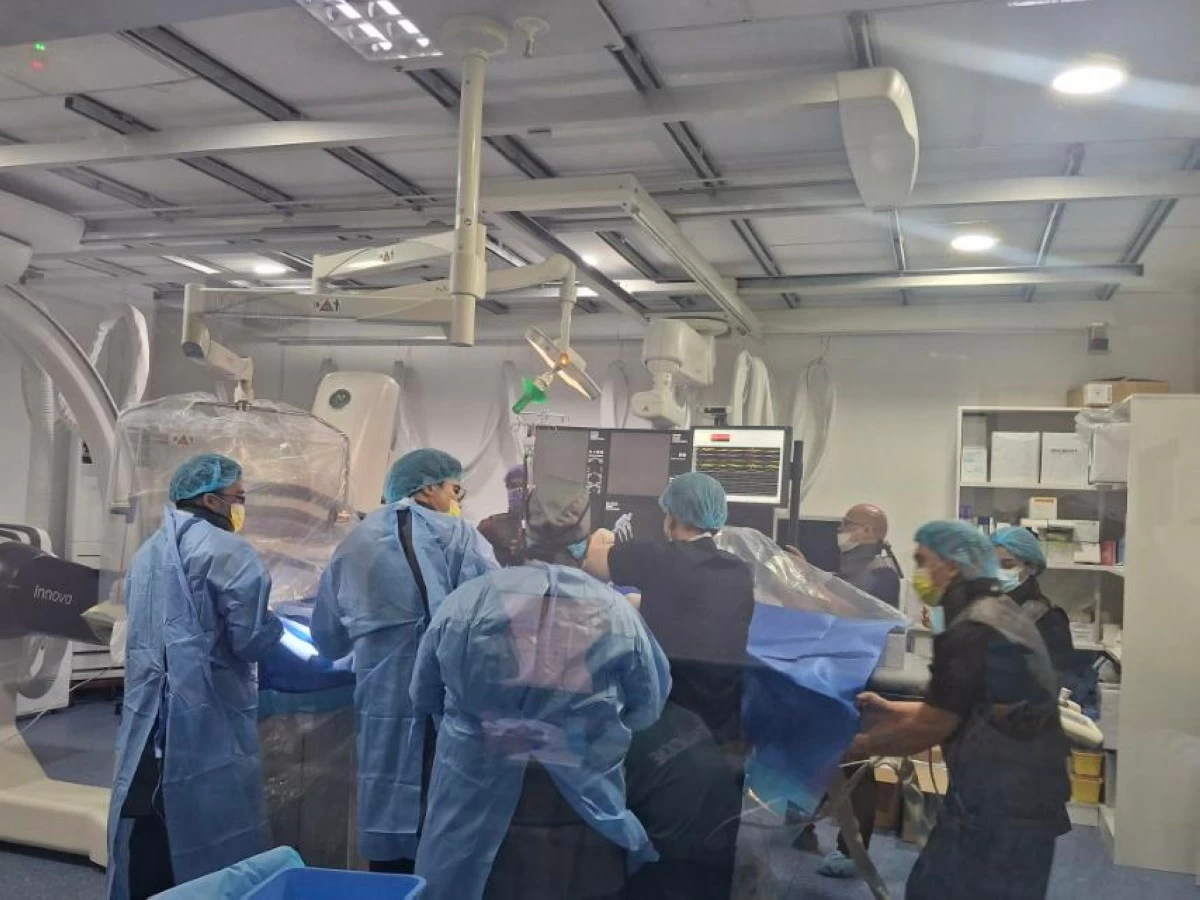
Medical staff at Ospital ng Maynila perform one of the hospital’s first successful angioplasty procedures on Friday, March 27, marking a major milestone in the city’s public cardiac care program. (Photo courtesy of Manila PIO)

A small group of patients, mostly suffering from chronic illnesses, accounts for a disproportionate share of hospital spending in the Philippines, according to state-run policy think tank Philippine Institute for Development Studies (PIDS).

In a statement on Wednesday, April 1, PIDS cited its study titled “Measuring Hospital Performance in the Philippines: Evidence on Quality, Efficiency, and Equity from Social Health Insurance Claims,” which analyzed 5.8 million inpatient claims submitted to state-run Philippine Health Insurance Corp. (PhilHealth).

This PIDS study found that patients in the top five percent of healthcare users accounted for about 20.1 percent—roughly a fifth—of total inpatient reimbursements, highlighting a concentration of costs among high-cost users.

In 2023 alone, more than 250,000 high-cost patients generated about ₱14 billion in reimbursements, or around one-fifth of PhilHealth’s inpatient payouts, PIDS said.

Nearly 65 percent of these high-cost cases were linked to noncommunicable diseases (NCDs), including heart disease, cancer, and other chronic illnesses that often require repeated hospitalizations, specialized treatment, and long-term management, the think tank added.

“A small subset of patients, often those with complex or chronic conditions, consumes a disproportionate share of resources, potentially crowding out coverage for the broader population's needs if not managed effectively,” PIDS said.

According to PIDS, the concentration of spending reflects the healthcare needs of patients with severe and long-term conditions, rather than excessive use of services.

The think tank added that high-cost cases are largely managed in Level 3 hospitals, which provide advanced and specialized care, with nearly half of reimbursements concentrated in these facilities.

National Capital Region (NCR) accounts for about one-fourth of reimbursements for high-cost patients, underscoring the concentration of specialized services in Metro Manila, according to PIDS.

The study also found that adults and elderly patients comprise the majority of high-cost cases, pointing to the growing burden of chronic diseases as the population ages.

Related Tags

Philippine Institute for Development Studies (PIDS) Philippine Health Insurance Corp. (PhilHealth)
ADVERTISEMENT
.most-popular .layout-ratio{ padding-bottom: 79.13%; } @media (min-width: 768px) and (max-width: 1024px) { .widget-title { font-size: 15px !important; } }

{{ articles_filter_1561_widget.title }}

.most-popular .layout-ratio{ padding-bottom: 79.13%; } @media (min-width: 768px) and (max-width: 1024px) { .widget-title { font-size: 15px !important; } }

{{ articles_filter_1562_widget.title }}

.most-popular .layout-ratio{ padding-bottom: 79.13%; } @media (min-width: 768px) and (max-width: 1024px) { .widget-title { font-size: 15px !important; } }

{{ articles_filter_1563_widget.title }}

{{ articles_filter_1564_widget.title }}

.mb-article-details { position: relative; } .mb-article-details .article-body-preview, .mb-article-details .article-body-summary{ font-size: 17px; line-height: 30px; font-family: "Libre Caslon Text", serif; color: #000; } .mb-article-details .article-body-preview iframe , .mb-article-details .article-body-summary iframe{ width: 100%; margin: auto; } .read-more-background { background: linear-gradient(180deg, color(display-p3 1.000 1.000 1.000 / 0) 13.75%, color(display-p3 1.000 1.000 1.000 / 0.8) 30.79%, color(display-p3 1.000 1.000 1.000) 72.5%); position: absolute; height: 200px; width: 100%; bottom: 0; display: flex; justify-content: center; align-items: center; padding: 0; } .read-more-background a{ color: #000; } .read-more-btn { padding: 17px 45px; font-family: Inter; font-weight: 700; font-size: 18px; line-height: 16px; text-align: center; vertical-align: middle; border: 1px solid black; background-color: white; } .hidden { display: none; }
function initializeAllSwipers() { // Get all hidden inputs with cms_article_id document.querySelectorAll('[id^="cms_article_id_"]').forEach(function (input) { const cmsArticleId = input.value; const articleSelector = '#article-' + cmsArticleId + ' .body_images'; const swiperElement = document.querySelector(articleSelector); if (swiperElement && !swiperElement.classList.contains('swiper-initialized')) { new Swiper(articleSelector, { loop: true, pagination: false, navigation: { nextEl: '#article-' + cmsArticleId + ' .swiper-button-next', prevEl: '#article-' + cmsArticleId + ' .swiper-button-prev', }, }); } }); } setTimeout(initializeAllSwipers, 3000); const intersectionObserver = new IntersectionObserver( (entries) => { entries.forEach((entry) => { if (entry.isIntersecting) { const newUrl = entry.target.getAttribute("data-url"); if (newUrl) { history.pushState(null, null, newUrl); let article = entry.target; // Extract metadata const author = article.querySelector('.author-section').textContent.replace('By', '').trim(); const section = article.querySelector('.section-info ').textContent.replace(' ', ' '); const title = article.querySelector('.article-title h1').textContent; // Parse URL for Chartbeat path format const parsedUrl = new URL(newUrl, window.location.origin); const cleanUrl = parsedUrl.host + parsedUrl.pathname; // Update Chartbeat configuration if (typeof window._sf_async_config !== 'undefined') { window._sf_async_config.path = cleanUrl; window._sf_async_config.sections = section; window._sf_async_config.authors = author; } // Track virtual page view with Chartbeat if (typeof pSUPERFLY !== 'undefined' && typeof pSUPERFLY.virtualPage === 'function') { try { pSUPERFLY.virtualPage({ path: cleanUrl, title: title, sections: section, authors: author }); } catch (error) { console.error('ping error', error); } } // Optional: Update document title if (title && title !== document.title) { document.title = title; } } } }); }, { threshold: 0.1 } ); function showArticleBody(button) { const article = button.closest("article"); const summary = article.querySelector(".article-body-summary"); const body = article.querySelector(".article-body-preview"); const readMoreSection = article.querySelector(".read-more-background"); // Hide summary and read-more section summary.style.display = "none"; readMoreSection.style.display = "none"; // Show the full article body body.classList.remove("hidden"); } document.addEventListener("DOMContentLoaded", () => { let loadCount = 0; // Track how many times articles are loaded const offset = [1, 2, 3, 4, 5, 6, 7, 8, 9, 10]; // Offset values const currentUrl = window.location.pathname.substring(1); let isLoading = false; // Prevent multiple calls if (!currentUrl) { console.log("Current URL is invalid."); return; } const sentinel = document.getElementById("load-more-sentinel"); if (!sentinel) { console.log("Sentinel element not found."); return; } function isSentinelVisible() { const rect = sentinel.getBoundingClientRect(); return ( rect.top < window.innerHeight && rect.bottom >= 0 ); } function onScroll() { if (isLoading) return; if (isSentinelVisible()) { if (loadCount >= offset.length) { console.log("Maximum load attempts reached."); window.removeEventListener("scroll", onScroll); return; } isLoading = true; const currentOffset = offset[loadCount]; window.loadMoreItems().then(() => { let article = document.querySelector('#widget_1690 > div:nth-last-of-type(2) article'); intersectionObserver.observe(article) loadCount++; }).catch(error => { console.error("Error loading more items:", error); }).finally(() => { isLoading = false; }); } } window.addEventListener("scroll", onScroll); });

Sign up by email to receive news.