







Unity crucial in fueling stability in uncertain times
Published Mar 27, 2026 12:05 am
|
Updated Mar 26, 2026 06:27 pm


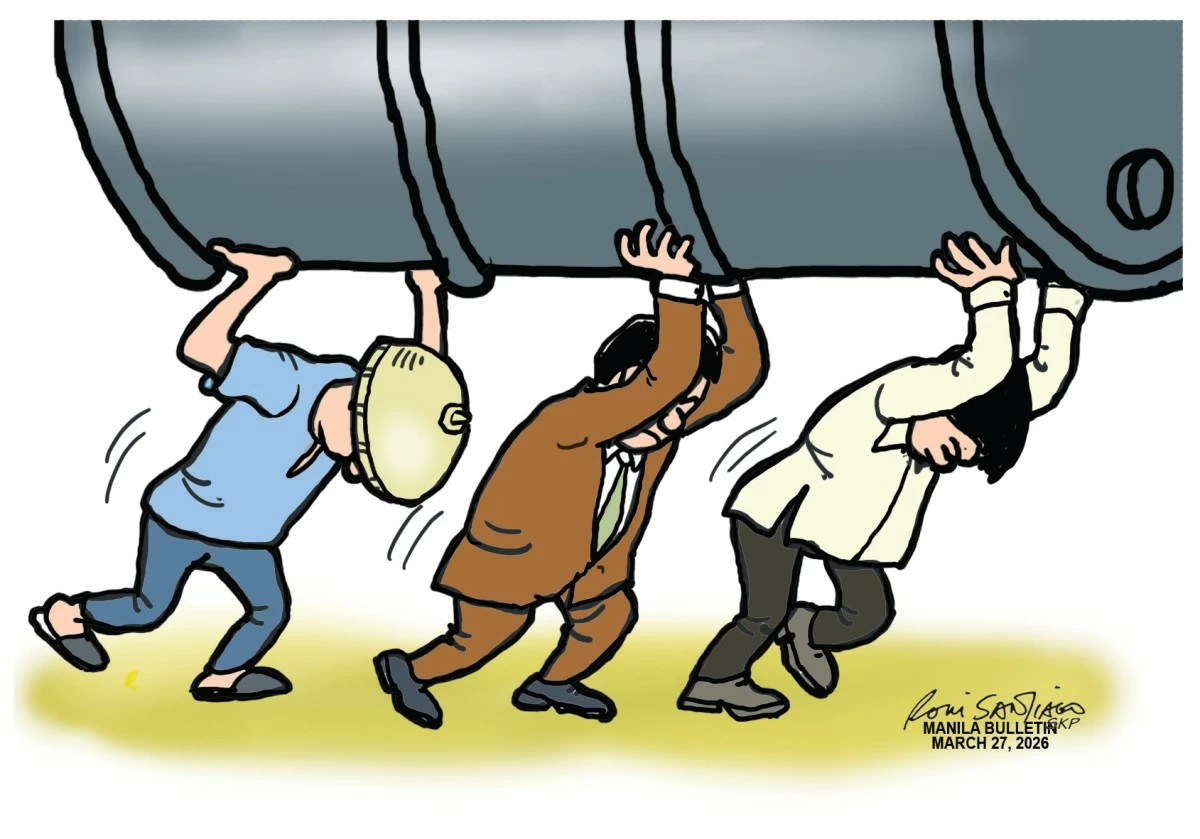
President Marcos’ declaration of a state of national energy emergency is a calculated move. Clearly, the government intends to stay ahead of a brewing storm. And in an era where geopolitical tensions can send crude prices soaring overnight, timing is everything—and by most expert accounts, the administration has struck a careful balance between urgency and restraint.
SMIC Group economist Robert Dan Roces captured this nuance, noting that the move “looks about right—early enough to show control, but not so fast that it feels reactive”. This view finds resonance across the private sector. UnionBank Chief Economist Ruben Carlo O. Asuncion described the declaration as “appropriate rather than delayed,” emphasizing that inflationary pressures—particularly in transport and logistics—are no longer hypothetical risks but increasingly evident realities.
The challenge now lies not in the declaration itself, but in the judicious use of the powers it confers.
Two policy instruments stand at the forefront. The first is the energy emergency framework, which enables the government to streamline procurement, mobilize reserves, and strengthen inter-agency coordination. The second is the newly enacted authority allowing the President to suspend or reduce excise taxes on fuel. Taken together, these measures constitute a strategic policy response aimed at mitigating price shocks while preserving macroeconomic stability.
Their effectiveness, however, will depend on disciplined execution. A sweeping reduction in excise taxes may provide immediate relief but could also erode fiscal revenues, thereby constraining public spending. Conversely, insufficient intervention risks exacerbating inflation, diminishing household purchasing power, and slowing economic activity. The imperative, therefore, is to strike a prudent balance between short-term relief and long-term sustainability.
As Jonathan Ravelas of Reyes Tacandong & Co. observed, the administration’s posture is best understood as precautionary rather than reactive. “It tells markets the government is getting ahead of Middle East risks and preparing for a potentially prolonged oil shock, not just a short-term spike,” he said. Such signaling is crucial, as market confidence rests not only on policy measures but also on the credibility of those who implement them.
And credibility will ultimately be measured by outcomes. President Marcos’ assurance that the country will maintain adequate oil supply beyond the 45-day buffer must be substantiated through effective supply management. Any disruption would have immediate and far-reaching consequences, particularly for transportation, food distribution, and industrial operations. As Rizal Commercial Banking Corp.’s Michael Ricafort aptly noted, the situation is akin to disaster preparedness: readiness must translate into resilience.
Nonetheless, government action alone will not suffice.
The private sector must assume an active and constructive role in sustaining supply stability. Oil companies, importers, and logistics providers are expected to uphold transparency in inventory management, refrain from speculative pricing, and invest in supply chain efficiency. Financial institutions, for their part, can extend support through adaptive credit mechanisms to assist firms coping with elevated fuel costs. Large enterprises may also consider hedging strategies and diversification of energy sources to mitigate exposure to volatility.
Filipino consumers likewise play a vital role. In periods of economic strain, collective prudence becomes an indispensable asset. Households can contribute by adopting energy-efficient practices, moderating fuel consumption, and making more sustainable transportation choices. Such measures, though incremental at the individual level, can collectively ease demand pressures and reinforce national efforts at stabilization.
This episode also underscores a broader structural imperative—the need to accelerate investments in renewable energy, enhance public transportation systems, and reduce dependence on imported fuel. Without these long-term reforms, the economy will remain vulnerable to recurring external shocks.
In navigating this complex landscape, the path forward demands coherence in policy, credibility in execution, and shared responsibility across sectors. The government has mobilized its instruments; the private sector must reinforce stability; and the public must exercise discipline. With a concerted effort, the Philippines can weather the present crisis and safeguard the resilience of its economy.