






Manila Bulletin
 Business
Trade & Industry
Seaoil Batangas facility to host arrival of gov't-procured diesel shipment
Business
Trade & Industry
Seaoil Batangas facility to host arrival of gov't-procured diesel shipment
Business
Trade & Industry
Seaoil Batangas facility to host arrival of gov't-procured diesel shipment
Seaoil Batangas facility to host arrival of gov't-procured diesel shipment
Published Mar 27, 2026 01:53 pm


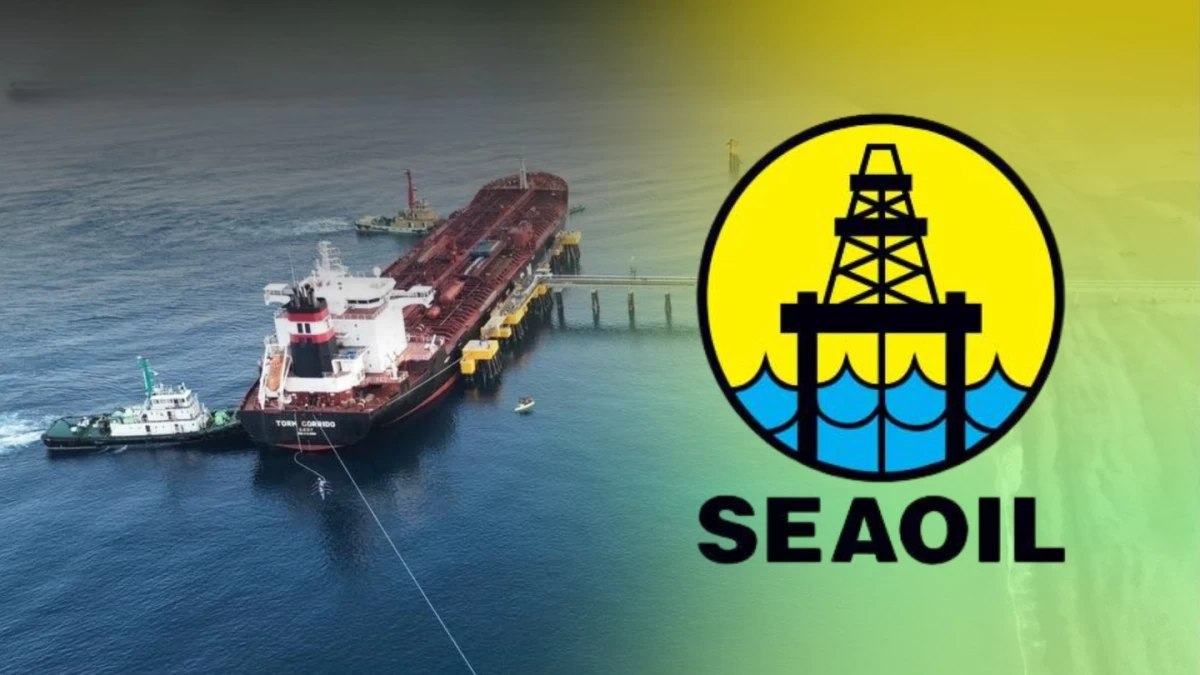
The 142,000 barrels (approximately 22.578 million liters) of diesel fuel scheduled to be formally received by Energy Secretary Sharon Garin this weekend will be unloaded at the bulk storage facility of independent player Seaoil Philippines in Mabini, Batangas, a government source privy to the matter has revealed.
According to the source, the fuel procurement was spearheaded by the Department of Energy (DOE) and will be entrusted to the stewardship of the state-run Philippine National Oil Company (PNOC) and its subsidiary, PNOC-Exploration Corp. (PNOC-EC).
Industry data shows that the country consumes at least 200,000 barrels of diesel per day; hence, this shipment represents less than a single day of national demand.
“The original source of the fuel supply was Japan, channeled through trading networks in Singapore,” the source noted, adding that the order was placed even before the President’s declaration of a National Energy Emergency last March 24.
Industry veterans emphasized that fuel deliveries originating from Singapore typically take five to seven days, excluding the lead time required for actual procurement processes.
The DOE-consigned cargo arrived in Bangar, La Union, on Thursday (March 26) and is expected to reach Mabini, Batangas, on Saturday (March 28). Energy officials are slated to witness the ceremonial discharge of the delivery upon its arrival.
At this stage, both the DOE and PNOC remain tight-lipped regarding the deployment of the diesel—specifically, whether it will be earmarked for public transport, carved out for key industries, or funneled to the general public through retail pumps.
The source also stressed that the fuel was purchased at prevailing market prices. “So, if it is sold to the consuming public, it will not be retailed at a discount,” the source clarified.
Meanwhile, industry insiders highlighted that the real strain lies with diesel, as supply buffers are already razor-thin. This presents a significant predicament, as diesel is the primary fuel used by the country’s public transport sector.
Another industry source indicated that while “gasoline supply may still hold for the coming months,” the outlook for “diesel remains problematic, as does LPG (liquefied petroleum gas),” the staple cooking fuel for Filipino households.
In a statement to the media, the DOE specified that the shipment accounts for the “first shipment of diesel imported under its Emergency Energy Security Program,” intended as “additional fuel to strengthen the country’s oil supply amid continued volatility in the global oil market.”
The department expounded that the shipment is part of a “broader effort to reinforce national fuel security and cushion the impact of external market disruptions on transport, industry, and other sectors that rely heavily on petroleum products.”
Under President Marcos’ emergency declaration, the government is mobilizing ₱20 billion to secure 2.0 million barrels of fuel from foreign suppliers—a volume that could cover approximately 10 days of national supply.
In a related development, the President announced assurances from market leader Petron Corporation that it has sufficient crude supply to run its Limay refinery until June 30 this year, which should guarantee supply flow across the company’s networks in the coming months.
Based on a DOE report, Petron held a 27.8 percent market share as of the first half of last year. This highlights the formidable challenge the government still faces in securing sufficient supply for the remaining 70 percent of the industry.