






Manila Bulletin
 Philippines
'Huwag na matulog': Gatchalian presses gov't agencies to find new oil sources amid supply uncertainty
Philippines
'Huwag na matulog': Gatchalian presses gov't agencies to find new oil sources amid supply uncertainty
Philippines
'Huwag na matulog': Gatchalian presses gov't agencies to find new oil sources amid supply uncertainty
'Huwag na matulog': Gatchalian presses gov't agencies to find new oil sources amid supply uncertainty
By Dhel Nazario
Published Mar 26, 2026 03:57 pm


At A Glance
- Senator Sherwin Gatchalian urged government agencies on Thursday, March 26, to act swiftly to secure additional petroleum supplies amid growing uncertainty in the global market.
Senator Sherwin Gatchalian urged government agencies on Thursday, March 26, to act swiftly to secure additional petroleum supplies amid growing uncertainty in the global market.
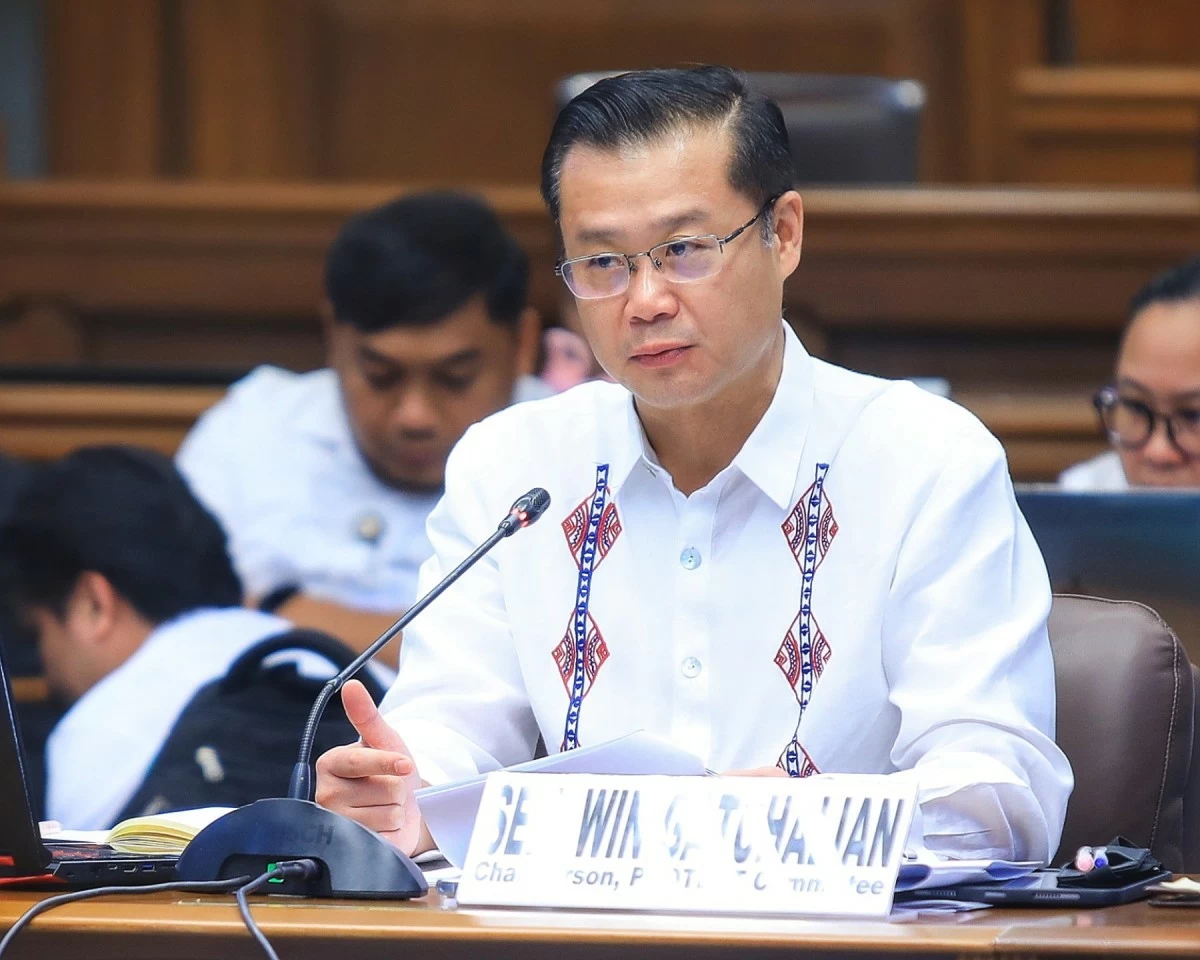
Senator Sherwin Gatchalian (Senate PRIB photo)
Gatchalian said this during the second organizational meeting, specifically calling on the Department of Energy (DOE) and the Philippine National Oil Company (PNOC) to find alternative sources of fuel.
"Huwag na—huwag na kayong matulog, kasi nasa inyo na 'yung—humihingi sila ng tulong sa inyo, eh. 'No? So, kailangan na talagang—mag-double time tayo dito kasi kung sinasabi nga ng oil companies, 'hirap kami,' then it's up to government to move, 'no? (Don’t—don’t go to sleep on this anymore, because it’s already in your hands—they’re asking for your help. Right? So we really need to double time here because if oil companies are saying, ‘we’re struggling,’ then it’s up to the government to move)" he said.
"Like I said, sixty days will fly by so fast. Kung hindi tayo magse-secure ngayon, pagdating ng panahon, problema tayong malaki (If we don’t secure supply now, we’ll face a big problem later on)," he added.
Gatchalian emphasized that oil companies themselves have admitted they are facing uncertainty from their suppliers, with no guarantee that they will be able to obtain supplies in their next importation.
Executives from major oil firms appeared before the panel to to brief lawmakers on the growing challenges in securing petroleum supplies.
They pointed out that the closure of the Strait of Hormuz—a key global shipping route—has significantly disrupted supply chains. The situation has been compounded by export restrictions imposed by some supplier countries, further straining nations like the Philippines that depend heavily on Middle Eastern crude.
Petron Corp. general manager Lubin Nepomuceno said China, Thailand, and Singapore have implemented temporary export bans to safeguard their own supply.
“Securing crude and finished products continue to become more difficult… Replenishment of crude, which Petron primarily sources from the Middle East, has been halted as a result of the closure of the Strait of Hormuz,” he said.
Shell Pilipinas Corp. President and CEO Lorelie Quiambao-Osial warned that a prolonged conflict would tighten global supply, with Asia already feeling the initial impact.
“If the conflict continues, then there will be tightness (of supply) in the entire world, which was first felt in Asia.”
“Today is March 26, which is the 26th day of the technical closure of the Strait of Hormuz, and that accounts for 20 percent most of that is going through Asia…When it comes to supply, it is getting tighter and tighter,” she said.
Chevron Philippines President Pongtorn Tangmanuswong noted that their refineries are still operating using pre-war crude supplies, but these may only last for about two months, even with reduced production.
Gatchalian expressed concern over the limited supply outlook, saying it could only last until late April or May.
“When I heard the statements of oil companies, medyo na-depress po ako. What I wanted to hear is certainly, na mayroong supply na papasok. It’s quite concerning. You cannot run a country or a business with uncertainty of fuel supply,” Gatchalian said.
DOE Undersecretary Felix William Fuentebella said authorities are actively monitoring for profiteering and hoarding amid the crisis.
He added that the agency is set to hold a crisis meeting next Tuesday with the Department Budget Coordination Committee (DBCC) to discuss whether fuel excise taxes should be suspended or reduced under the President’s emergency powers.
Meanwhile, Department of Finance Undersecretary Karlo Adriano said the President is expected to issue an executive order around April 12 or 13, deciding whether to fully suspend or partially reduce the excise tax.