






Manila Bulletin
 Philippines
National
Gatchalian: Lack of national contingency plan for oil 'concerning'
Philippines
National
Gatchalian: Lack of national contingency plan for oil 'concerning'
Philippines
National
Gatchalian: Lack of national contingency plan for oil 'concerning'
Gatchalian: Lack of national contingency plan for oil 'concerning'
By Dhel Nazario
Published Mar 25, 2026 03:47 pm


After 26 days since the Middle East conflict, Senator Sherwin Gatchalian said that it's "concerning" that the government still has no unified, coordinated national contingency plan to address matters related to the country's oil supply.
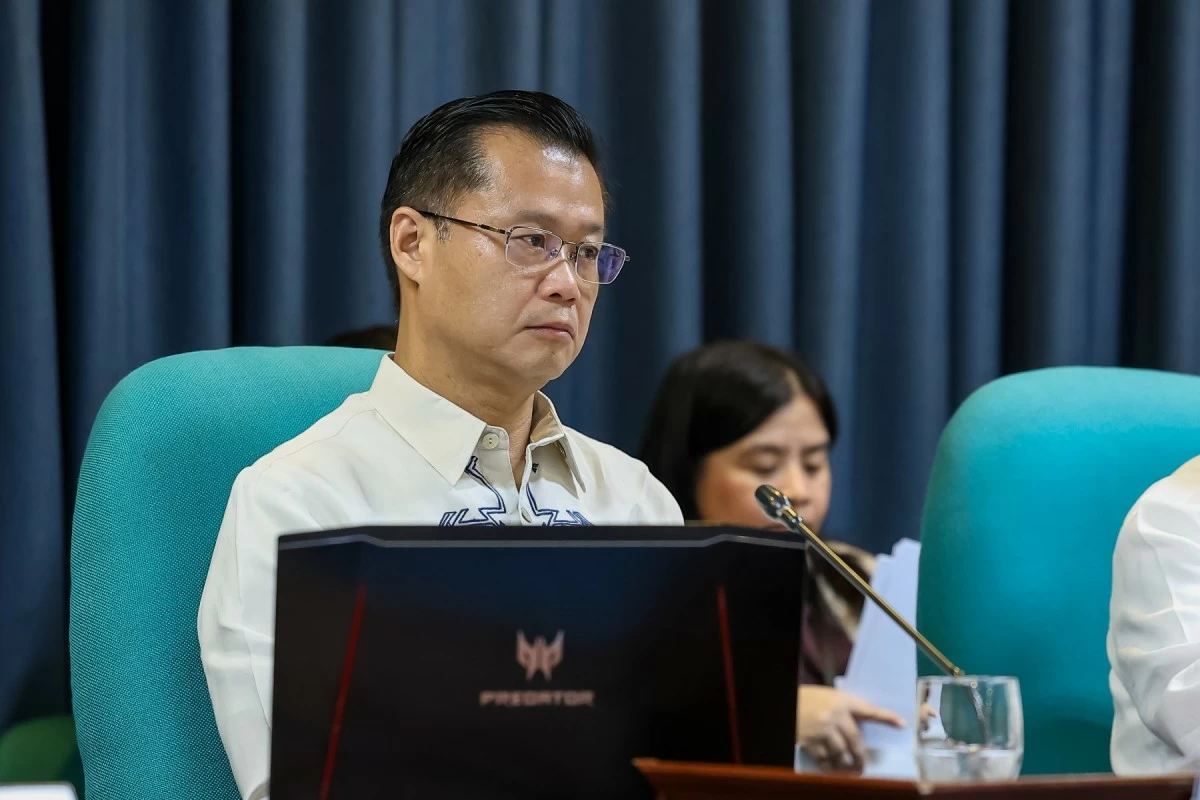
Senator Sherwin Gatchalian (Senate PRIB photo)
In a press conference on Wednesday, March 25, Gatchalian said that this is what he found out after convening the first organizational meeting of the Senate Proactive Response and Oversight for Timely and Effective Crisis Strategy (PROTECT) Committee on Tuesday, Feb. 24.
The senator stressed the importance of such a plan, as it will dictate how much budget the government will need to address the issues.
A day before, President Marcos had declared a state of national energy emergency. For Gatchalian, this just proves how severe the problem can get and the importance of having contingency measures.
"This declaration of a national energy emergency proves that our problems could worsen and that we really need to craft contingency measures," he said.
With this, Gatchalian urged the government to immediately craft a comprehensive national contingency plan that outlines specific actions for various crisis scenarios, noting that while the Senate and the Executive have initiated parallel frameworks, referred to as “PROTECT” in the Senate and “UPLIFT” in the Executive, these should now lead to a unified strategy.
He said the plan must cover a range of possible situations, including a worst-case scenario where the country faces a complete lack of oil supply, which he warned is not far-fetched given the absence of firm supply agreements.
Gatchalian also expressed concern that current assistance remains insufficient and could become a major problem if no stable supply is secured within 60 days. He added that such a contingency plan would serve as the basis for determining whether the government needs to pass a supplemental budget or enact a Bayanihan 3 measure to respond effectively.
Government action
With the government's current move, Gatchalian said that he can see that there is action, yet the response is not that fast.
He gave an example, stating that as of March 24, it shows that around 200,000, more or less, have been given aid in the transport sector.
"If we count the entire transport sector, it’s around 900,000 to close to about 1 million—this includes everyone, from tricycle to jeepney drivers to buses. So far, those receiving assistance or subsidies are only here in Metro Manila," he said.
"At that point, the distribution of subsidies should be fast because all public utility drivers are currently experiencing intense pressure since their take-home pay has already decreased. Every day they load fuel, but fares are not increasing. So that means their income is shrinking. And because of that, the government needs to step in," he added.
However, Gatchalian said that the most important part of the Executive Order on UPLIFT, is the section on energy. He said it directs the Energy Secretary to do everything possible to secure a stable supply at reasonable prices.
"So the important thing I see is that this is where our diplomatic relationships with other countries come into play…We need to have government-to-government arrangements in order for us to secure a firm supply," he said.