

ADVERTISEMENT

DOE: PH fuel supply will 'run dry' if Middle East tensions escalate

Published Mar 24, 2026 06:00 pm

At A Glance

  • An energy official on Tuesday, March 24, disclosed the possibility of supply disruptions in a worst-case scenario tied to escalating tensions in the Middle East.
An energy official on Tuesday, March 24, disclosed the possibility of supply disruptions in a worst-case scenario tied to escalating tensions in the Middle East.
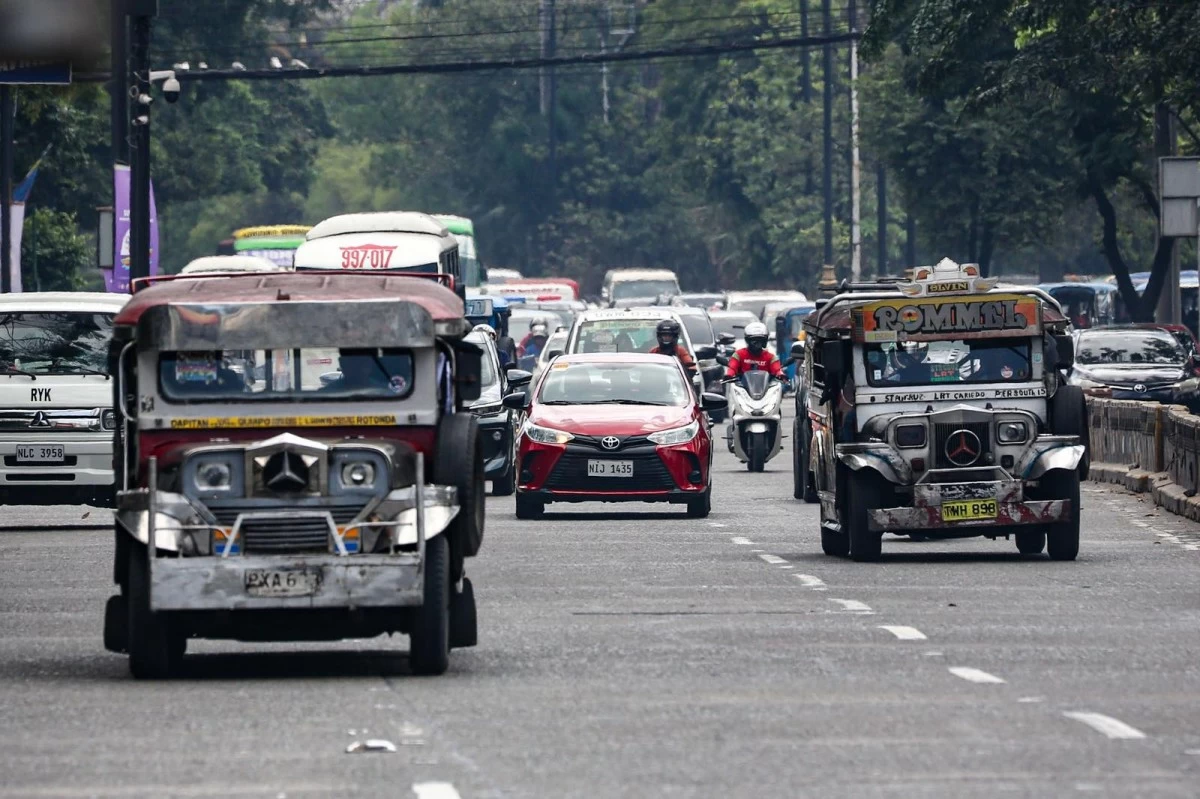
Traditional jeepneys ply their routes along Padre Burgos Avenue in Manila on Tuesday, March 10. (Mark Balmores)
During the first organizational meeting of the Senate Proactive Response and Oversight for Timely and Effective Crisis Strategy (PROTECT), Department of Energy (DOE) Secretary Sharon Garin warned that the country could face a severe fuel shortage if global supply routes are significantly disrupted.
“The worst case is we run dry. This country runs dry,” Garin said, referring to a scenario where oil shipments are halted, including a potential closure of the Strait of Hormuz.
Garin said that the country has roughly a month to a month and a half to prepare contingency measures should the Middle East situation worsen.
Prior to this, Gatchalian asked the DOE regarding the country’s current fuel buffer after the agency stated that the gasoline supply would last around 53 days and diesel about 46 days. He questioned whether firm supply contracts are already in place beyond those timelines.
Garin said oil companies continue to place orders regularly—typically twice a month—and that existing suppliers have so far confirmed deliveries for April, with no reported cancellations.
She acknowledged that supply planning remains constrained by storage capacity and financing limitations, resulting in what Gatchalian described as a “hand-to-mouth” situation.
DOE estimates that the gasoline supply could stretch to about 64 days, while diesel may last around 54 days, factoring in incoming deliveries. Beyond that, Garin said the government and oil firms would need to continuously secure new shipments.
Despite the risks, Garin expressed confidence that a total supply shortage remains unlikely, adding that the more probable impact would be significantly higher fuel prices.
“I do believe that will not happen,” she said, referring to a complete depletion of supply. “The worst case is the prices will be really high.”
To mitigate risks, the DOE said it is exploring alternative suppliers outside the Philippines’ usual sources in the Middle East, including the United States and India, to diversify supply chains.

Related Tags

Department of Energy (DOE) Sherwin Gatchalian Middle East Middle East conflict oil price hike
ADVERTISEMENT
.most-popular .layout-ratio{ padding-bottom: 79.13%; } @media (min-width: 768px) and (max-width: 1024px) { .widget-title { font-size: 15px !important; } }

{{ articles_filter_1561_widget.title }}

.most-popular .layout-ratio{ padding-bottom: 79.13%; } @media (min-width: 768px) and (max-width: 1024px) { .widget-title { font-size: 15px !important; } }

{{ articles_filter_1562_widget.title }}

.most-popular .layout-ratio{ padding-bottom: 79.13%; } @media (min-width: 768px) and (max-width: 1024px) { .widget-title { font-size: 15px !important; } }

{{ articles_filter_1563_widget.title }}

{{ articles_filter_1564_widget.title }}

.mb-article-details { position: relative; } .mb-article-details .article-body-preview, .mb-article-details .article-body-summary{ font-size: 17px; line-height: 30px; font-family: "Libre Caslon Text", serif; color: #000; } .mb-article-details .article-body-preview iframe , .mb-article-details .article-body-summary iframe{ width: 100%; margin: auto; } .read-more-background { background: linear-gradient(180deg, color(display-p3 1.000 1.000 1.000 / 0) 13.75%, color(display-p3 1.000 1.000 1.000 / 0.8) 30.79%, color(display-p3 1.000 1.000 1.000) 72.5%); position: absolute; height: 200px; width: 100%; bottom: 0; display: flex; justify-content: center; align-items: center; padding: 0; } .read-more-background a{ color: #000; } .read-more-btn { padding: 17px 45px; font-family: Inter; font-weight: 700; font-size: 18px; line-height: 16px; text-align: center; vertical-align: middle; border: 1px solid black; background-color: white; } .hidden { display: none; }
function initializeAllSwipers() { // Get all hidden inputs with cms_article_id document.querySelectorAll('[id^="cms_article_id_"]').forEach(function (input) { const cmsArticleId = input.value; const articleSelector = '#article-' + cmsArticleId + ' .body_images'; const swiperElement = document.querySelector(articleSelector); if (swiperElement && !swiperElement.classList.contains('swiper-initialized')) { new Swiper(articleSelector, { loop: true, pagination: false, navigation: { nextEl: '#article-' + cmsArticleId + ' .swiper-button-next', prevEl: '#article-' + cmsArticleId + ' .swiper-button-prev', }, }); } }); } setTimeout(initializeAllSwipers, 3000); const intersectionObserver = new IntersectionObserver( (entries) => { entries.forEach((entry) => { if (entry.isIntersecting) { const newUrl = entry.target.getAttribute("data-url"); if (newUrl) { history.pushState(null, null, newUrl); let article = entry.target; // Extract metadata const author = article.querySelector('.author-section').textContent.replace('By', '').trim(); const section = article.querySelector('.section-info ').textContent.replace(' ', ' '); const title = article.querySelector('.article-title h1').textContent; // Parse URL for Chartbeat path format const parsedUrl = new URL(newUrl, window.location.origin); const cleanUrl = parsedUrl.host + parsedUrl.pathname; // Update Chartbeat configuration if (typeof window._sf_async_config !== 'undefined') { window._sf_async_config.path = cleanUrl; window._sf_async_config.sections = section; window._sf_async_config.authors = author; } // Track virtual page view with Chartbeat if (typeof pSUPERFLY !== 'undefined' && typeof pSUPERFLY.virtualPage === 'function') { try { pSUPERFLY.virtualPage({ path: cleanUrl, title: title, sections: section, authors: author }); } catch (error) { console.error('ping error', error); } } // Optional: Update document title if (title && title !== document.title) { document.title = title; } } } }); }, { threshold: 0.1 } ); function showArticleBody(button) { const article = button.closest("article"); const summary = article.querySelector(".article-body-summary"); const body = article.querySelector(".article-body-preview"); const readMoreSection = article.querySelector(".read-more-background"); // Hide summary and read-more section summary.style.display = "none"; readMoreSection.style.display = "none"; // Show the full article body body.classList.remove("hidden"); } document.addEventListener("DOMContentLoaded", () => { let loadCount = 0; // Track how many times articles are loaded const offset = [1, 2, 3, 4, 5, 6, 7, 8, 9, 10]; // Offset values const currentUrl = window.location.pathname.substring(1); let isLoading = false; // Prevent multiple calls if (!currentUrl) { console.log("Current URL is invalid."); return; } const sentinel = document.getElementById("load-more-sentinel"); if (!sentinel) { console.log("Sentinel element not found."); return; } function isSentinelVisible() { const rect = sentinel.getBoundingClientRect(); return ( rect.top < window.innerHeight && rect.bottom >= 0 ); } function onScroll() { if (isLoading) return; if (isSentinelVisible()) { if (loadCount >= offset.length) { console.log("Maximum load attempts reached."); window.removeEventListener("scroll", onScroll); return; } isLoading = true; const currentOffset = offset[loadCount]; window.loadMoreItems().then(() => { let article = document.querySelector('#widget_1690 > div:nth-last-of-type(2) article'); intersectionObserver.observe(article) loadCount++; }).catch(error => { console.error("Error loading more items:", error); }).finally(() => { isLoading = false; }); } } window.addEventListener("scroll", onScroll); });

Sign up by email to receive news.