






Manila Bulletin
 Technews
AWS expands Cloud & AI programs to help Philippine MSMEs accelerate digital transformation
Technews
AWS expands Cloud & AI programs to help Philippine MSMEs accelerate digital transformation
Technews
AWS expands Cloud & AI programs to help Philippine MSMEs accelerate digital transformation
AWS expands Cloud & AI programs to help Philippine MSMEs accelerate digital transformation
By Bob Reyes
Published Mar 24, 2026 11:23 am


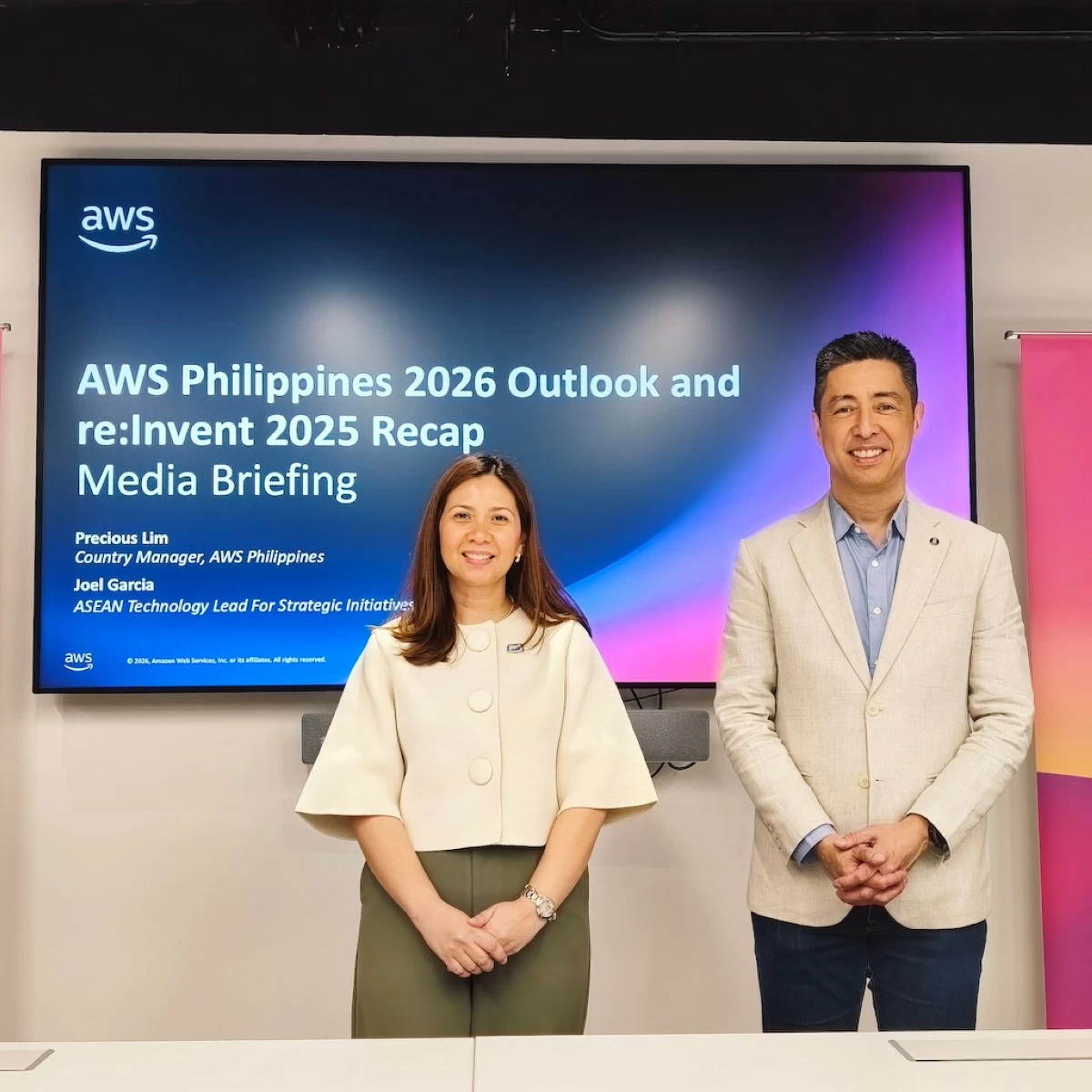
As Philippine micro, small, and medium enterprises (MSMEs) accelerate their digital transformation efforts, Amazon Web Services (AWS) is expanding initiatives to help smaller businesses adopt cloud and artificial intelligence technologies through training, cost-support programs, and industry partnerships.
Micro, Small, and Medium Enterprises (MSMEs) in the Philippines are increasingly turning to Cloud and Artificial Intelligence (AI) technologies to improve productivity, enhance customer experience, and compete in a rapidly digitalizing economy. As businesses explore these technologies, cloud providers and industry partners are expanding programs designed to make AI adoption more accessible, particularly for smaller organizations that may face financial and technical barriers.
One key strategy to accelerate AI adoption among MSMEs is skills development. Training initiatives are being scaled through learning partners and industry organizations to equip Filipino entrepreneurs, developers, and IT professionals with the knowledge required to implement cloud-based AI solutions. Through programs such as AWS Skill Builder, businesses can access learning resources to understand AI tools, cloud infrastructure, and the practical applications of emerging technologies, regardless of their size or level of technical maturity.
During a recent press briefing, Precious Lim, Country Manager of Amazon Web Services (AWS), shared that these training efforts are supported by technology partners and local organizations that aim to extend digital literacy nationwide, including regions outside major business hubs. By working with local ecosystem partners, cloud providers are helping ensure that MSMEs in areas such as Mindanao and other regional markets gain access to the same learning opportunities and digital infrastructure as those in Metro Manila.
Cost remains one of the biggest concerns for small businesses considering the move to cloud platforms. To address this, cloud providers are offering financial support and migration programs designed to reduce the cost of transitioning to the cloud. One such initiative is a migration acceleration program that helps businesses manage the “double running cost” that often occurs during digital transformation — when companies must maintain both legacy infrastructure and new cloud systems simultaneously during the migration process.
These programs typically support companies at different stages of their cloud journey, including system assessments, setting up secure cloud environments, and migrating workloads. By subsidizing part of the process, the goal is to make cloud adoption more feasible for startups and small businesses with limited IT budgets.
For organizations already operating in the cloud, the focus shifts to cost optimization. Cloud account managers, partners, and technical specialists work with companies to continuously refine their infrastructure, with some organizations targeting at least a 30% annual improvement in cost efficiency. This approach helps build customer trust while ensuring the long-term sustainability of cloud investments.
According to Joel Garcia, Technology Lead for Strategic Initiatives at Amazon Web Services for
Beyond infrastructure, the growing demand for AI in the Philippines is driven by practical business applications. Many companies initially experiment with AI through customer-facing solutions, such as chatbots and automated support systems, to improve response times and streamline customer interactions. Over time, more mature organizations are moving toward building internal AI frameworks — sometimes referred to as an “AI kitchen” or center of excellence — to systematically evaluate and scale successful AI initiatives across the enterprise.
This structured approach enables businesses to determine which AI projects deliver measurable improvements in productivity and operational efficiency. It also allows organizations to establish governance policies and security guardrails that ensure responsible AI deployment.
In the Philippines, the information technology and business process management (IT-BPM) sector is also exploring new opportunities through AI. Companies in the outsourcing industry are investigating the use of agentic AI systems to automate repetitive processes, enabling Filipino professionals to move into higher-value roles such as analytics, software development, and knowledge services.
Meanwhile, software development itself is undergoing a significant transformation through AI-assisted development cycles. Tasks that once took months — including research, coding, testing, documentation, and debugging — can now be completed in a matter of hours with the assistance of AI-powered tools and cloud platforms. Workshops and training sessions are increasingly demonstrating how organizations can integrate AI throughout the software development lifecycle rather than relying solely on it for code generation.
The broader opportunity for the Philippines lies in strengthening its talent pipeline. With a large base of skilled developers and a globally competitive outsourcing sector, the country has the potential to become a regional hub for AI-enabled software development and digital services. However, industry leaders emphasize that the focus should remain on solving real business problems rather than adopting technology simply for its novelty.