ADVERTISEMENT

No oil crisis yet; gov't forms crisis committee to manage impact — Palace

Published Mar 23, 2026 11:39 am
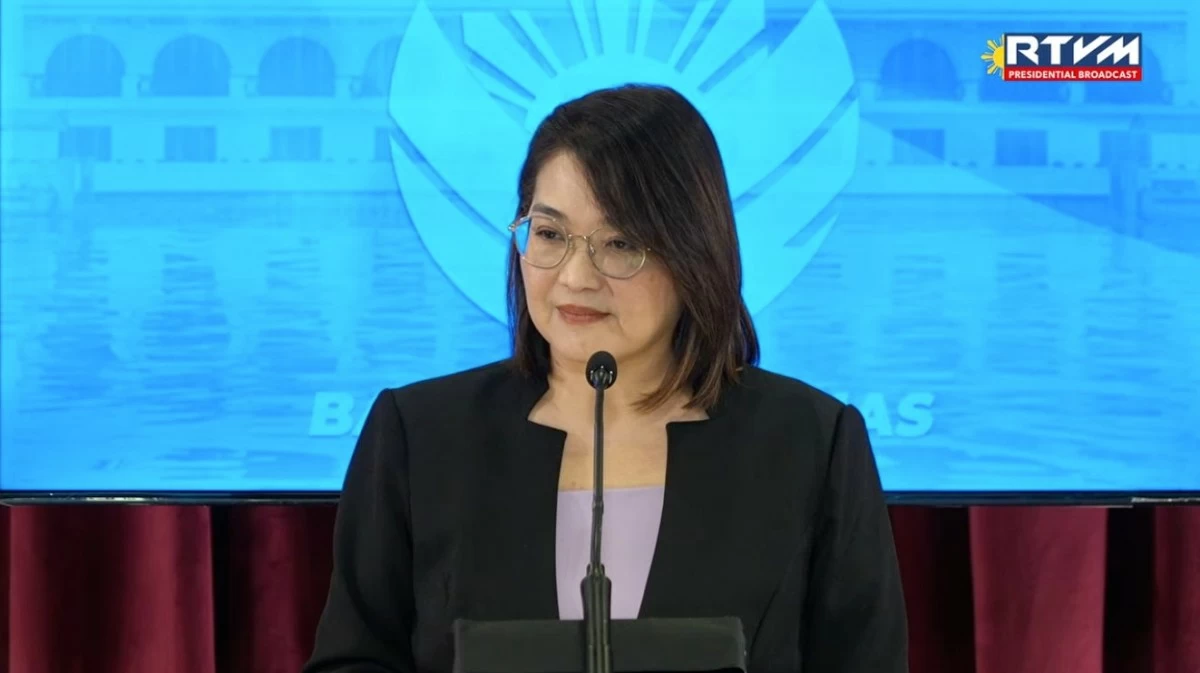
Communications Undersecretary Claire Castro (RTVM Screenshot)

Malacañang said the government is not downplaying the situation amid rising oil prices, as it announced the formation of a crisis committee even as it maintained that there is no oil crisis in the country so far.

Presidential Communications Office (PCO) Undersecretary Claire Castro said this amid criticisms that the government is supposedly “downplaying” the situation by claiming that the country is not facing an oil crisis.

In her press briefing on Monday, March 24, Castro said the government continues to act proactively to mitigate the impact of tensions in the Middle East.

“Wala naman tayong dina-downplay – ito po kasi iyong totoong sitwasyon (We are not downplaying anything—this is the real situation),” Castro said.

Crisis committee formed

Castro confirmed that President Marcos has already ordered the creation of a crisis committee to address the potential impacts of the situation.

“Bago pa po may nag-suggest na gumawa ng crisis committee, nag-utos na po ang Pangulo na maggawa officially ng crisis committee (Even before suggestions were made, the President already ordered the creation of a crisis committee),” she said.

While details of the committee are still being finalized, Castro said the committee will focus on ensuring supply stability and addressing the needs of Filipinos, particularly in fuel and basic goods.

No oil crisis in PH — yet

Despite rising oil prices, Castro said the government does not consider the situation an oil crisis in the Philippines, citing the assessment of Department of Energy (DOE) Secretary Sharon Garin that the country has sufficient fuel supply.

“Hindi pa po kinukonsidera na mayroon tayong oil crisis dahil kumpleto po tayo at enough po ang supply ng langis (It is not yet considered an oil crisis because we have complete and sufficient oil supply),” Castro said.

She explained that the term “oil crisis” used by the President in an earlier interview referred to the situation in the Middle East, not in the Philippines.

Price issue, not supply

Castro said the main concern at present is the increase in prices, not a shortage in supply.

“Kung pag-uusapan po natin ang supply ay wala po tayong sasabihing krisis… maybe mayroon pong price disruption (If we talk about supply, there is no crisis… maybe there is a price disruption),” she said.

She added that negotiations are ongoing to secure additional fuel imports, including hundreds of thousands of barrels.

President Marcos said in his vlog over the weekend that the government is working to ensure a stable power supply, with 23 projects expected to add 900 megawatts to the grid.

He added that the government is also coordinating with partner countries, including India, China, Japan, Thailand, Brunei, and South Korea, to secure oil supply.

Gov’t mitigating impact

Castro said the government is implementing measures to cushion the effects of rising oil prices, including subsidies and assistance programs.

She said multiple agencies, including the DOE, Department of Agriculture (DA), and the Department of Social Welfare and Development (DSWD), are working together to ensure supply stability.

“Kumpleto po ang supplies natin sa krudo… pati po sa pagkain (Our supplies of crude oil… and even food are complete),” she said.

Public urged to cooperate

The Palace Press Officer acknowledged that the Philippines will inevitably be affected by the Middle East conflict but assured that the government is working to soften its impact.

“Hindi po natin mapapasubalian… talaga pong maaapektuhan tayo – that’s the reality (We cannot deny it… we will really be affected—that’s the reality),” Castro said.

She echoed the President’s call for cooperation, urging Filipinos to practice prudence and help manage the situation as global uncertainties persist.

Related Tags

Claire Castro Oil crisis Oil price hike Middle East conflict
ADVERTISEMENT
.most-popular .layout-ratio{ padding-bottom: 79.13%; } @media (min-width: 768px) and (max-width: 1024px) { .widget-title { font-size: 15px !important; } }

{{ articles_filter_1561_widget.title }}

.most-popular .layout-ratio{ padding-bottom: 79.13%; } @media (min-width: 768px) and (max-width: 1024px) { .widget-title { font-size: 15px !important; } }

{{ articles_filter_1562_widget.title }}

.most-popular .layout-ratio{ padding-bottom: 79.13%; } @media (min-width: 768px) and (max-width: 1024px) { .widget-title { font-size: 15px !important; } }

{{ articles_filter_1563_widget.title }}

{{ articles_filter_1564_widget.title }}

.mb-article-details { position: relative; } .mb-article-details .article-body-preview, .mb-article-details .article-body-summary{ font-size: 17px; line-height: 30px; font-family: "Libre Caslon Text", serif; color: #000; } .mb-article-details .article-body-preview iframe , .mb-article-details .article-body-summary iframe{ width: 100%; margin: auto; } .read-more-background { background: linear-gradient(180deg, color(display-p3 1.000 1.000 1.000 / 0) 13.75%, color(display-p3 1.000 1.000 1.000 / 0.8) 30.79%, color(display-p3 1.000 1.000 1.000) 72.5%); position: absolute; height: 200px; width: 100%; bottom: 0; display: flex; justify-content: center; align-items: center; padding: 0; } .read-more-background a{ color: #000; } .read-more-btn { padding: 17px 45px; font-family: Inter; font-weight: 700; font-size: 18px; line-height: 16px; text-align: center; vertical-align: middle; border: 1px solid black; background-color: white; } .hidden { display: none; }
function initializeAllSwipers() { // Get all hidden inputs with cms_article_id document.querySelectorAll('[id^="cms_article_id_"]').forEach(function (input) { const cmsArticleId = input.value; const articleSelector = '#article-' + cmsArticleId + ' .body_images'; const swiperElement = document.querySelector(articleSelector); if (swiperElement && !swiperElement.classList.contains('swiper-initialized')) { new Swiper(articleSelector, { loop: true, pagination: false, navigation: { nextEl: '#article-' + cmsArticleId + ' .swiper-button-next', prevEl: '#article-' + cmsArticleId + ' .swiper-button-prev', }, }); } }); } setTimeout(initializeAllSwipers, 3000); const intersectionObserver = new IntersectionObserver( (entries) => { entries.forEach((entry) => { if (entry.isIntersecting) { const newUrl = entry.target.getAttribute("data-url"); if (newUrl) { history.pushState(null, null, newUrl); let article = entry.target; // Extract metadata const author = article.querySelector('.author-section').textContent.replace('By', '').trim(); const section = article.querySelector('.section-info ').textContent.replace(' ', ' '); const title = article.querySelector('.article-title h1').textContent; // Parse URL for Chartbeat path format const parsedUrl = new URL(newUrl, window.location.origin); const cleanUrl = parsedUrl.host + parsedUrl.pathname; // Update Chartbeat configuration if (typeof window._sf_async_config !== 'undefined') { window._sf_async_config.path = cleanUrl; window._sf_async_config.sections = section; window._sf_async_config.authors = author; } // Track virtual page view with Chartbeat if (typeof pSUPERFLY !== 'undefined' && typeof pSUPERFLY.virtualPage === 'function') { try { pSUPERFLY.virtualPage({ path: cleanUrl, title: title, sections: section, authors: author }); } catch (error) { console.error('ping error', error); } } // Optional: Update document title if (title && title !== document.title) { document.title = title; } } } }); }, { threshold: 0.1 } ); function showArticleBody(button) { const article = button.closest("article"); const summary = article.querySelector(".article-body-summary"); const body = article.querySelector(".article-body-preview"); const readMoreSection = article.querySelector(".read-more-background"); // Hide summary and read-more section summary.style.display = "none"; readMoreSection.style.display = "none"; // Show the full article body body.classList.remove("hidden"); } document.addEventListener("DOMContentLoaded", () => { let loadCount = 0; // Track how many times articles are loaded const offset = [1, 2, 3, 4, 5, 6, 7, 8, 9, 10]; // Offset values const currentUrl = window.location.pathname.substring(1); let isLoading = false; // Prevent multiple calls if (!currentUrl) { console.log("Current URL is invalid."); return; } const sentinel = document.getElementById("load-more-sentinel"); if (!sentinel) { console.log("Sentinel element not found."); return; } function isSentinelVisible() { const rect = sentinel.getBoundingClientRect(); return ( rect.top < window.innerHeight && rect.bottom >= 0 ); } function onScroll() { if (isLoading) return; if (isSentinelVisible()) { if (loadCount >= offset.length) { console.log("Maximum load attempts reached."); window.removeEventListener("scroll", onScroll); return; } isLoading = true; const currentOffset = offset[loadCount]; window.loadMoreItems().then(() => { let article = document.querySelector('#widget_1690 > div:nth-last-of-type(2) article'); intersectionObserver.observe(article) loadCount++; }).catch(error => { console.error("Error loading more items:", error); }).finally(() => { isLoading = false; }); } } window.addEventListener("scroll", onScroll); });

Sign up by email to receive news.