ADVERTISEMENT

Josie AI app helps Filipinos learn virtual assistant skills and adapt to AI-powered remote work

Published Mar 16, 2026 08:01 am
As Artificial Intelligence (AI) continues to transform the modern workplace, a new learning platform is helping workers adapt to the changing demands of remote work. Founded by software engineer and startup founder France Paul Pastrana, Josie AI is a mobile learning app designed to teach practical remote work skills, particularly those used by Virtual Assistants (VAs), while introducing users to the growing role of AI tools in everyday work.
Pastrana said the idea for Josie AI emerged after observing two major trends shaping the global workforce: the rapid advancement of AI technologies and the growing number of workers being affected by automation. Rather than waiting for job disruptions to intensify, the team behind Josie AI wanted to create a platform that would help workers adapt early and learn how AI can support them in their daily tasks.
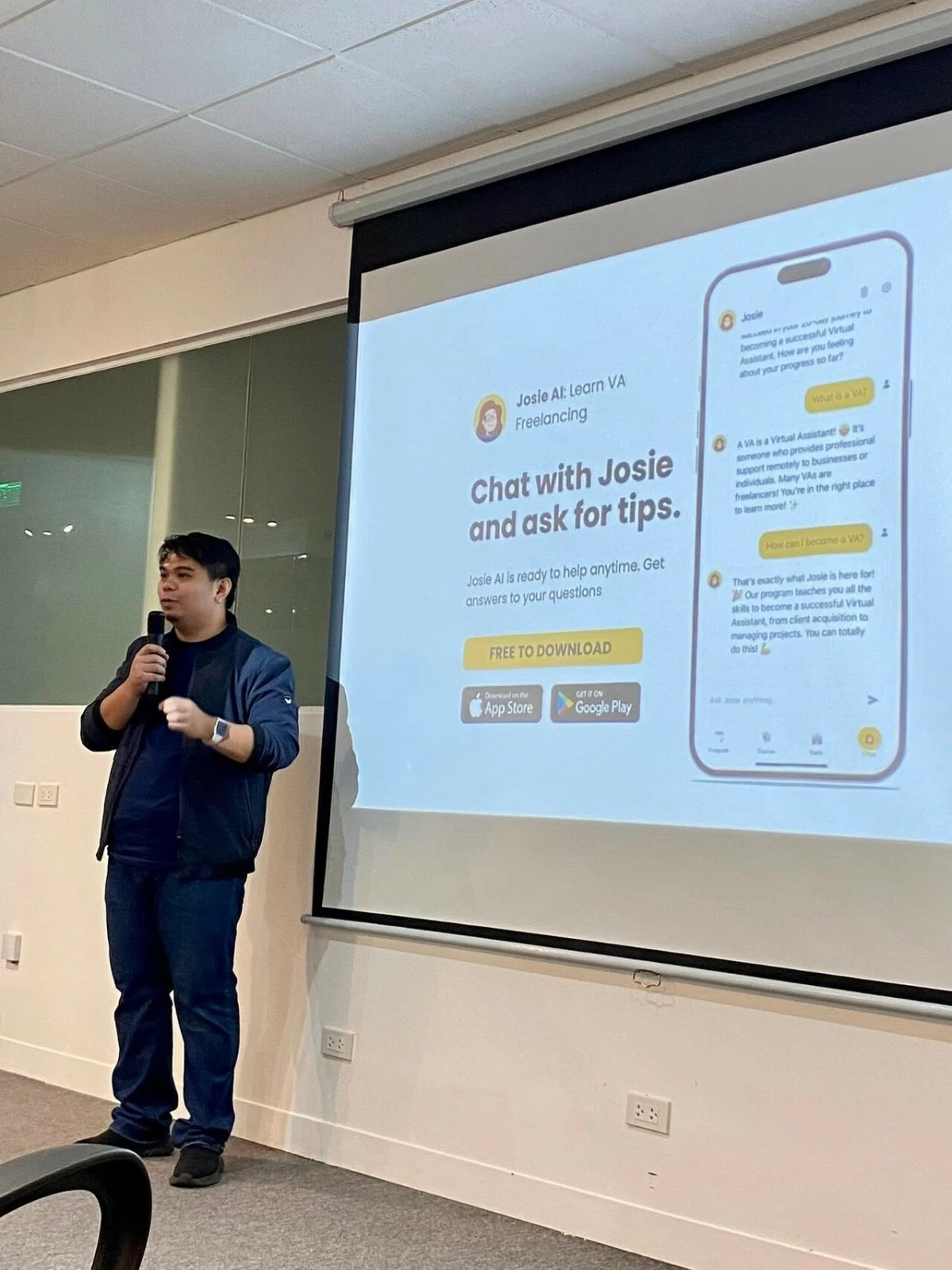
“AI tools are improving quickly and changing how many jobs are done. Our mission is to help people prepare for the future of work by learning how to use these tools so they can adapt and stay relevant,” Pastrana explained.
Since its launch, the Josie AI app has gained strong traction among users interested in remote work opportunities. The app has already surpassed 40,000 downloads and currently holds an average rating of 4.9 out of 5 on the App Store, reflecting positive feedback from users who say the platform helped them better understand how to start working online.
Recently, the app also experienced a surge in popularity after going viral on social media, significantly boosting downloads in a short period of time. According to Pastrana, the viral moment introduced the app to thousands of new users and continues to drive steady growth as more people discover the platform.
The concept behind Josie AI addresses a common challenge faced by aspiring remote workers. Many people want to work from home but do not know where to begin. They often search online for tutorials, watch multiple videos, or enroll in various courses, only to find that the information is scattered and difficult to piece together.
Josie AI simplifies that learning process by offering short, focused lessons about remote work and virtual assistant tasks. These lessons cover practical skills such as writing professional emails, managing tasks, organizing information, and using AI tools to complete work faster.
Unlike traditional learning platforms that rely on long, structured courses, Josie AI emphasizes short lessons based on real-world work scenarios. The mobile-first design allows users to learn directly on their smartphones, making the platform accessible to anyone who wants to develop remote work skills anytime and anywhere.
The app’s main users include people who want to begin working from home, especially those interested in becoming virtual assistants. However, Pastrana noted that the platform is also attracting freelancers, remote workers, and employees in the business process outsourcing (BPO) sector who want to learn how AI tools can improve their productivity.
Behind the platform is modern cloud infrastructure and AI technology designed to deliver learning content efficiently within the app. This ensures a smooth, responsive learning experience for users as they progress through lessons and practice new skills.
One of the biggest challenges during development was simplifying complex technologies for beginners. AI tools can be powerful but often confusing for first-time users. Josie AI addresses this by presenting lessons in a clear and practical format that users can apply immediately in their work.
Many users report that the app helped them understand where to start. Before using Josie AI, they were aware of remote work opportunities or AI tools, but did not know how to apply them in real work situations. After completing the lessons, they feel more confident experimenting with these tools and improving their productivity.
As remote work continues to expand globally and AI becomes more integrated into everyday workflows, Pastrana believes workers who understand these technologies will have a clear advantage. With its rapidly growing user base and viral momentum, Josie AI aims to equip more people with the skills they need to succeed in an AI-powered future of work.
Josie AI is available on the App Store and Google Play. You may also visit their website via https://josieai.com.
ADVERTISEMENT
.most-popular .layout-ratio{ padding-bottom: 79.13%; } @media (min-width: 768px) and (max-width: 1024px) { .widget-title { font-size: 15px !important; } }

{{ articles_filter_1561_widget.title }}

.most-popular .layout-ratio{ padding-bottom: 79.13%; } @media (min-width: 768px) and (max-width: 1024px) { .widget-title { font-size: 15px !important; } }

{{ articles_filter_1562_widget.title }}

.most-popular .layout-ratio{ padding-bottom: 79.13%; } @media (min-width: 768px) and (max-width: 1024px) { .widget-title { font-size: 15px !important; } }

{{ articles_filter_1563_widget.title }}

{{ articles_filter_1564_widget.title }}

.mb-article-details { position: relative; } .mb-article-details .article-body-preview, .mb-article-details .article-body-summary{ font-size: 17px; line-height: 30px; font-family: "Libre Caslon Text", serif; color: #000; } .mb-article-details .article-body-preview iframe , .mb-article-details .article-body-summary iframe{ width: 100%; margin: auto; } .read-more-background { background: linear-gradient(180deg, color(display-p3 1.000 1.000 1.000 / 0) 13.75%, color(display-p3 1.000 1.000 1.000 / 0.8) 30.79%, color(display-p3 1.000 1.000 1.000) 72.5%); position: absolute; height: 200px; width: 100%; bottom: 0; display: flex; justify-content: center; align-items: center; padding: 0; } .read-more-background a{ color: #000; } .read-more-btn { padding: 17px 45px; font-family: Inter; font-weight: 700; font-size: 18px; line-height: 16px; text-align: center; vertical-align: middle; border: 1px solid black; background-color: white; } .hidden { display: none; }
function initializeAllSwipers() { // Get all hidden inputs with cms_article_id document.querySelectorAll('[id^="cms_article_id_"]').forEach(function (input) { const cmsArticleId = input.value; const articleSelector = '#article-' + cmsArticleId + ' .body_images'; const swiperElement = document.querySelector(articleSelector); if (swiperElement && !swiperElement.classList.contains('swiper-initialized')) { new Swiper(articleSelector, { loop: true, pagination: false, navigation: { nextEl: '#article-' + cmsArticleId + ' .swiper-button-next', prevEl: '#article-' + cmsArticleId + ' .swiper-button-prev', }, }); } }); } setTimeout(initializeAllSwipers, 3000); const intersectionObserver = new IntersectionObserver( (entries) => { entries.forEach((entry) => { if (entry.isIntersecting) { const newUrl = entry.target.getAttribute("data-url"); if (newUrl) { history.pushState(null, null, newUrl); let article = entry.target; // Extract metadata const author = article.querySelector('.author-section').textContent.replace('By', '').trim(); const section = article.querySelector('.section-info ').textContent.replace(' ', ' '); const title = article.querySelector('.article-title h1').textContent; // Parse URL for Chartbeat path format const parsedUrl = new URL(newUrl, window.location.origin); const cleanUrl = parsedUrl.host + parsedUrl.pathname; // Update Chartbeat configuration if (typeof window._sf_async_config !== 'undefined') { window._sf_async_config.path = cleanUrl; window._sf_async_config.sections = section; window._sf_async_config.authors = author; } // Track virtual page view with Chartbeat if (typeof pSUPERFLY !== 'undefined' && typeof pSUPERFLY.virtualPage === 'function') { try { pSUPERFLY.virtualPage({ path: cleanUrl, title: title, sections: section, authors: author }); } catch (error) { console.error('ping error', error); } } // Optional: Update document title if (title && title !== document.title) { document.title = title; } } } }); }, { threshold: 0.1 } ); function showArticleBody(button) { const article = button.closest("article"); const summary = article.querySelector(".article-body-summary"); const body = article.querySelector(".article-body-preview"); const readMoreSection = article.querySelector(".read-more-background"); // Hide summary and read-more section summary.style.display = "none"; readMoreSection.style.display = "none"; // Show the full article body body.classList.remove("hidden"); } document.addEventListener("DOMContentLoaded", () => { let loadCount = 0; // Track how many times articles are loaded const offset = [1, 2, 3, 4, 5, 6, 7, 8, 9, 10]; // Offset values const currentUrl = window.location.pathname.substring(1); let isLoading = false; // Prevent multiple calls if (!currentUrl) { console.log("Current URL is invalid."); return; } const sentinel = document.getElementById("load-more-sentinel"); if (!sentinel) { console.log("Sentinel element not found."); return; } function isSentinelVisible() { const rect = sentinel.getBoundingClientRect(); return ( rect.top < window.innerHeight && rect.bottom >= 0 ); } function onScroll() { if (isLoading) return; if (isSentinelVisible()) { if (loadCount >= offset.length) { console.log("Maximum load attempts reached."); window.removeEventListener("scroll", onScroll); return; } isLoading = true; const currentOffset = offset[loadCount]; window.loadMoreItems().then(() => { let article = document.querySelector('#widget_1690 > div:nth-last-of-type(2) article'); intersectionObserver.observe(article) loadCount++; }).catch(error => { console.error("Error loading more items:", error); }).finally(() => { isLoading = false; }); } } window.addEventListener("scroll", onScroll); });

Sign up by email to receive news.