






Manila Bulletin
 Philippines
National
Senate panel OKs 'in principle' giving Marcos emergency powers on fuel excise taxes
Philippines
National
Senate panel OKs 'in principle' giving Marcos emergency powers on fuel excise taxes
Philippines
National
Senate panel OKs 'in principle' giving Marcos emergency powers on fuel excise taxes
Senate panel OKs 'in principle' giving Marcos emergency powers on fuel excise taxes
By Dhel Nazario
Published Mar 11, 2026 05:12 pm


A Senate panel on Wednesday, March 11, approved "in principle" the proposals that would grant President Marcos powers to either suspend or reduce excise tax on fuel amid rising fuel costs.
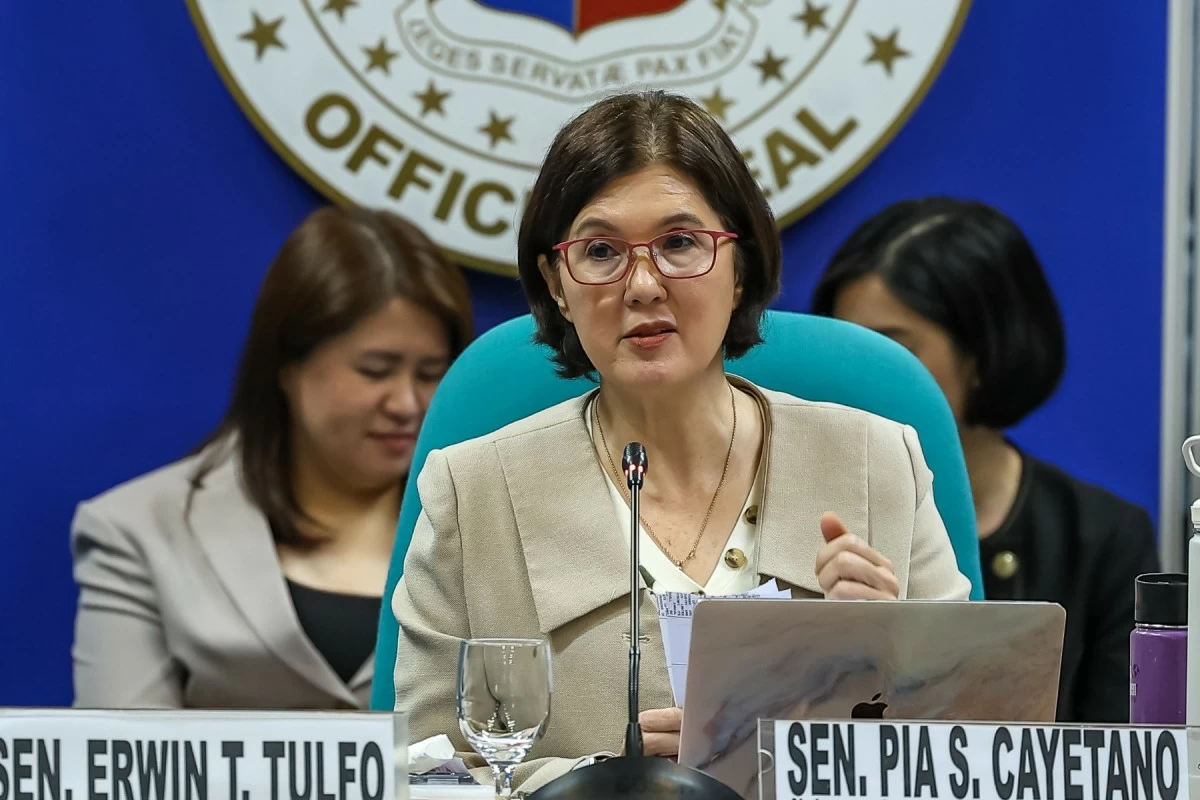
Senator Pia Cayetano presides over a public hearing of the Committee on Ways and Means on Wednesday, March 11, 2026, to discuss proposed measures allowing the automatic suspension or reduction of excise taxes on fuel during soaring global oil prices. (Senate PRIB photo)
"In principle, the members who attended are supportive of the main principle of the bill, which is to give emergency powers to the President," Senator Pia Cayetano said in a chance interview after the hearing of the Senate Committee on Ways and Means.
Cayetano said that there are 10 bills on the suspension or reduction of excise taxes on fuel or petroleum products, and one bill on the abolition of excise taxes on petroleum products, and one Senate resolution on the impact of global oil prices, volatility, oil price volatility arising from the heightened Middle East tensions.
She stated that the Senate is awaiting the House of Representatives’ version of a measure that would allow the suspension or reduction of excise taxes on fuel, noting that tax measures must originate from the lower chamber under the Constitution.
Cayetano said the Senate has already begun hearings on the proposal but cannot sponsor a counterpart bill until the House passes its version on third reading and transmits it to the upper chamber.
The senator said the Senate is also finalizing details of its own version of the proposal, including determining the price threshold that would trigger the President’s authority to suspend or reduce excise taxes, as well as the conditions for ending that authority.
“We are also just finalizing because there are just a few details on when the trigger is: when will the President be given that authority to suspend or reduce the excise tax; and then, when will this authority end?” Cayetano said, adding that the Department of Energy (DOE) and the Department of Finance (DOF) are working on the matter.
She said she prefers using a one-month average of oil prices to determine whether the tax suspension should take effect.
Cayetano also said the period for lifting the tax relief should not be too long, noting that global conditions, such as an armed conflict, could quickly change.
At the same time, the executive branch is seeking more flexibility in implementing the measure.
“So to be able to reduce and then pwede nga after ma-reduce, ma-suspend yun, and then gusto nila may long period yun so that kung may mangyayari ulit…they just want that total flexibility (So to be able to reduce it, and then after it’s reduced, it can even be suspended...They want it to stay that way for a long period so that if something happens again, they’ll have that total flexibility),” she said.
Cayetano said lawmakers are also exploring safeguards and whether the DOE should be given stronger enforcement powers against fuel retailers that may exploit price fluctuations.
Meanwhile, Cayetano also said one option under discussion is suspending excise taxes on diesel first, though lawmakers are still studying whether the measure should cover all fuel products.
While diesel carries the bulk of the excise tax and is widely used in transportation and logistics, she noted that gasoline prices also affect the daily expenses of motorists, such as motorcycle riders.
On the other hand, Cayetano clarified that the proposal does not include removing the value-added tax (VAT) on fuel, saying the issue is more complicated compared with excise taxes.
She said the DOF has been asked to explain the issue more clearly to the public, noting that removing VAT could have different effects because businesses claim input and output taxes in the production chain.
“So sabi ko, paliwanag niyo nang maayos sa mga kababayan natin (explained that clearly to the public)…that option is there for us, pero it's not something that we can automatically do without thinking of the repercussion,” she said.
Cayetano also warned that suspending or reducing fuel excise taxes could significantly affect government revenues. She said estimates show the government could lose around P130 billion from May to December if the tax relief is implemented.
The senator stressed the need for careful deliberation since the funds are used to finance public services.
Cayetano said the Department of Economy, Planning, and Development (DepDev) has also presented possible scenarios on how global fuel price shocks could affect inflation.
Under one scenario, inflation could increase consumer spending by about P1 for every P100 spent, while removing the excise tax could offset about 80 centavos of that increase.
However, a more severe scenario could see inflation raising costs by nearly P3 for every P100, meaning the impact would still be felt even if excise taxes are removed.
“So pagdasal natin na hindi masyadong mabigat ang impact sa atin kasi kaya natin iresolve yung impact by way of this bill (So let us pray that the impact on us will not be too heavy, because we can address that impact through this bill),” Cayetano said.