







PH faces over 144,758 classroom shortage—Marcos
Published Feb 23, 2026 04:01 pm


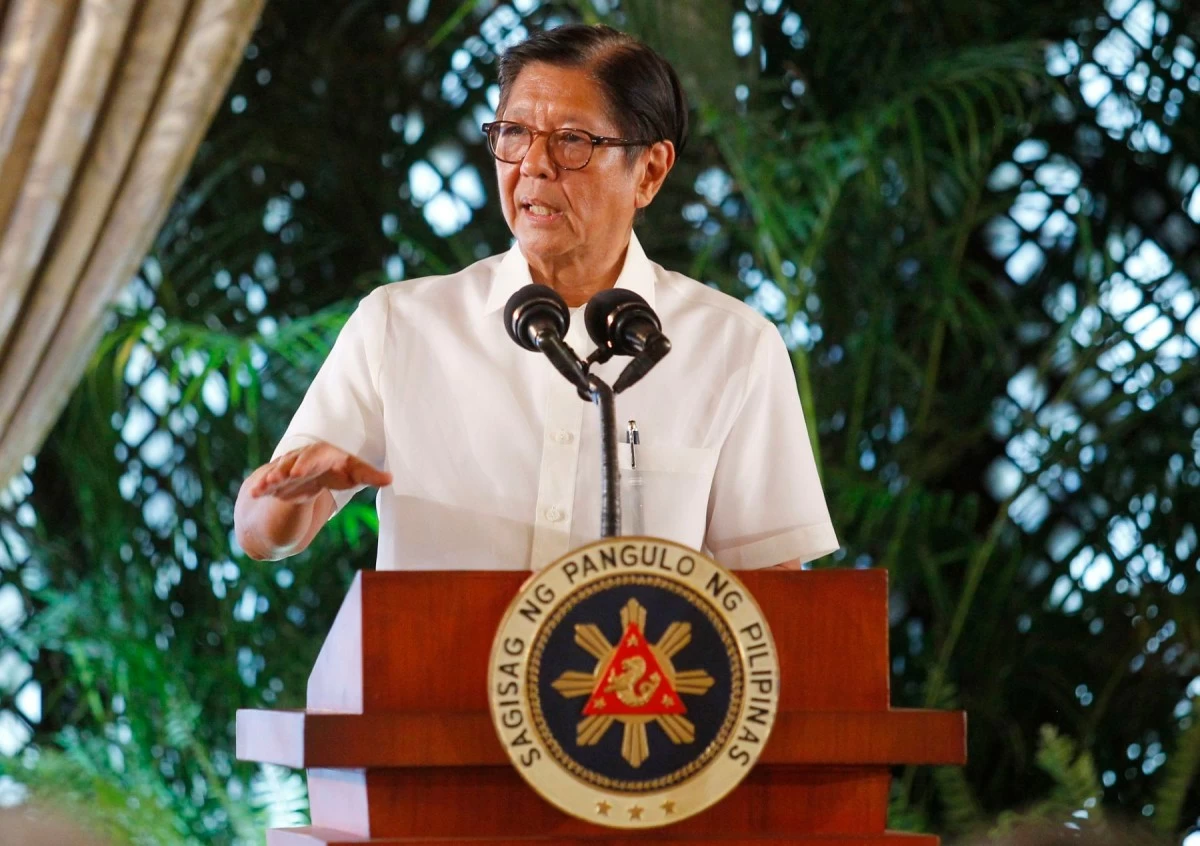
President Ferdinand R. Marcos Jr. (Mark Balmores)
President Marcos said on Monday, Feb. 23, that the Philippines is still facing a classroom shortage of more than 144,000.
In his speech during the presentation of the memorandum of agreement (MOA) on nationwide classroom building, Marcos stressed that the country must not wait for decades to address the classroom shortage, although it was previously stated by the Department of Education (DepEd) that the shortage could take up to 30 years to resolve, considering the budget the department was getting.
"As of January 2026, we have still a classroom shortage of more than 144,758 – to be specific – units," Marcos said.
"We cannot wait for decades, years, to give every student a safe and conducive classroom for effective learning," he added.
He pointed out that the lack of classrooms had resulted in overcrowding and the implementation of shifts at public schools.
Students find it harder to learn, he said, adding that teachers also face a heavier burden in teaching, and parents become more concerned.
This prompted them, Marcos said, to "shifting from centralized implementation of classroom construction to faster, and more responsive execution on the ground."
He emphasized that with the signing of the MOA by the DepEd and local leaders from cities across the country, city governments are given a huge role in addressing classroom shortage.
The President said the city governments will be responsible for handling the procurement, building, and managing the project. The DepEd, on the other hand, will set the standards and ensure that the classrooms are compliant with national standards.
Marcos said under this year's national budget, more than P85 billion was allocated to Basic Education Facilities.
'Accountability is embedded in the system'
According to the President, the system was made to ensure that public funds are spent well.
"Alam naman natin na ang pondo ng taumbayan ay kailangang ingatan kaya malinaw din ang pananagutan sa sistemang itinayo natin dito (We all know that public funds must be safeguarded, which is why accountability is clearly embedded in the system we have established here)," he said.
Marcos said the funds will be released in three tranches, and a separate trust account is required exclusively for the project.
Local government units are also obligated to submit monthly and quarterly reports to the DepEd in order to determine issues and whether implementation is proceeding properly.
"At ang mahalaga, walang final turnover or final payment na mangyayari hangga’t na-validate na ng ating DepEd (Most importantly, no final turnover or final payment will take place until it has been validated by DepEd)," Marcos said.
The Chief Executive also urged LGUs to ensure that the projects will not be delayed and that classrooms are of high quality.
"Tiyakin din natin na ang bawat sentimo na pinaghirapan ng ating mga kababayan ay gagamitin sa tama (Let us also ensure that every cent earned through the hard work of our fellow citizens is spent properly)," Marcos said.
"Dahil hindi lamang tayo nagtatayo ng silid-aralan; nagtatayo tayo ng isang matibay na kinabukasan para sa ating kabataan at para sa ating minamahal na Pilipinas (Because we are not merely building classrooms; we are building a strong future for our youth and for our beloved Philippines). Because every classroom we build gives our children a better future," he added.