






The country is grappling with a worsening classroom shortage that could take up to 30 years to address if current funding levels persist, according to the Department of Education (DepEd).
Manila Bulletin
 Philippines
National
Philippines faces growing classroom shortage, may take 30 years to address — Angara
Philippines
National
Philippines faces growing classroom shortage, may take 30 years to address — Angara
Philippines
National
Philippines faces growing classroom shortage, may take 30 years to address — Angara
Philippines faces growing classroom shortage, may take 30 years to address — Angara
With the current budget, the DepEd chief says it may take decades to build enough classrooms for public school students
Published May 26, 2025 09:29 pm



The Philippines is facing a critical shortage of classrooms, with the Department of Education (DepEd) warning that it may take 30 years to resolve without increased investment. (Noel Pabalate / Manila Bulletin / File)
DepEd Secretary Sonny Angara on Monday, May 26, highlighted the urgent need for greater investment in the country’s public education infrastructure --- citing the “growing” shortage of classrooms.
“Around 165,000 [classroom shortage] and growing kasi hindi nakakayanan ng current budget — it will take us 30 years to build if we work on the current budget (Around 165,000 and growing because the current budget can't support it — at this rate, it will take us 30 years to build if we stick to the existing budget),” Angara said in an interview after the launch of a recent partnership with HOPE.
Generation HOPE partnership launch
DepEd data shows that the Philippines currently lacks 165,443 classrooms — a challenge that directly impacts the quality of education and the future of Filipino youth.
To address this pressing issue, DepEd has partnered with HOPE and a coalition of leading brands to launch Generation HOPE — an innovative campaign aimed at empowering consumers to support education and nation-building through meaningful marketing initiatives.
“Malaking bagay ito kasi nga nabawasan kami ng budget noong 2025, so ito makakatulong sa kakulangan natin sa classrooms (This is a big deal because our budget was reduced in 2025, so this will help address our classroom shortage),” said Angara, in an interview on the sidelines of the Generation HOPE launch at SM Aura Premier in Bonifacio Global City, Taguig.
Through partnerships like this, Angara said DepEd can better prioritize other gaps in the education sector.
“Ang daming network na mata-tap, ang daming brands, korporasyon, at ang publiko ay makakatulong dito (Many networks, brands, and corporations can be tapped, and the public can truly contribute to this effort),” he added. “So ito, mapapabilis yung construction — yung mga deficits natin (So with this, construction will speed up — including addressing our deficits),” he added.
Collaborative efforts for education infrastructure
During the launch, Angara emphasized the importance of collaboration in addressing the classroom crisis.
“Education is not just a duty — it’s a solemn responsibility we all share,” he said. “When the government and the private sector unite through partnerships like Generation HOPE, we break down barriers and pave the way for every Filipino child to learn in a safe and inspiring environment.”
The event marked the beginning of a strategic partnership between DepEd, HOPE, and prominent brands such as Aivee Clinic, BDO Credit Cards, Carmen’s Best, Grab, Penshoppe, SM Supermalls, and Sunnies.
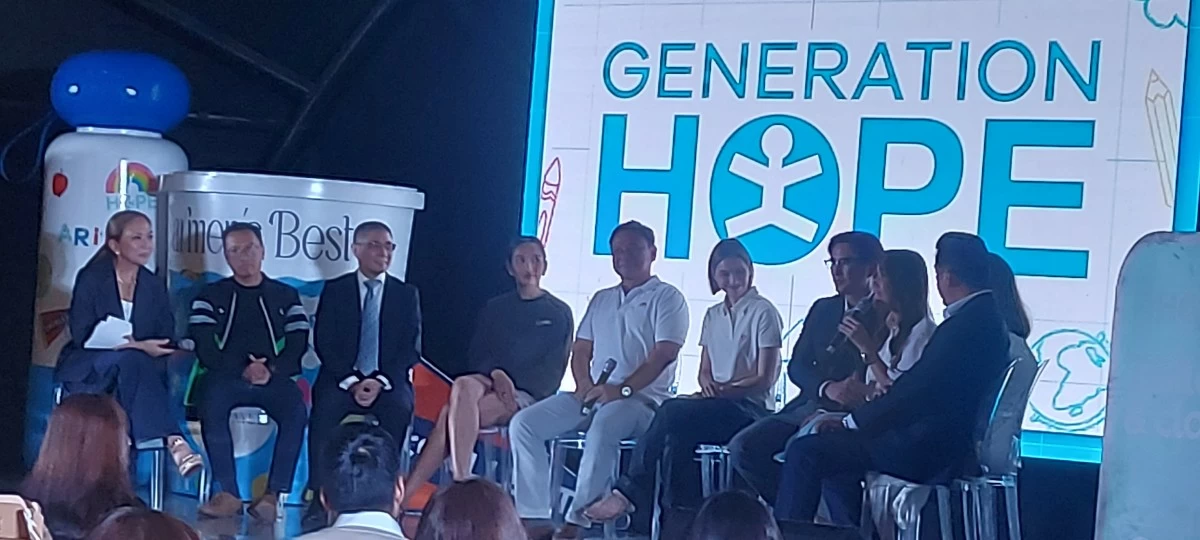
A powerful collaboration for education: Generation HOPE launch attended by DepEd officials and key partners at SM Aura Premier, Bonifacio Global City, Taguig, on May 26, 2025. (Merlina Hernando-Malipot / Manila Bulletin)
Attendees also viewed an inspiring video presentation showcasing HOPE’s journey — highlighting completed classrooms and the current state of the Philippine educational landscape.
The presentation set the stage for HOPE 2.0, the next phase of the initiative, which aims to expand its impact and bring much-needed classroom infrastructure to communities nationwide.
Making a difference
The Generation HOPE partnership encourages Filipino consumers to participate in nation-building by supporting education through everyday purchases.
“Filipinos always come together in times of need,” said HOPE founder Nanette Medved-Po. “In a world that is increasingly divided, let's harness that power every day to support something we can all agree on: investing in the youth of this country to build a nation and ensure a brighter future,” she added.
Participating brands are expected to launch co-branded products and marketing campaigns designed to raise awareness and funds for classroom construction projects nationwide.
The event also featured pledges from partner organizations, symbolizing their commitment to this vital cause and a shared vision of a better future through education.
Classroom shortage crisis in the Philippines
With a shortage of over 165,000 classrooms, Angara noted that many Filipino students face overcrowded conditions, limited resources, and compromised learning environments.
This shortage not only affects student performance but also hinders the country’s broader socio-economic development.
“Meron tayong mga lugar na yung mga bata, hindi pumapasok araw-araw dahil wala silang classrooms (There are places where children don’t attend school daily because there aren’t enough classrooms),” Angara said.
Through Generation HOPE, Angara expressed optimism that the shortage can be addressed — especially in densely populated areas like Region IV-A and the National Capital Region (NCR), where the backlog is particularly severe.
Impact on Filipino students
The Generation HOPE initiative seeks to bridge the classroom gap by mobilizing the collective power of the government, private sector, and consumers.
Angara urged all Filipinos to take part in the movement, emphasizing its potential for collective impact. “Education is how we secure the future of our nation,” he said.
When asked about the timeline for the partnership’s success, he said it would depend on donor participation. “Sa tingin ko, mabilis ito (I believe this will move quickly),” he said.
Through collaborative efforts and consumer participation, the partnership aims to significantly improve educational infrastructure — ensuring that more children have access to quality learning spaces.