







Duterte's transfer to The Hague lawful—Palace
Published Feb 19, 2026 02:48 pm


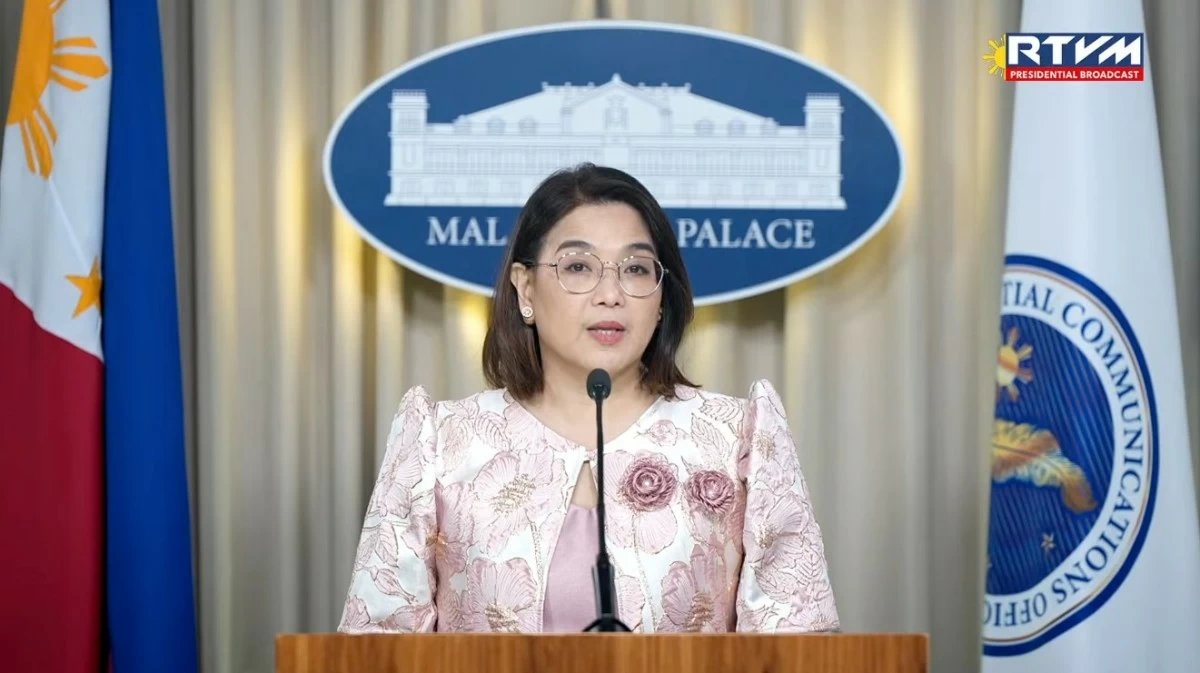
Communications Undersecretary Claire Castro (RTVM)
Malacañang has defended the transfer of former president Rodrigo Duterte to The Hague in the Netherlands, saying it was carried out in accordance with Philippine law and existing international obligations.
Presidential Communications Office (PCO) Undersecretary Claire Castro said this after Duterte, in a signed waiver to the International Criminal Court (ICC) on Feb. 17, claimed that the aircraft used to bring him to The Hague in March last year was funded by the Office of the President.
In a press briefing on Thursday, Feb. 19, Castro cited Republic Act No. 9851 as the legal basis for the government’s actions.
“Ang pagpapadala po sa dating pangulong Duterte sa ICC or sa The Hague ay ayon po sa batas (The sending of former President Duterte to the ICC or to The Hague was in accordance with the law),” she said.
She pointed to Section 17 of RA 9851, which allows the government to dispense with local investigation when a case is already being heard by a state or international tribunal.
“Kapag ang isang kaso o isang complaint ay dinidinig na sa isang state o international tribunal or court, maaari pong i-dispense with na ng gobyernong ito ang anumang pag-iimbestiga at hayaang magpatuloy ang pag-iimbestiga sa nasabing state or international tribunal (When a case or complaint is being heard by a state or international tribunal or court, this government may dispense with its own investigation and allow the proceedings to continue before that state or international tribunal),” she said.
Castro said the government also acted in cooperation with the International Criminal Police Organization (Interpol) and in fulfillment of what she described as a “residual obligation” stemming from the Philippines’ previous membership in the ICC.
“Mayroon din pong residual obligation ang administrasyon na ito upang ipatupad ang dating napagkasunduan na noong tayo pa ay miyembro ng ICC or ng Rome Statute (There is also a residual obligation of this administration to implement what had been agreed upon when we were still members of the ICC or the Rome Statute),” she said.
Castro stressed that while the Philippines no longer recognizes the ICC’s jurisdiction at present, the tribunal may still exercise jurisdiction over alleged crimes committed when the country was still a State Party.
“Hindi man natin kinikilala na may jurisdiction ang ICC ngayon, sa ngayon, pero ang ICC ay nagkaroon ng jurisdiction sa mga aksyon na naganap noong tayo pa ay miyembro (We may not recognize the ICC’s jurisdiction now, at present, but the ICC had jurisdiction over actions that occurred when we were still members),” she said.
Taxpayer funds issue
Asked to respond to Duterte’s claim in a recent ICC filing that the Office of the President funded the private jet that brought him to The Hague and that he was “kidnapped,” the Palace Press Officer maintained that any expenses incurred were lawful.
“Kung taxpayer po ang ginamit dito, ito lang po ay naaayon sa batas dahil gumaganap lang po ang gobyernong ito sa kaniyang katungkulan (If taxpayer money was used, it was in accordance with the law because this government was merely performing its duty),” she said.
Castro, however, said she had no details on the exact cost of the flight.
“Wala po akong detalye sa ngayon (I have no details at the moment),” she said.
The Palace’s remarks came after Duterte formally waived his right to personally attend the confirmation of charges hearing before the ICC Pre-Trial Chamber, scheduled from Feb. 23 to 27.
In a signed waiver dated Feb. 17 at the ICC Detention Centre in The Hague, Duterte said he does not recognize the court’s jurisdiction over him and described his transfer as being done “in flagrant contravention” of Philippine sovereignty.
He also claimed he was forcibly rendered to The Hague and insisted that the allegations of overseeing a policy of extrajudicial killings were “an outrageous lie.”
Duterte said he would not follow the proceedings even through video link and would instead entrust his legal team to challenge the prosecution’s evidence.
The confirmation of charges hearing will determine whether sufficient evidence exists for the case to proceed to a full trial before the ICC.