







Inside Birdjovi's intimate yakitori omakase in Makati
At a nine-seat counter in Makati, fire, timing and conversation shape a multi-course experience built around Japanese yakitori traditions
Published Feb 18, 2026 11:16 am


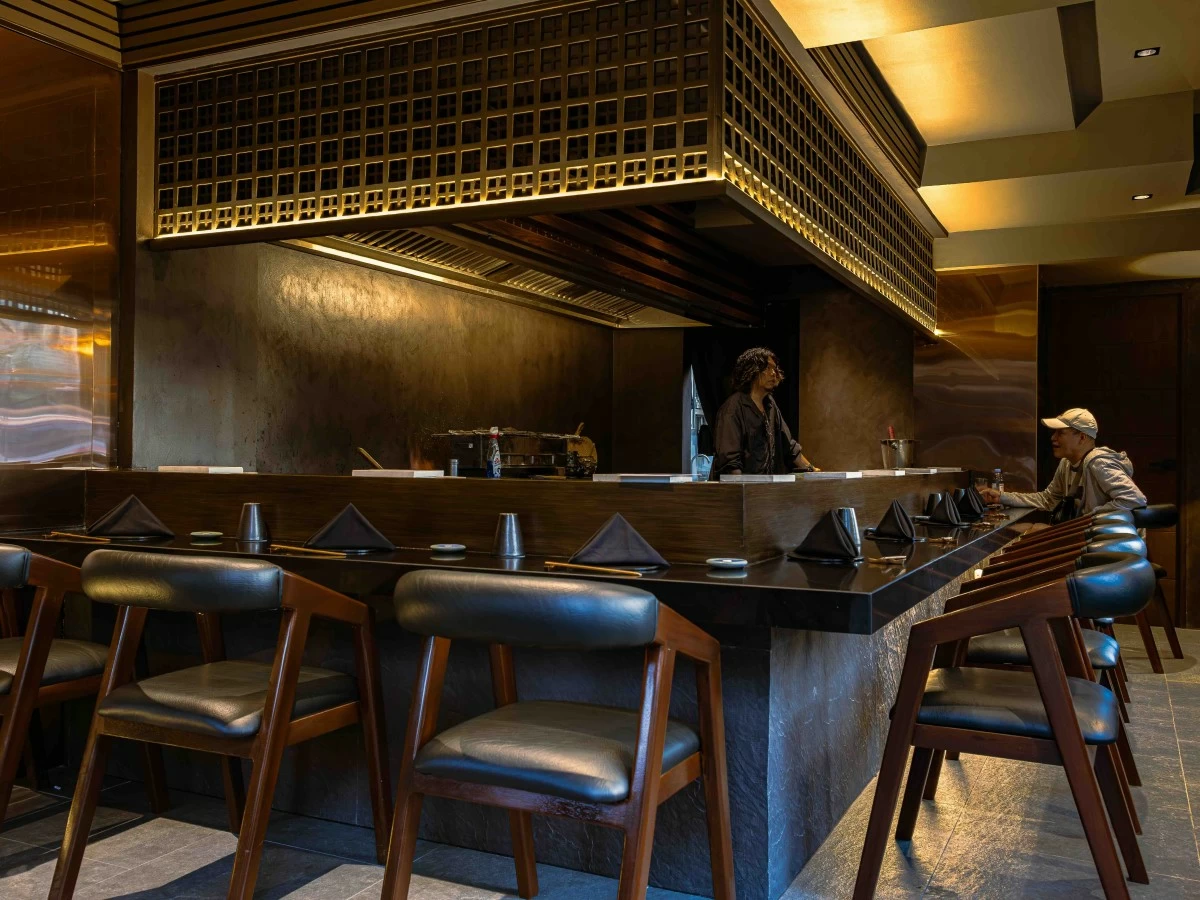
COUNTER CRAFT Takuto Kato, known to guests as Kato-san, works inside Birdjovi, the intimate yakitori omakase space
On a cold evening of Feb. 10, the glow of charcoal and the scent of grilled chicken offered an inviting contrast to the chill outside. Inside Birdjovi, the small dining space is designed for conversation and close attention to the food, making it a fitting setting for an intimate gathering among friends.
The restaurant, tucked inside the Comuna Building in Makati City, presents a focused yakitori omakase experience with only nine counter seats per service. The compact layout places diners directly in front of the grill, where each skewer is prepared and served.
The evening unfolded as a multi-course progression paced around the rhythm of the fire. Each serving arrived moments after leaving the grill, emphasizing texture and temperature rather than theatrics. The setting encouraged patience, with diners watching skewers rotate over glowing charcoal while exchanging conversation.
Birdjovi is led by yakitori master Takuto Kato, who describes the concept as rooted in simplicity and precision. “Yakitori omakase is about serving each skewer at its best moment,” says Kato-san. “We focus on the basics: fire, salt, and timing, keeping everything simple and precise.”
The name itself comes from a personal story. “My child once mispronounced ‘one, two, three,’ and it came out as ‘Birdjovi,’” shares Kato-san. “It's simple, natural sound matched the spirit of yakitori, so it became the name of the restaurant.”
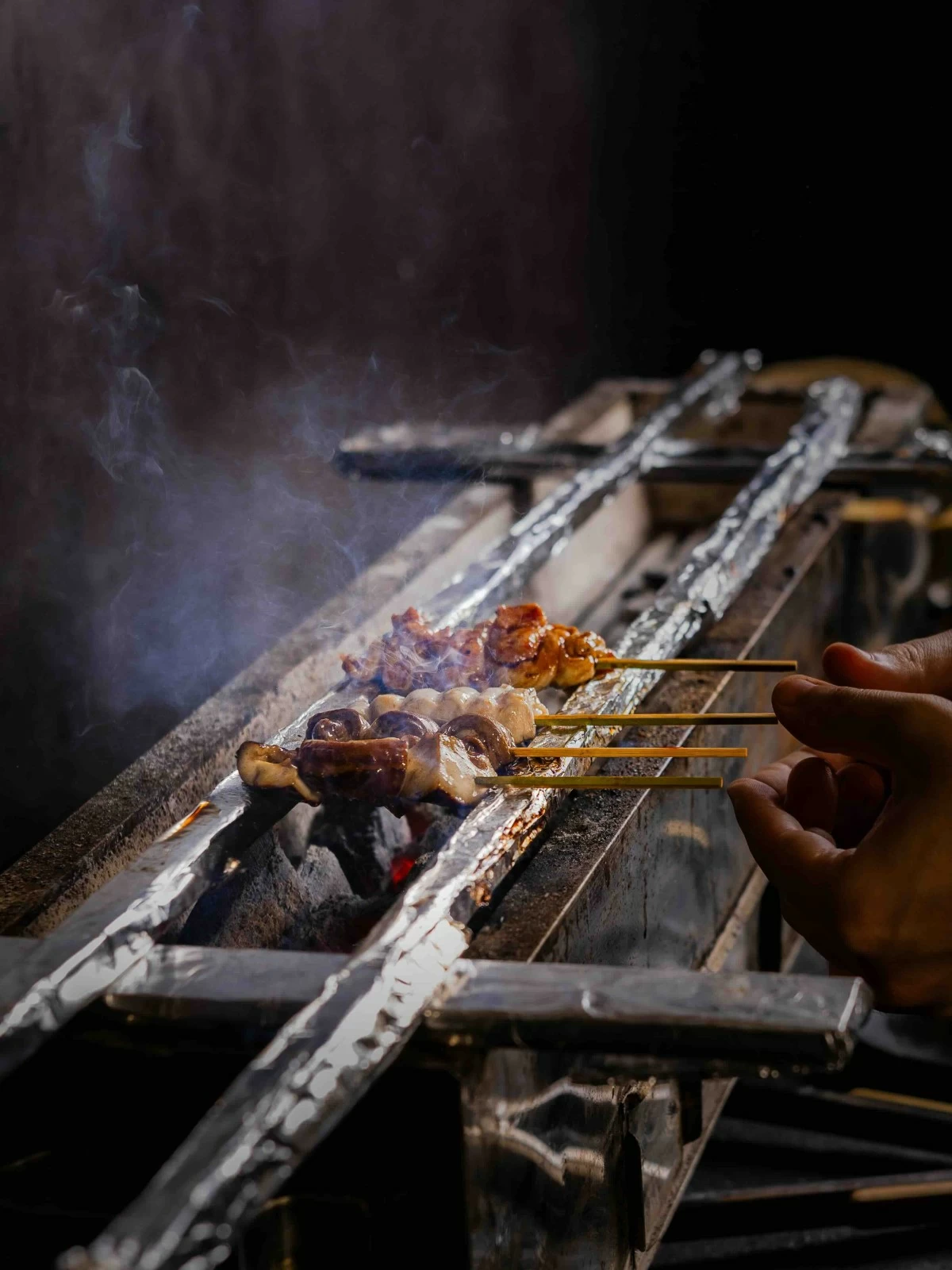
CHARCOAL GLOW Skewers cook over binchotan charcoal, prized for its clean burn and steady heat
Kato-san chose Makati for what he described as its energy and diversity, positioning the restaurant as both refined and approachable. Though grounded in Japanese technique, the experience acknowledges its Manila setting. “While staying true to Japanese yakitori, we adjusted the experience to fit the local setting,” says Kato-san. “The goal is to keep it authentic, yet natural and approachable.”
Each cut of chicken is treated individually, grilled over binchotan charcoal sourced from Laos and Vietnam. The charcoal burns hot and clean, producing a gentle smoke that allows subtle flavors to emerge. Seasoning is restrained, relying on Himalayan pink salt and Okinawa salt to enhance rather than dominate.
From the counter, diners can observe every movement. “The counter lets guests enjoy the food fresh off the grill while feeling close to the cooking process,” Kato-san explains. The effect is quietly theatrical without becoming performative, with the attention fixed on technique and timing.
Kato-san, a self-taught cook who began practicing yakitori six years ago, frames the restaurant as an ongoing evolution of his craft. “I express my own style of yakitori here through experience and continuous refinement,” he shares.
As the multi-course meal progressed through different cuts and textures, the atmosphere remained calm and unhurried. The small space, warmed by the grill and filled with the subtle aroma of charcoal, felt particularly suited to the cool weather outside.
For Kato-san, the experience extends beyond the plate. “I hope guests can feel the character of charcoal cooking and the hospitality at the counter,” he says. “More than just a meal, I want it to be an experience they enjoy as a whole.”
By the end of the evening, the cold night in Makati seemed distant, replaced by the lingering warmth of charcoal, conversation, and carefully timed skewers.
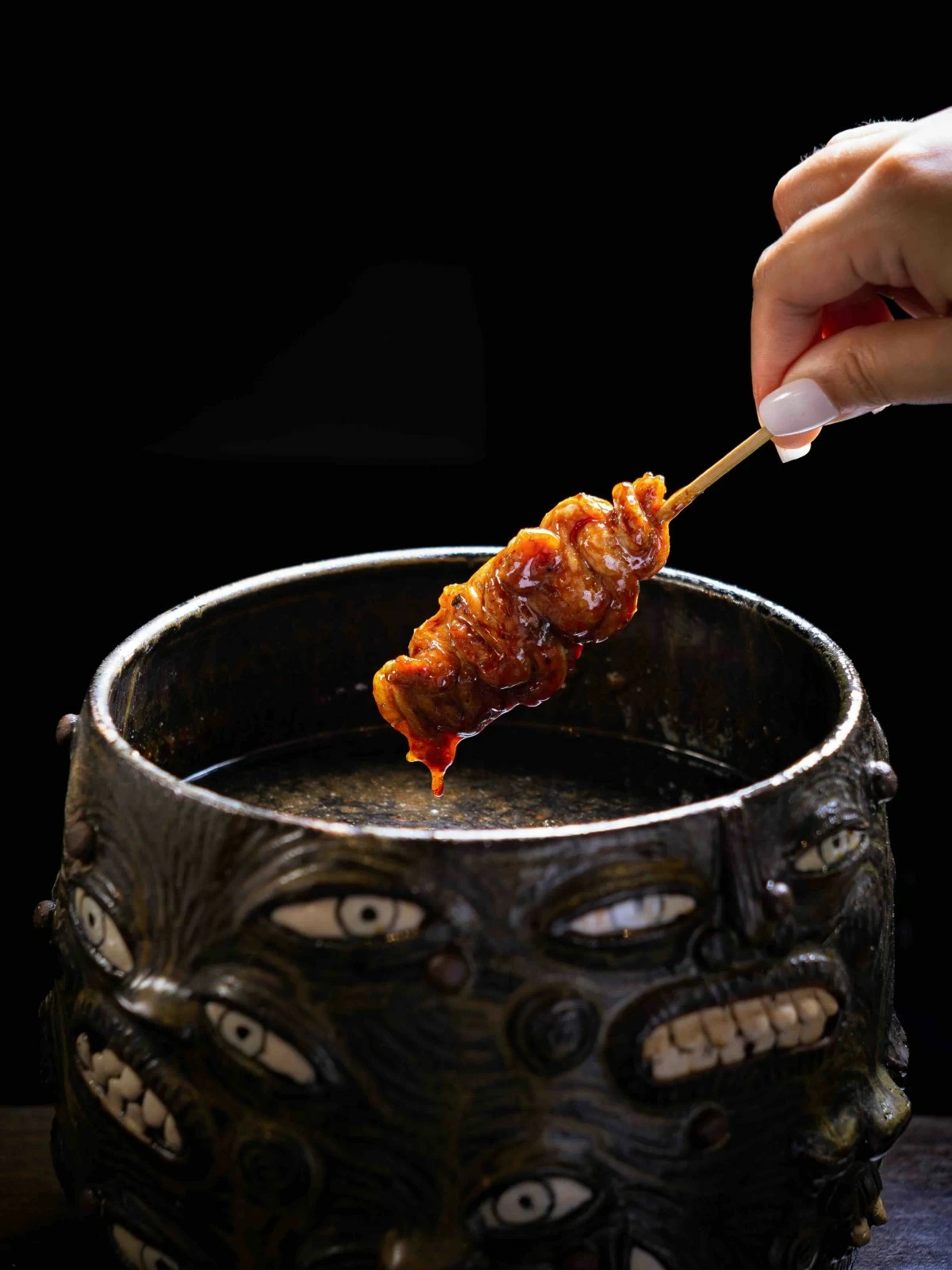
FRESH OFF FIRE A freshly grilled yakitori chicken skewer is served moments after leaving the grill