

ADVERTISEMENT

'Why the World Bank?': Group sounds alarm over possible mass layoffs during CHED review

ACT Philippines raises concerns over 'privatization, contractualization, and rightsizing' under Marcos administration

Published Feb 10, 2026 04:29 pm
A group of education workers on Tuesday, February 10, sounded the alarm over potential mass layoffs and the intensification of contractualization and privatization policies amid a planned World Bank-led review of the Commission on Higher Education (CHED).
Alliance of Concerned Teachers (ACT) Philippines Vice Chairperson Prof. Carl Marc Ramota, in a statement, expressed concern over the international organization’s role, noting the World Bank’s history of promoting neoliberal policies that undermine labor rights.
“Why the World Bank? The choice is suspicious at the least,” Ramota said, highlighting the institution’s track record of promoting “neoliberal, anti-labor policies here and abroad.”
CHED–World Bank partnership
In a statement issued February 4, CHED announced that it had partnered with the World Bank to conduct a comprehensive functional review of its operations, signaling a major step toward more efficient and effective higher education governance in the Philippines.
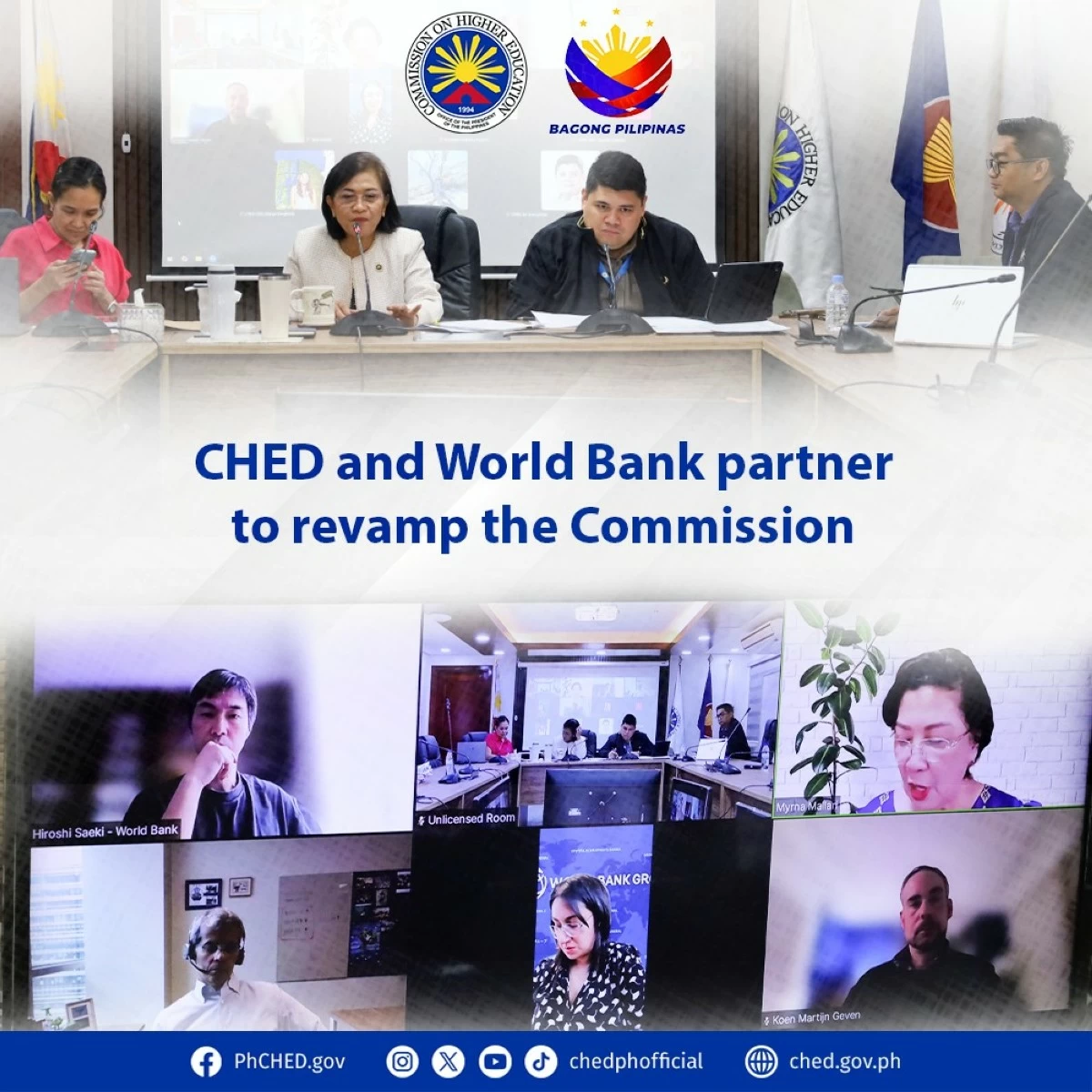
: ACT Philippines warns that the planned World Bank-led review of CHED could trigger mass layoffs and intensified privatization, urging the government to prioritize workers’ rights and public service. (CHED photo)
CHED said the initiative was discussed on January 30 during a meeting led by CHED Chairperson Dr. Shirley C. Agrupis, together with CHED Commissioners, Directors, and the World Bank team led by Lead Economist Tara Beteille.
The review aims to examine CHED’s structure, staffing, and core functions to ensure they align with the Commission’s mandate and evolving responsibilities.
As part of the review, CHED will assess staff qualifications, map critical workflows, and identify overlaps with other agencies.
The analysis also seeks to improve quality assurance and regulatory compliance across approximately 2,000 higher education institutions serving 5.4 million students nationwide, CHED said.
Agrupis stressed the importance of matching staff competencies to their roles to maintain efficient and effective public service.
She also highlighted that collaboration with the World Bank supports CHED’s mission of stronger governance, smarter systems, and public service that truly delivers, anchored in the ACHIEVE Agenda.
Review could trigger mass layoffs
ACT warned that such measures often result in workforce reduction, suppression of wages and benefits, and weakened job security, all under the guise of austerity and bureaucratic rationalization.
Ramota explained that these policies could lead to significant job insecurity for government employees.
“Nangangahulugan ng tanggalan at kawalan ng kasiguruhan sa trabaho ang polisiya ng rasyunalisasyon na sa esensya ay pagtitipid (The policy of rationalization, which in essence is cost-cutting, means layoffs and job insecurity),” he said.
Ramota alleged that this approach reflects earlier recommendations from the World Bank and other International Financial Institutions that have not benefited countries in the Global South, including the Philippines.
ACT also criticized the planned CHED review within the broader context of the Marcos administration’s rightsizing or optimization program, describing it as a framework that exploits government workers while weakening public institutions.
“Overworked ang mga empleyado at laganap ang contractualization sa CHED at sa maraming ahensiya ng pamahalaan (Employees are overworked and contractualization is widespread in CHED and in many government agencies),” Ramota said, noting that the solution is not rightsizing or reorganization, which would only further burden remaining staff.
Meanwhile, the group pointed out the contradiction of pursuing cost-saving measures while billions of pesos are lost to corruption.
Ramota urged policymakers to focus on strengthening public service and upholding workers’ rights, rather than relying on neoliberal approaches like World Bank reviews and rightsizing programs.
“Ang unang dapat konsultahin ng gobyerno ay ang mga kawani na araw-araw pumapasan sa bigat ng trabaho at may kongkretong pag-unawa sa mga problemang kinakaharap ng ahensya (The first ones the government should consult are the employees who carry the weight of work every day and have a concrete understanding of the problems faced by the agency),” he added. 

Related Tags

Keywords: CHED CHED review World Bank ACT Philippines mass layoffs
ADVERTISEMENT
.most-popular .layout-ratio{ padding-bottom: 79.13%; } @media (min-width: 768px) and (max-width: 1024px) { .widget-title { font-size: 15px !important; } }

{{ articles_filter_1561_widget.title }}

.most-popular .layout-ratio{ padding-bottom: 79.13%; } @media (min-width: 768px) and (max-width: 1024px) { .widget-title { font-size: 15px !important; } }

{{ articles_filter_1562_widget.title }}

.most-popular .layout-ratio{ padding-bottom: 79.13%; } @media (min-width: 768px) and (max-width: 1024px) { .widget-title { font-size: 15px !important; } }

{{ articles_filter_1563_widget.title }}

{{ articles_filter_1564_widget.title }}

.mb-article-details { position: relative; } .mb-article-details .article-body-preview, .mb-article-details .article-body-summary{ font-size: 17px; line-height: 30px; font-family: "Libre Caslon Text", serif; color: #000; } .mb-article-details .article-body-preview iframe , .mb-article-details .article-body-summary iframe{ width: 100%; margin: auto; } .read-more-background { background: linear-gradient(180deg, color(display-p3 1.000 1.000 1.000 / 0) 13.75%, color(display-p3 1.000 1.000 1.000 / 0.8) 30.79%, color(display-p3 1.000 1.000 1.000) 72.5%); position: absolute; height: 200px; width: 100%; bottom: 0; display: flex; justify-content: center; align-items: center; padding: 0; } .read-more-background a{ color: #000; } .read-more-btn { padding: 17px 45px; font-family: Inter; font-weight: 700; font-size: 18px; line-height: 16px; text-align: center; vertical-align: middle; border: 1px solid black; background-color: white; } .hidden { display: none; }
function initializeAllSwipers() { // Get all hidden inputs with cms_article_id document.querySelectorAll('[id^="cms_article_id_"]').forEach(function (input) { const cmsArticleId = input.value; const articleSelector = '#article-' + cmsArticleId + ' .body_images'; const swiperElement = document.querySelector(articleSelector); if (swiperElement && !swiperElement.classList.contains('swiper-initialized')) { new Swiper(articleSelector, { loop: true, pagination: false, navigation: { nextEl: '#article-' + cmsArticleId + ' .swiper-button-next', prevEl: '#article-' + cmsArticleId + ' .swiper-button-prev', }, }); } }); } setTimeout(initializeAllSwipers, 3000); const intersectionObserver = new IntersectionObserver( (entries) => { entries.forEach((entry) => { if (entry.isIntersecting) { const newUrl = entry.target.getAttribute("data-url"); if (newUrl) { history.pushState(null, null, newUrl); let article = entry.target; // Extract metadata const author = article.querySelector('.author-section').textContent.replace('By', '').trim(); const section = article.querySelector('.section-info ').textContent.replace(' ', ' '); const title = article.querySelector('.article-title h1').textContent; // Parse URL for Chartbeat path format const parsedUrl = new URL(newUrl, window.location.origin); const cleanUrl = parsedUrl.host + parsedUrl.pathname; // Update Chartbeat configuration if (typeof window._sf_async_config !== 'undefined') { window._sf_async_config.path = cleanUrl; window._sf_async_config.sections = section; window._sf_async_config.authors = author; } // Track virtual page view with Chartbeat if (typeof pSUPERFLY !== 'undefined' && typeof pSUPERFLY.virtualPage === 'function') { try { pSUPERFLY.virtualPage({ path: cleanUrl, title: title, sections: section, authors: author }); } catch (error) { console.error('ping error', error); } } // Optional: Update document title if (title && title !== document.title) { document.title = title; } } } }); }, { threshold: 0.1 } ); function showArticleBody(button) { const article = button.closest("article"); const summary = article.querySelector(".article-body-summary"); const body = article.querySelector(".article-body-preview"); const readMoreSection = article.querySelector(".read-more-background"); // Hide summary and read-more section summary.style.display = "none"; readMoreSection.style.display = "none"; // Show the full article body body.classList.remove("hidden"); } document.addEventListener("DOMContentLoaded", () => { let loadCount = 0; // Track how many times articles are loaded const offset = [1, 2, 3, 4, 5, 6, 7, 8, 9, 10]; // Offset values const currentUrl = window.location.pathname.substring(1); let isLoading = false; // Prevent multiple calls if (!currentUrl) { console.log("Current URL is invalid."); return; } const sentinel = document.getElementById("load-more-sentinel"); if (!sentinel) { console.log("Sentinel element not found."); return; } function isSentinelVisible() { const rect = sentinel.getBoundingClientRect(); return ( rect.top < window.innerHeight && rect.bottom >= 0 ); } function onScroll() { if (isLoading) return; if (isSentinelVisible()) { if (loadCount >= offset.length) { console.log("Maximum load attempts reached."); window.removeEventListener("scroll", onScroll); return; } isLoading = true; const currentOffset = offset[loadCount]; window.loadMoreItems().then(() => { let article = document.querySelector('#widget_1690 > div:nth-last-of-type(2) article'); intersectionObserver.observe(article) loadCount++; }).catch(error => { console.error("Error loading more items:", error); }).finally(() => { isLoading = false; }); } } window.addEventListener("scroll", onScroll); });

Sign up by email to receive news.