






Manila Bulletin
 Philippines
National
Classroom shortage set to worsen as 51,000 school buildings age out by 2028
Philippines
National
Classroom shortage set to worsen as 51,000 school buildings age out by 2028
Philippines
National
Classroom shortage set to worsen as 51,000 school buildings age out by 2028
Classroom shortage set to worsen as 51,000 school buildings age out by 2028
EDCOM II urges long-term school infrastructure plan amid looming 'replacement challenge' from aging classrooms
Published Feb 10, 2026 02:11 pm


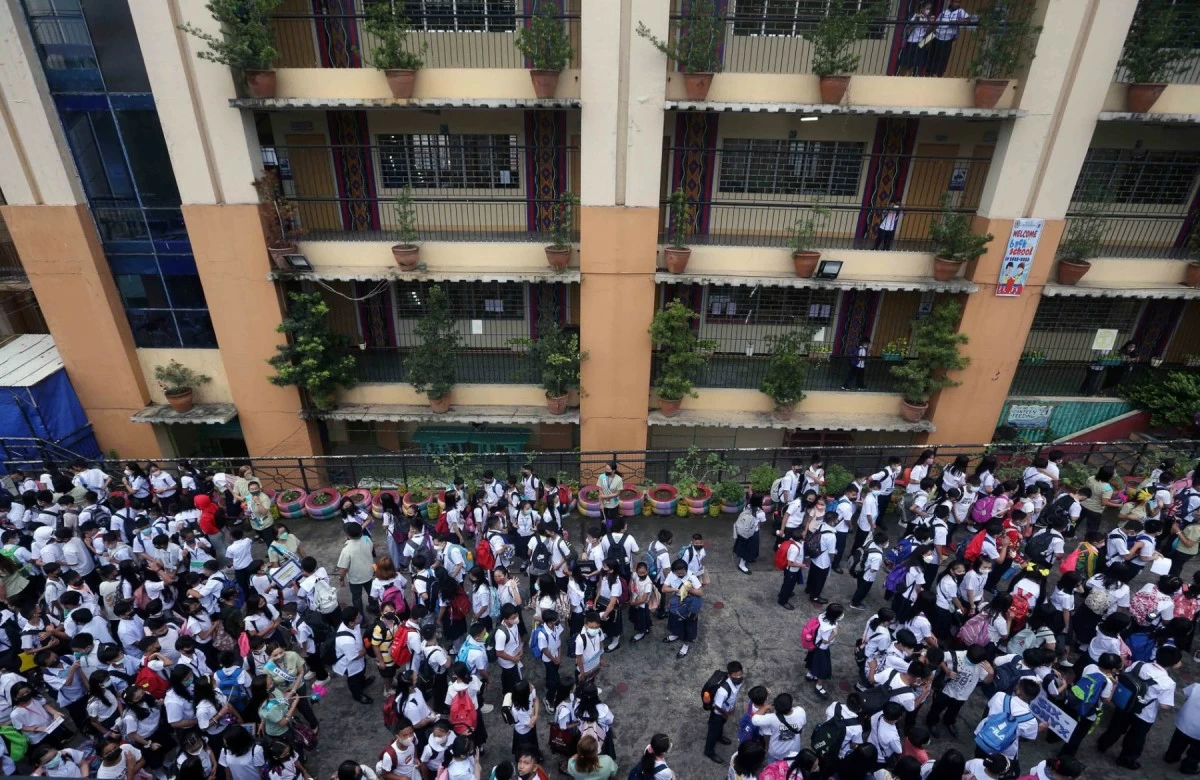
Thousands of aging public school buildings may soon be condemned, worsening the country’s classroom shortage and prompting calls for long-term infrastructure reforms. (Manila Bulletin / file)
The country’s classroom shortage is expected to worsen as around 51,000 public school buildings are projected to age out by 2028, with the Second Congressional Commission on Education (EDCOM II) warning that the Department of Education (DepEd) could face a major “replacement challenge” unless a long-term, sustainable school infrastructure plan is implemented to address aging classrooms and persistent overcrowding.
In a statement issued on February 9, EDCOM II said the Philippines is facing a deepening public school infrastructure crisis, with thousands of classrooms projected to be condemned within three years. This would further compound the country’s already severe classroom shortage, currently estimated at 165,443 units.
Citing its Final Report titled “Turning Point: A Decade of Necessary Reform (2026–2035),” EDCOM II warned that the growing classroom backlog is being worsened by the rapid aging and deterioration of existing school buildings nationwide.
Aging school buildings worsen classroom backlog
EDCOM II noted that under DepEd Order No. 6, s. 2021, standard public school classrooms are designed to last 25 years.
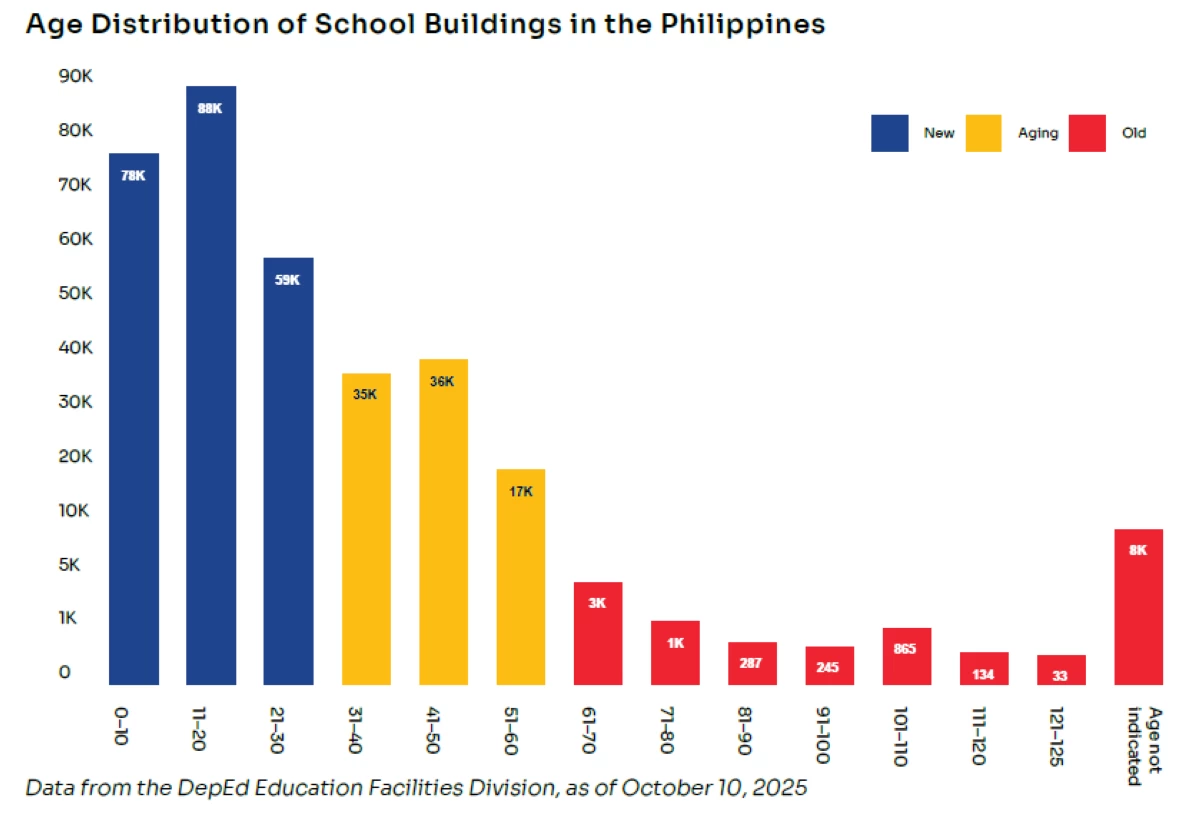
However, administrative data cited by the Commission show that out of approximately 329,716 school buildings nationwide, about 122,518 have already exceeded their intended design life.
Within this aging inventory, 51,222 classrooms are expected to reach 50 years old by 2028, making them candidates for condemnation due to structural risks, wear and tear, and exposure to earthquakes and typhoons.
(Courtesy of EDCOM 2 / DepEd)
EDCOM II described this as a looming “replacement challenge” that threatens to widen the existing classroom gap.
The Commission also cited a Philippine Institute for Development Studies (PIDS) study by Fellow Michael Abrigo, which supports the projections and underscores the urgency of adopting a long-term, risk-informed School Infrastructure Plan.
Crisis extends beyond current shortages
EDCOM II noted that the current estimate of 165,000 lacking classrooms does not yet fully account for damages caused by recent natural disasters, further straining public school capacity.
To address the shortage, EDCOM II said solving the classroom problem will “take more than one year” and “more than one administration,” estimating that six to ten years of sustained high-level funding will be needed to close the infrastructure gap.
Diversifying construction and delivery methods
To meet the massive demand, EDCOM II explored alternatives beyond traditional procurement by the Department of Public Works and Highways (DPWH), including greater involvement of Local Government Units (LGUs) and Public-Private Partnerships (PPPs).
The Commission stressed that transparency and efficiency must guide the process, emphasizing that classrooms should be built “at the right price, through the right process, and at the right time.”
EDCOM II added that the government will not tolerate wide price discrepancies across different construction modalities, noting that all classrooms follow a single national standard.
DepEd ramps up innovative solutions
In response, EDCOM II said DepEd has begun rolling out a diversified strategy to accelerate classroom delivery.
The agency aims to start constructing 26,000 classrooms in 2026 and has launched the Project Bukas portal to promote transparency in the upcoming PPP School Infrastructure Project (PSIP) 3, which targets more than 16,000 classrooms under an availability payment model.
EDCOM II added that DepEd is also testing faster interventions to ease congestion, including leasing private buildings, purchasing foreclosed properties, expanding the voucher program, and piloting blended learning modalities.
Classroom leasing has already been piloted in Pila, Laguna as a short-term decongestion measure.
READ:
EDCOM II, created under Republic Act No. 11899, is mandated to conduct a comprehensive assessment of the Philippine education sector and recommend reforms to address what it describes as a long-standing education crisis.
The full PIDS study cited in the report, “Low Fertility, Ageing Buildings, and School Congestion in the Philippines: Tailwinds, Headwinds, and Some Policy Options,” is available through EDCOM II’s official publications.
RELATED STORY: