ADVERTISEMENT

DepEd ramps up completion of unfinished classrooms, expands delivery options for 2026

Published Feb 5, 2026 08:21 pm
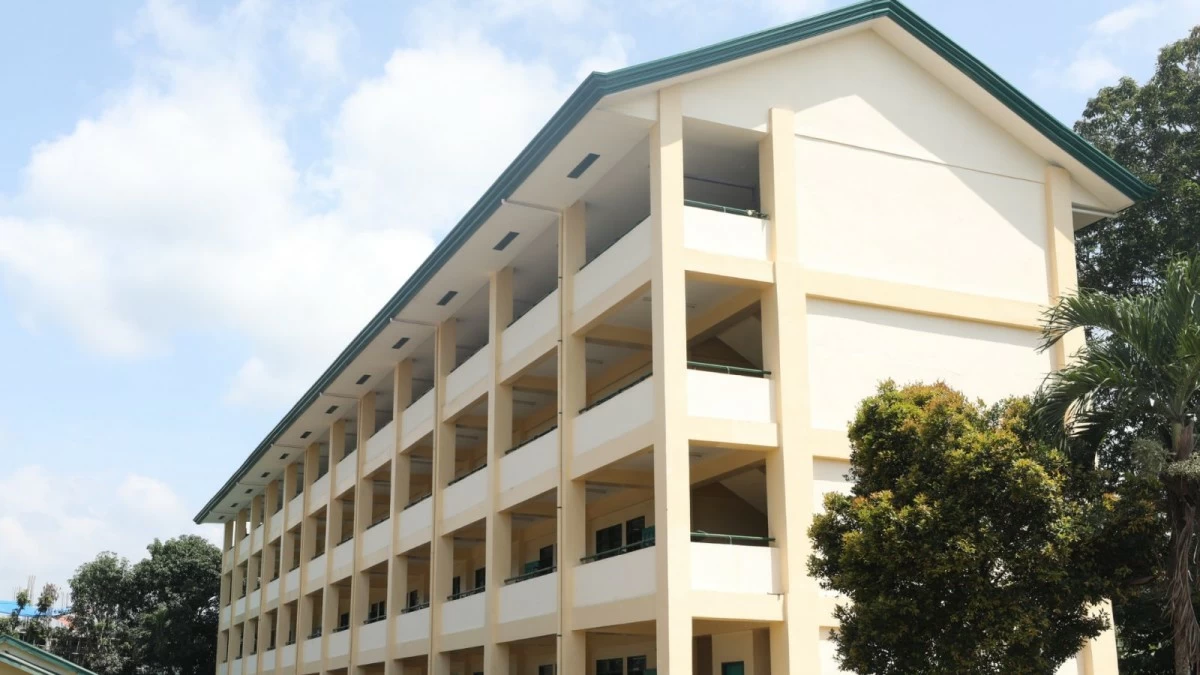
The Department of Education (DepEd) emphasized that completing unfinished classrooms and expanding delivery options are crucial to meeting the country’s education infrastructure needs. (DepEd photo)
The Department of Education (DepEd) on Thursday, February 5, announced it is accelerating efforts to complete unfinished classroom projects nationwide while preparing to broaden delivery approaches in 2026 to address persistent gaps in public school infrastructure.
In a statement, DepEd Secretary Sonny Angara said that over 8,000 classroom projects were simultaneously underway for 2024 and 2025, with 3,600 already completed by the Department of Public Works and Highways (DPWH).
The remaining classrooms are being closely monitored to ensure timely completion and turnover for learners, DepEd added.
“Batay sa pinakahuling datos, lagpas 8,000 classroom projects ang sabay-sabay na tinatrabaho para sa 2024 at 2025 (Based on the latest data, more than 8,000 classroom projects are being worked on simultaneously for 2024 and 2025),” Angara said.
“Nasa 3,600 classrooms na ang natapos ng DPWH, at ang natitira ay patuloy na tinututukan para agad makumpleto at magamit ng ating mga mag-aaral (The DPWH has already completed 3,600 classrooms, and the remaining ones are continuously being monitored to ensure they are completed quickly and made available for our students),” he added.
DepEd said it maintains an inventory of unfinished classrooms from previous years.
To tackle the backlog, the agency proposed P3.192 billion under the 2026 national budget to complete 3,614 classrooms. Congress approved P2.282 billion, which DepEd said is sufficient to complete 2,067 classrooms.
Despite funding constraints, Angara emphasized that DepEd is implementing concrete measures to fast-track construction in line with the President’s directive to prioritize school infrastructure and learner safety.
As part of this initiative, DepEd and DPWH are conducting nationwide validation activities across 384 schools with unfinished or pending classroom projects. The validation assesses the physical status, remaining scope of work, funding gaps, and site readiness to ensure classrooms are prioritized for immediate completion.
Looking ahead, DepEd is also preparing more flexible delivery options for 2026, including increased participation from local government units (LGUs) and public-private partnerships (PPPs). Angara said these approaches aim to accelerate classroom availability and better match the needs of individual communities.
“Sa mga nagdaang taon, sabay-sabay naming inaayos ang mga naiwan at hindi natapos na silid-aralan (In recent years, we have been simultaneously addressing classrooms that were left unfinished),” Angara said.
“Para sa 2026 pataas, mas pinalalawak namin ang mga opsyon—kasama ang mas aktibong partisipasyon ng LGUs at iba pang flexible approaches tulad ng public-private partnerships—para mas mabilis at mas akma sa pangangailangan ng bawat komunidad ang solusyon (Starting 2026 and beyond, we are expanding the options—this includes more active participation from LGUs and other flexible approaches such as public-private partnerships—so that solutions can be delivered faster and better aligned with the needs of each community),” he added.
READ: 
https://mb.com.ph/2026/02/05/deped-to-fast-track-classroom-construction-through-private-sector-collaboration-technology
On February 4, Angara also met with mayors from the National Capital Region (NCR) to discuss guidelines for school building projects under the 2026 General Appropriations Act, including LGU eligibility and alternative solutions such as leasing and repairing existing facilities.
Discussions are ongoing regarding DPWH’s new construction targets for 2026, DepEd said. Angara noted that approximately 1,500 to 2,000 classrooms are expected to be built under the new construction program.
“Mayroon ding naka-program para sa 2026, bagama’t patuloy pa itong pinag-uusapan (There are also projects programmed for 2026, although discussions are still ongoing),” Angara said.
Citing DPWH Secretary Vince Dizon, Angara noted that the target is to build around 1,500 to 2,000 classrooms under new construction for 2026. 
RELATED STORY: 
https://mb.com.ph/2026/02/05/165000-classroom-backlog-deped-taps-lgus-to-speed-up-school-infrastructure

Related Tags

DepEd DepEd Secretary Sonny Angara DepEd classroom construction public school infrastructure unfinished classrooms education facilities 2026 school building projects
ADVERTISEMENT
.most-popular .layout-ratio{ padding-bottom: 79.13%; } @media (min-width: 768px) and (max-width: 1024px) { .widget-title { font-size: 15px !important; } }

{{ articles_filter_1561_widget.title }}

.most-popular .layout-ratio{ padding-bottom: 79.13%; } @media (min-width: 768px) and (max-width: 1024px) { .widget-title { font-size: 15px !important; } }

{{ articles_filter_1562_widget.title }}

.most-popular .layout-ratio{ padding-bottom: 79.13%; } @media (min-width: 768px) and (max-width: 1024px) { .widget-title { font-size: 15px !important; } }

{{ articles_filter_1563_widget.title }}

{{ articles_filter_1564_widget.title }}

.mb-article-details { position: relative; } .mb-article-details .article-body-preview, .mb-article-details .article-body-summary{ font-size: 17px; line-height: 30px; font-family: "Libre Caslon Text", serif; color: #000; } .mb-article-details .article-body-preview iframe , .mb-article-details .article-body-summary iframe{ width: 100%; margin: auto; } .read-more-background { background: linear-gradient(180deg, color(display-p3 1.000 1.000 1.000 / 0) 13.75%, color(display-p3 1.000 1.000 1.000 / 0.8) 30.79%, color(display-p3 1.000 1.000 1.000) 72.5%); position: absolute; height: 200px; width: 100%; bottom: 0; display: flex; justify-content: center; align-items: center; padding: 0; } .read-more-background a{ color: #000; } .read-more-btn { padding: 17px 45px; font-family: Inter; font-weight: 700; font-size: 18px; line-height: 16px; text-align: center; vertical-align: middle; border: 1px solid black; background-color: white; } .hidden { display: none; }
function initializeAllSwipers() { // Get all hidden inputs with cms_article_id document.querySelectorAll('[id^="cms_article_id_"]').forEach(function (input) { const cmsArticleId = input.value; const articleSelector = '#article-' + cmsArticleId + ' .body_images'; const swiperElement = document.querySelector(articleSelector); if (swiperElement && !swiperElement.classList.contains('swiper-initialized')) { new Swiper(articleSelector, { loop: true, pagination: false, navigation: { nextEl: '#article-' + cmsArticleId + ' .swiper-button-next', prevEl: '#article-' + cmsArticleId + ' .swiper-button-prev', }, }); } }); } setTimeout(initializeAllSwipers, 3000); const intersectionObserver = new IntersectionObserver( (entries) => { entries.forEach((entry) => { if (entry.isIntersecting) { const newUrl = entry.target.getAttribute("data-url"); if (newUrl) { history.pushState(null, null, newUrl); let article = entry.target; // Extract metadata const author = article.querySelector('.author-section').textContent.replace('By', '').trim(); const section = article.querySelector('.section-info ').textContent.replace(' ', ' '); const title = article.querySelector('.article-title h1').textContent; // Parse URL for Chartbeat path format const parsedUrl = new URL(newUrl, window.location.origin); const cleanUrl = parsedUrl.host + parsedUrl.pathname; // Update Chartbeat configuration if (typeof window._sf_async_config !== 'undefined') { window._sf_async_config.path = cleanUrl; window._sf_async_config.sections = section; window._sf_async_config.authors = author; } // Track virtual page view with Chartbeat if (typeof pSUPERFLY !== 'undefined' && typeof pSUPERFLY.virtualPage === 'function') { try { pSUPERFLY.virtualPage({ path: cleanUrl, title: title, sections: section, authors: author }); } catch (error) { console.error('ping error', error); } } // Optional: Update document title if (title && title !== document.title) { document.title = title; } } } }); }, { threshold: 0.1 } ); function showArticleBody(button) { const article = button.closest("article"); const summary = article.querySelector(".article-body-summary"); const body = article.querySelector(".article-body-preview"); const readMoreSection = article.querySelector(".read-more-background"); // Hide summary and read-more section summary.style.display = "none"; readMoreSection.style.display = "none"; // Show the full article body body.classList.remove("hidden"); } document.addEventListener("DOMContentLoaded", () => { let loadCount = 0; // Track how many times articles are loaded const offset = [1, 2, 3, 4, 5, 6, 7, 8, 9, 10]; // Offset values const currentUrl = window.location.pathname.substring(1); let isLoading = false; // Prevent multiple calls if (!currentUrl) { console.log("Current URL is invalid."); return; } const sentinel = document.getElementById("load-more-sentinel"); if (!sentinel) { console.log("Sentinel element not found."); return; } function isSentinelVisible() { const rect = sentinel.getBoundingClientRect(); return ( rect.top < window.innerHeight && rect.bottom >= 0 ); } function onScroll() { if (isLoading) return; if (isSentinelVisible()) { if (loadCount >= offset.length) { console.log("Maximum load attempts reached."); window.removeEventListener("scroll", onScroll); return; } isLoading = true; const currentOffset = offset[loadCount]; window.loadMoreItems().then(() => { let article = document.querySelector('#widget_1690 > div:nth-last-of-type(2) article'); intersectionObserver.observe(article) loadCount++; }).catch(error => { console.error("Error loading more items:", error); }).finally(() => { isLoading = false; }); } } window.addEventListener("scroll", onScroll); });

Sign up by email to receive news.