

ADVERTISEMENT

Salt of the earth: How asin tibuok keeps Bohol's soul intact

Centuries-old salt-making tradition earns UNESCO recognition, revitalizing pride and purpose in Bohol's coastal communities—with the Manila Bulletin chronicling its rise from near-oblivion

Published Jan 30, 2026 06:32 pm
In a barangay along the southern coast of Bohol, the air hangs heavy with smoke and sea. Beneath a stilted hut, rows of clay pots sit atop glowing embers. Inside each pot, seawater—once steeped in coconut ash—slowly simmers into a milky brine. Hours pass. What remains is no ordinary seasoning, but a relic of the past molded by hand and fire: asin tibuok, the island’s ancient “whole salt.”
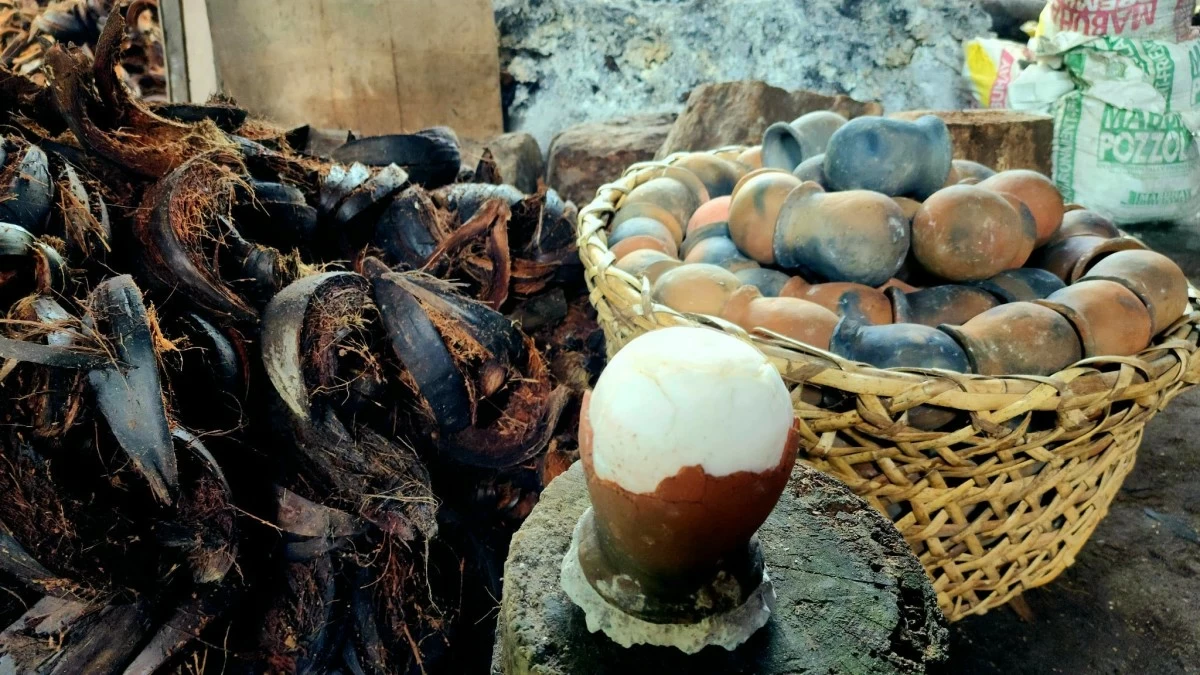
SALTED LEGACY A rare view of asin tibuok, the iconic Boholano “unbroken salt,” shaped by fire and tradition in clay pots unique to Alburquerque’s coastal artisans.
Nearly lost to modernity, asin tibuok now finds itself in the international spotlight. In December 2025, UNESCO inscribed the practice into its List of Intangible Cultural Heritage in Need of Urgent Safeguarding, the first Philippine food tradition to receive such an honor.
But long before the acclaim, and long before tourists marveled at its “dinosaur egg” shape and smoky tang, asin tibuok was simply the lifeblood of families in Alburquerque, Bohol. For generations, it was both currency and craft, passed down quietly from parent to child, often in silence but always with care.
A tradition fired by time
Asin tibuok begins not with the sea, but with the coconut—dried husks steeped in saltwater over weeks, then burned into charcoal. The resulting ash is rinsed and filtered, releasing a deeply saline solution. The brine is then boiled slowly in terracotta pots—kawa—until it hardens into a salt dome, fused to the clay vessel itself.
The process is slow, physically grueling, and highly dependent on climate and patience. It yields little. Yet it is a masterwork of ecological balance, using local materials sustainably and without waste.
Every step requires community: husk gatherers, pot makers, brine boilers. As modern salt flooded markets and cheaper imports displaced traditional methods, only a few elders kept the fire alive.
Their persistence paid off.
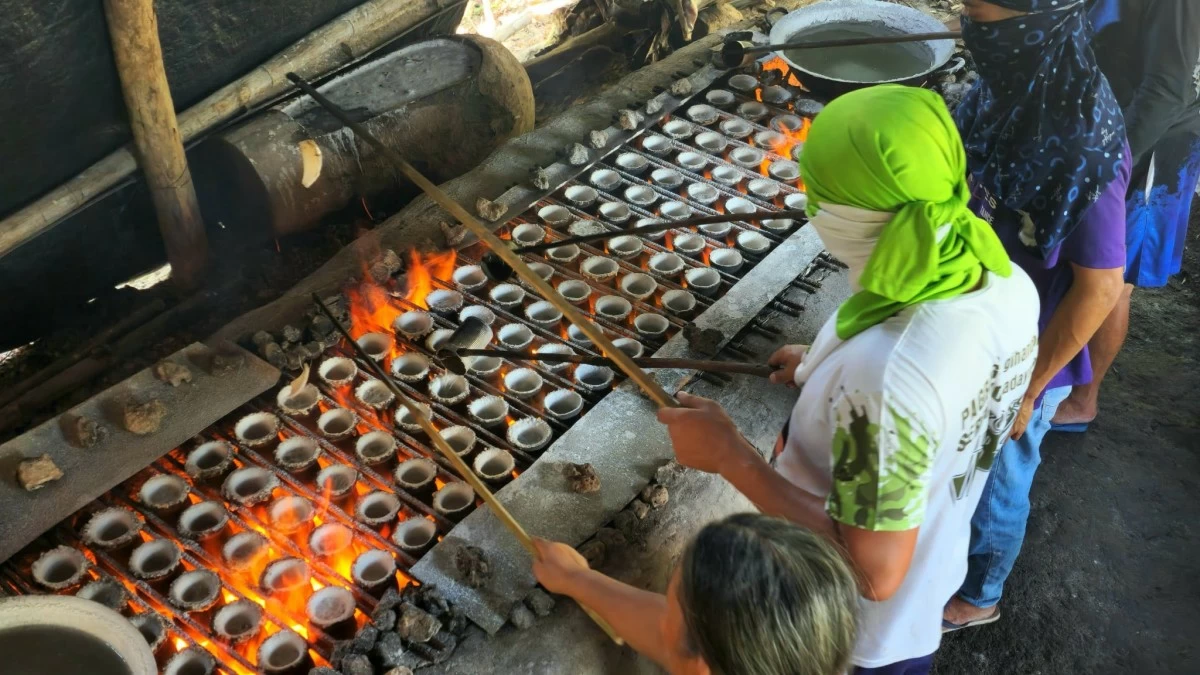
CRAFT IN FLAME Artisans prepare the coconut-husk ash and brine used in the time-honored process of making asin tibuok, a salt tradition inscribed in UNESCO’s heritage list
Cultural anchor in Bohol
The UNESCO recognition carries weight for communities like Alburquerque. Artisans here, often underrecognized, now find their work treated with dignity and importance. Cooperatives have begun to form, and younger Boholanos are showing renewed interest in apprenticing under elder salt makers.
As the National Commission for Culture and the Arts (NCCA) noted in its address, the recognition affirms “the centuries-old wisdom passed down through our ancestors.” It is a victory not just for a product, but for a people long overshadowed by industry and convenience.
In Bohol, asin tibuok is more than condiment, it is identity. It flavored the meals of ancestors, preserved fish through lean seasons, and was once traded inland like gold. To restore its place is to revive a thread of cultural memory still vivid in the island’s oral histories.
A future bound in clay
Yet the inscription on a UNESCO list is not a guarantee of survival. Like the fires under the pots, this tradition must be tended. Clay pot supply chains remain fragile. Coastal changes and tourism-driven development pose risks. Without economic incentives and cultural transmission, heritage can slip.
The NCCA, alongside the Bohol provincial government, has initiated programs to help communities safeguard asin tibuok through education, subsidies, and intergenerational workshops. But the heart of the work remains in the homes and hands of the salt makers themselves.
There is dignity in the daily labor of turning seawater and ash into something essential. And there is grace in knowing that each dome of salt, shaped by heat and heritage, contains more than sodium—it holds memory, struggle, and place.
As the Manila Bulletin continues its legacy of documenting the Philippines’ cultural story, asin tibuok stands as a reminder that sometimes the most powerful narratives come not from the loudest voices, but from the quiet simmer of pots in a Boholano hut—where history is made, one grain at a time.

Related Tags

MB126 Asin Tibuok
ADVERTISEMENT
.most-popular .layout-ratio{ padding-bottom: 79.13%; } @media (min-width: 768px) and (max-width: 1024px) { .widget-title { font-size: 15px !important; } }

{{ articles_filter_1561_widget.title }}

.most-popular .layout-ratio{ padding-bottom: 79.13%; } @media (min-width: 768px) and (max-width: 1024px) { .widget-title { font-size: 15px !important; } }

{{ articles_filter_1562_widget.title }}

.most-popular .layout-ratio{ padding-bottom: 79.13%; } @media (min-width: 768px) and (max-width: 1024px) { .widget-title { font-size: 15px !important; } }

{{ articles_filter_1563_widget.title }}

{{ articles_filter_1564_widget.title }}

.mb-article-details { position: relative; } .mb-article-details .article-body-preview, .mb-article-details .article-body-summary{ font-size: 17px; line-height: 30px; font-family: "Libre Caslon Text", serif; color: #000; } .mb-article-details .article-body-preview iframe , .mb-article-details .article-body-summary iframe{ width: 100%; margin: auto; } .read-more-background { background: linear-gradient(180deg, color(display-p3 1.000 1.000 1.000 / 0) 13.75%, color(display-p3 1.000 1.000 1.000 / 0.8) 30.79%, color(display-p3 1.000 1.000 1.000) 72.5%); position: absolute; height: 200px; width: 100%; bottom: 0; display: flex; justify-content: center; align-items: center; padding: 0; } .read-more-background a{ color: #000; } .read-more-btn { padding: 17px 45px; font-family: Inter; font-weight: 700; font-size: 18px; line-height: 16px; text-align: center; vertical-align: middle; border: 1px solid black; background-color: white; } .hidden { display: none; }
function initializeAllSwipers() { // Get all hidden inputs with cms_article_id document.querySelectorAll('[id^="cms_article_id_"]').forEach(function (input) { const cmsArticleId = input.value; const articleSelector = '#article-' + cmsArticleId + ' .body_images'; const swiperElement = document.querySelector(articleSelector); if (swiperElement && !swiperElement.classList.contains('swiper-initialized')) { new Swiper(articleSelector, { loop: true, pagination: false, navigation: { nextEl: '#article-' + cmsArticleId + ' .swiper-button-next', prevEl: '#article-' + cmsArticleId + ' .swiper-button-prev', }, }); } }); } setTimeout(initializeAllSwipers, 3000); const intersectionObserver = new IntersectionObserver( (entries) => { entries.forEach((entry) => { if (entry.isIntersecting) { const newUrl = entry.target.getAttribute("data-url"); if (newUrl) { history.pushState(null, null, newUrl); let article = entry.target; // Extract metadata const author = article.querySelector('.author-section').textContent.replace('By', '').trim(); const section = article.querySelector('.section-info ').textContent.replace(' ', ' '); const title = article.querySelector('.article-title h1').textContent; // Parse URL for Chartbeat path format const parsedUrl = new URL(newUrl, window.location.origin); const cleanUrl = parsedUrl.host + parsedUrl.pathname; // Update Chartbeat configuration if (typeof window._sf_async_config !== 'undefined') { window._sf_async_config.path = cleanUrl; window._sf_async_config.sections = section; window._sf_async_config.authors = author; } // Track virtual page view with Chartbeat if (typeof pSUPERFLY !== 'undefined' && typeof pSUPERFLY.virtualPage === 'function') { try { pSUPERFLY.virtualPage({ path: cleanUrl, title: title, sections: section, authors: author }); } catch (error) { console.error('ping error', error); } } // Optional: Update document title if (title && title !== document.title) { document.title = title; } } } }); }, { threshold: 0.1 } ); function showArticleBody(button) { const article = button.closest("article"); const summary = article.querySelector(".article-body-summary"); const body = article.querySelector(".article-body-preview"); const readMoreSection = article.querySelector(".read-more-background"); // Hide summary and read-more section summary.style.display = "none"; readMoreSection.style.display = "none"; // Show the full article body body.classList.remove("hidden"); } document.addEventListener("DOMContentLoaded", () => { let loadCount = 0; // Track how many times articles are loaded const offset = [1, 2, 3, 4, 5, 6, 7, 8, 9, 10]; // Offset values const currentUrl = window.location.pathname.substring(1); let isLoading = false; // Prevent multiple calls if (!currentUrl) { console.log("Current URL is invalid."); return; } const sentinel = document.getElementById("load-more-sentinel"); if (!sentinel) { console.log("Sentinel element not found."); return; } function isSentinelVisible() { const rect = sentinel.getBoundingClientRect(); return ( rect.top < window.innerHeight && rect.bottom >= 0 ); } function onScroll() { if (isLoading) return; if (isSentinelVisible()) { if (loadCount >= offset.length) { console.log("Maximum load attempts reached."); window.removeEventListener("scroll", onScroll); return; } isLoading = true; const currentOffset = offset[loadCount]; window.loadMoreItems().then(() => { let article = document.querySelector('#widget_1690 > div:nth-last-of-type(2) article'); intersectionObserver.observe(article) loadCount++; }).catch(error => { console.error("Error loading more items:", error); }).finally(() => { isLoading = false; }); } } window.addEventListener("scroll", onScroll); });

Sign up by email to receive news.