






Manila Bulletin
 Philippines
National
DepEd fronts early-grade reforms as Filipino students' proficiency falls sharply
Philippines
National
DepEd fronts early-grade reforms as Filipino students' proficiency falls sharply
Philippines
National
DepEd fronts early-grade reforms as Filipino students' proficiency falls sharply
DepEd fronts early-grade reforms as Filipino students' proficiency falls sharply
Following findings from EDCOM 2's study, DepEd expands learning recovery and curriculum reforms amid deepening learning crisis
Published Jan 19, 2026 10:31 am
|
Updated Jan 19, 2026 04:54 pm


At A Glance
- DepEd recognized EDCOM 2 data showing a sharp decline in student proficiency from Grade 3 to Grade 12
- To address early learning gaps, DepEd said it is prioritizing Key Stage 1 through the ARAL Program, a decongested K to 10 curriculum, and plans for Senior High expansion
- DepEd added that academic reforms are paired with welfare initiatives, increased textbook procurement, and Project BUKAS for local monitoring of learning gaps
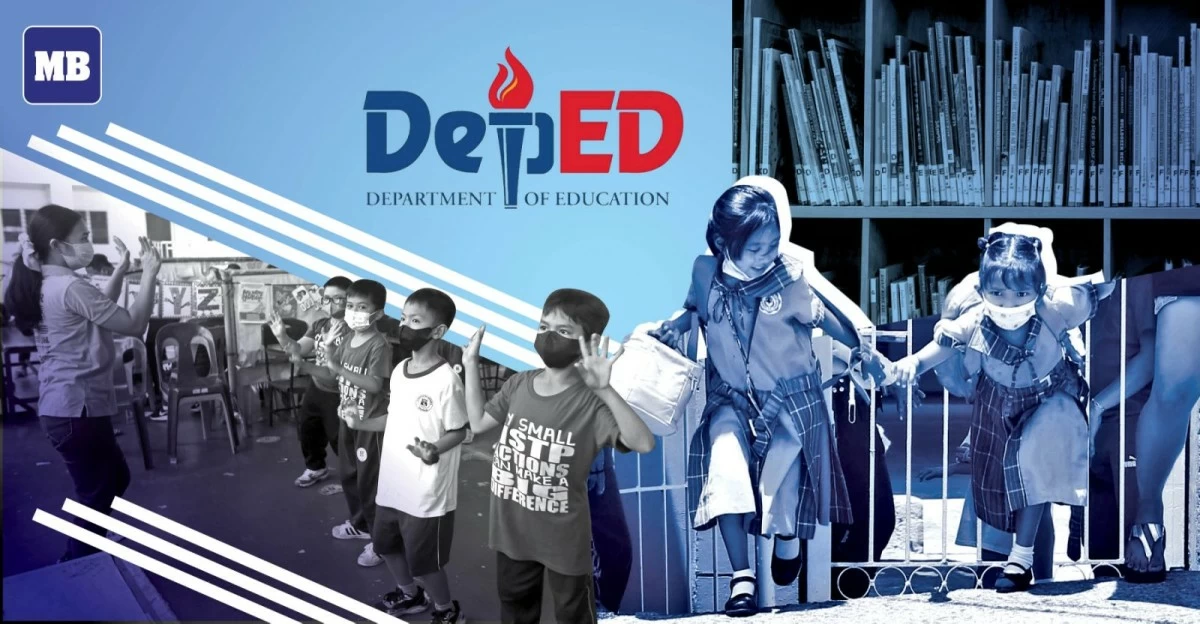
The Department of Education (DepEd) ramps up early-grade reforms and learning recovery programs after EDCOM 2 data reveal Filipino students’ proficiency drops to near zero by Senior High School. (DepEd / MB Visual Content Group)
The Department of Education (DepEd) on Monday, January 19, acknowledged a deepening learning crisis in Philippine schools and said it is accelerating early-grade reforms after data from the Second Congressional Commission on Education (EDCOM 2) showed that student proficiency drops to near zero by Senior High School (SHS).
In an official statement, DepEd Chief Media Relations Officer Dennis E. Legaspi told the Manila Bulletin that the findings confirm learning gaps begin early and worsen over time if foundational skills are not addressed decisively.
“DepEd recognizes the seriousness of the learning crisis highlighted by EDCOM 2, particularly the sharp drop in proficiency,” Legaspi said. “This confirms that learning gaps begin early and compound over time if not addressed at the foundation,” he added.
The findings, which will be included in EDCOM 2’s Final Report set for release on January 26, showed proficiency rates plunging from 30.52 percent in Grade 3 to just 0.47 percent by Grade 12.
DepEd fronts reforms at early grades
DepEd said it is prioritizing reforms at Key Stage 1, covering Kindergarten to Grade 3, where reading, numeracy, and comprehension skills are formed.
“DepEd is front-loading reforms at Key Stage 1 (Kindergarten to Grade 3), where reading, numeracy, and comprehension are formed,” Legaspi said. “Evidence shows that without strong early mastery, later interventions become more costly and less effective,” he added.
DepEd stressed that evidence consistently shows early mastery is critical, as later interventions become more costly and less effective when learners fall behind in the early years.
To address learning loss, DepEd said the 2026 national budget funds the full rollout of the Academic Recovery and Accessible Learning (ARAL) Program under Republic Act 12028. The program currently targets learners from Grades 1 to 10 and includes structured remediation to strengthen literacy and numeracy.
Legaspi said DepEd is “exploring the expansion of ARAL to Grades 11 and 12,” recognizing that SHS learners also need “structured academic recovery to close gaps that accumulated over many years.”
Curriculum reform and learning materials
DepEd said curriculum reform is already underway under the revised K to 10 framework, which streamlines learning standards to allow teachers to devote more classroom time to essential competencies rather than an overcrowded syllabus.
“Curriculum reform is already underway through the revised K to 10 framework, which decongests the curriculum to refocus classroom time on foundational skills rather than overcrowded content,” Legaspi said.
To support instruction, DepEd reported a 289-percent increase in textbook procurement in just one year, delivering more titles than the public school system produced in the previous decade combined.
Legaspi said this ensures that “learners and teachers have the materials needed to master core competencies.”
Linking learning recovery with learner welfare
Legaspi also underscored the importance of pairing learning recovery efforts with programs that address learner welfare.
These include expanded school feeding programs, with universal feeding for Kindergarten and Grade 1, the deployment of additional guidance counselors, and strengthened child protection measures.
According to DepEd, hunger, safety, and well-being directly affect student performance, attendance, and retention, making these interventions essential to reversing learning loss.
“Expanded school feeding with universal feeding for Kindergarten and Grade 1, additional guidance counselors, and strengthened child protection measures address hunger, safety, and well-being—factors that directly affect proficiency and retention,” he added.
Support for teachers, learners
Alongside recovery efforts, Legaspi said that support for teachers has been scaled up.
“Administrative tasks have been reduced by more than half, while teachers received the largest cash benefits package to date, including teaching, medical, and service recognition allowances,” he explained.
To improve learning environments for Filipino learners nationwide, DepEd has allowed greater flexibility for local government units to build parallel school facilities, expanded public-private partnerships for large-scale classroom construction, and strengthened the Adopt-a-School Program to help decongest overcrowded schools.
Meanwhile, Legaspi noted that the substantial allocation in the 2026 budget signals the Marcos administration’s commitment to start building 24,964 classrooms in 2026 alone, moving the country closer to closing the classroom gap.
Transparency through Project BUKAS
Legaspi also emphasized transparency as a key part of DepEd’s reform agenda.
Through Project BUKAS, he said DepEd is making assessment and school-level data publicly accessible so parents, local government units, the private sector, the academe, and civil society can better understand learning gaps at the local level.
“Through Project BUKAS, assessment and school-level data are made public so parents, LGUs, the private sector, the academe, and civil society can understand local learning gaps and act on them collaboratively,” Legaspi said.
EDCOM 2 findings underscore urgency
The EDCOM 2 data, drawn from DepEd assessments administered between 2023 and 2025, show a steady decline in proficiency as learners progress through school.
According to the data, only about one in five students meets proficiency standards by Grade 6, and fewer than two percent do so by Grade 10.
While EDCOM 2 noted that proficiency benchmarks may be stringent, it stressed that the overall trend remains alarming and demands urgent, system-wide action.
EDCOM 2 was created under Republic Act 11899 to assess the state of Philippine education and recommend policy reforms to address persistent challenges in learning outcomes.
READ: