







Zubiri files bill resetting BARMM polls to March 2026


At A Glance
- Senate Majority Leader Juan Miguel "Migz" Zubiri said Senate Bill No. 1587 primarily seeks to amend Section 13, Article XVI of Republic Act 11054, or the Bangsamoro Organic Law (BOL), and reset the BARMM elections to Mar. 30, 2026, with the elected officials' term of office to commence at noon of April 30 following their election.
Senate Majority Leader Juan Miguel “Migz” Zubiri has filed a bill seeking to schedule the Bangsamoro Autonomous Region in Muslim Mindanao’s (BARMM) very first parliamentary elections to March 30, 2026.
Zubiri, author and sponsor of the Bangsamoro Organic Law (BOL), said it is important to ensure that the BARMM people’s right to vote for their own leaders will push through as election is a cornerstone of every strong democracy.
“It has been more than six years since the BARMM was established, and the Bangsamoro people have yet to exercise their power to elect their own leaders. The core principles of BOL is self-governance and self-determination, and these cannot be achieved without the people’s right to vote,” Zubiri stated.
“Kaya (That’s why) we are filing this bill to push for the BARMM’s parliamentary elections in March next year. Para may mandato ng batas ang kauna-unahang eleksyon sa rehiyon (So that the first-ever elections in the region will have a legal mandate),” he said of Senate Bill No. 1587.
Senate Bill No. 1587, Zubiri said, primarily seeks to amend Section 13, Article XVI of Republic Act 11054, or the Bangsamoro Organic Law (BOL), and reset the BARMM elections to Mar. 30, 2026, with the elected officials’ term of office to commence at noon of April 30 following their election.
The bill also mandates that the next BARMM election be synchronized with the 2028 national elections and every three years thereafter.
Under the bill, the Commission on Elections (Comelec), through the Bangsamoro Electoral Office, shall promulgate rules and regulations for the conduct of the elections and shall enforce and administer them pursuant to national law, the BOL and the Bangsamoro Electoral Code.
Under the BOL, the Parliament has at least 80 members, with 50 percent elected by party representation, not more than 40 percent by single-member districts, and at least 10 percent reserved for sectors including non-Moro Indigenous Peoples, settler communities, women, youth, traditional leaders and the ulama.
The bill follows two major Supreme Court actions: first, a ruling that excluded Sulu from BARMM, which reshaped the region’s political map, and second, a decision striking down the Bangsamoro Parliament’s 2025 redistricting law and ordering a fresh, valid apportionment before elections can proceed.
Both rulings require authorities—including Comelec—to reset plans, reallocate seats and reprint the basics of the election – from precinct assignments to ballots – on a corrected legal footing.
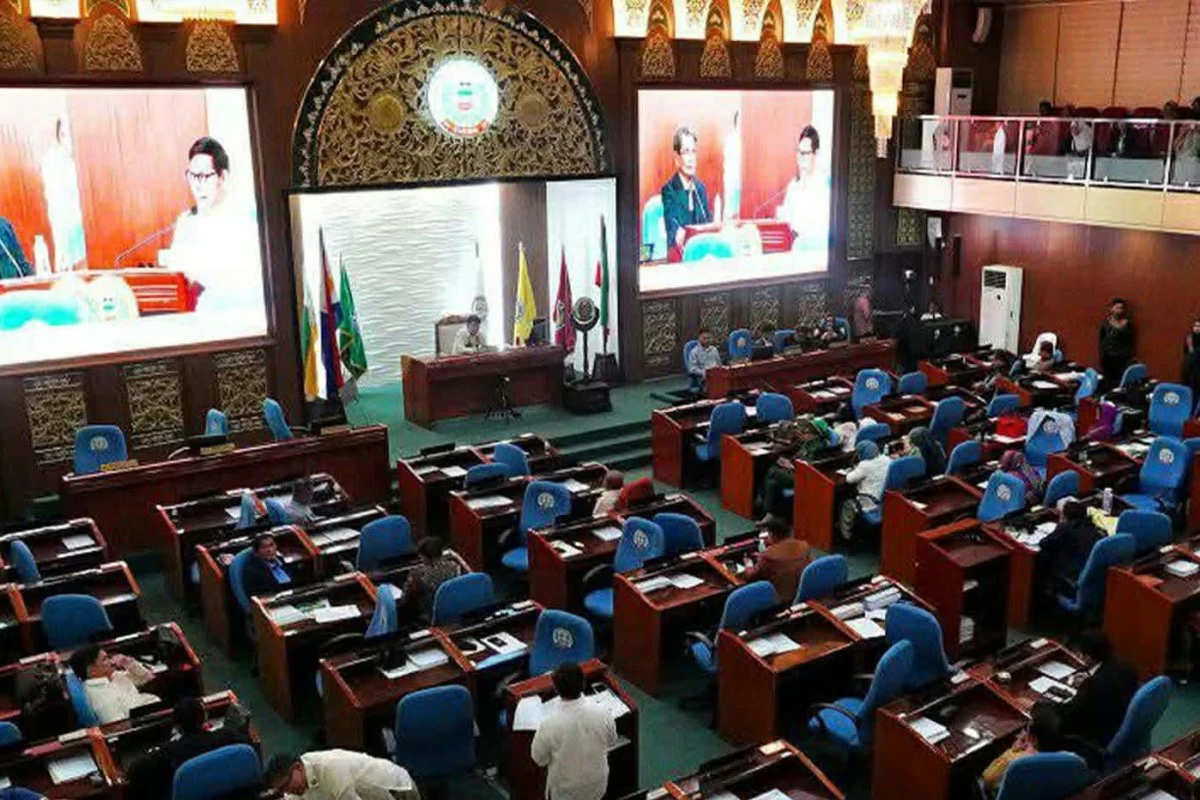
In a key step toward the Bangsamoro’s first parliamentary elections, the Bangsamoro Parliament finally passed BTA Bill No. 415 or the Bangsamoro Parliamentary Districts Act of 2025 in the early hours of Tuesday, Jan. 13 after over 10 hours of session.
“We all know what’s at stake here: a Bangsamoro government elected freely by its people. Kaya napakahalaga na matuloy na ang halalan sa BARMM (That’s why it’s very important the BARMM elections will push through),” he said.
“Dalangin natin ang mabilisang enactment ng panukala natin para maisakatuparan na ang paghahanda sa Marso (we pray for the speedy enactment of this bill so that preparations would be underway in March),” Zubiri stressed.
Moreover, under the bill, the Bangsamoro Transition Authority (BTA) shall continue as the interim government in BARMM during the extension of the Transition Period, unless the President replaces any interim members or their tenure is shortened by election to another office.