






Manila Bulletin
 Spotlight Features
Why the world can't stop drinking matcha, and why Japan still does it differently
Spotlight Features
Why the world can't stop drinking matcha, and why Japan still does it differently
Spotlight Features
Why the world can't stop drinking matcha, and why Japan still does it differently
Why the world can't stop drinking matcha, and why Japan still does it differently
Matcha is having a moment, but it is not the moment Japan expected
Published Jan 14, 2026 04:40 pm


Across the world, the finely ground green tea powder appears everywhere, poured over ice, blended with milk, folded into desserts, and photographed endlessly in clear cups that glow an almost unreal shade of green. Ordering matcha has become a small declaration, of balance, of taste, of choosing something gentler than coffee yet more intentional than tea.
And yet, the version of matcha most people now know is far removed from how it is understood where it began.
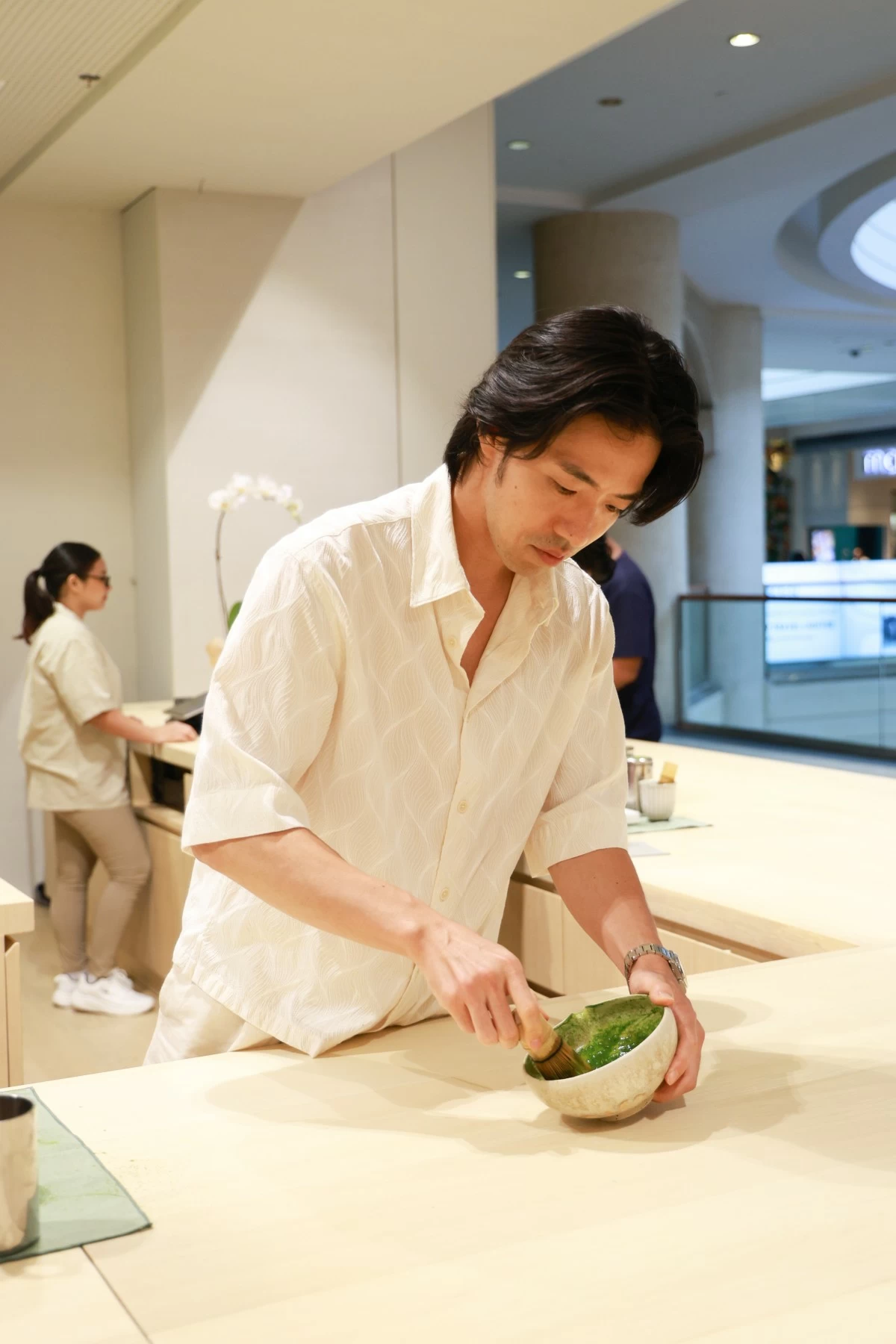
MATCHA CRAFT -- Wasachi founder Takuma Yamanaka prepares matcha at the café’s Philippine branch, demonstrating the careful, deliberate technique behind each bowl.
In Japan, matcha was never meant to be casual.
Long before it became a café staple, matcha was a discipline. Its preparation demanded attention at every stage, starting not at the bowl but in the field. Tea plants were shaded weeks before harvest, coaxing deeper flavor and color from the leaves. Only the youngest leaves were selected, then steamed, dried and stone-ground slowly into powder. There was no rush built into the process, and no allowance for shortcuts.
This care carried into how matcha was consumed. Whisked with hot water and served plain, matcha was meant to be experienced fully, its bitterness, sweetness and umami unfolding in balance. In the context of the Japanese tea ceremony, the drink was inseparable from the act itself. Every movement mattered. Silence mattered. The goal was not stimulation but presence.
That expectation still shapes how matcha is viewed in Japan today. Despite its global popularity, matcha remains something to be approached with restraint. Milk-based matcha drinks exist, but they are not the norm. Most Japanese still drink matcha straight, without sugar or embellishment. A matcha latte, while familiar abroad, is widely seen as a modern adaptation rather than an expression of tradition.
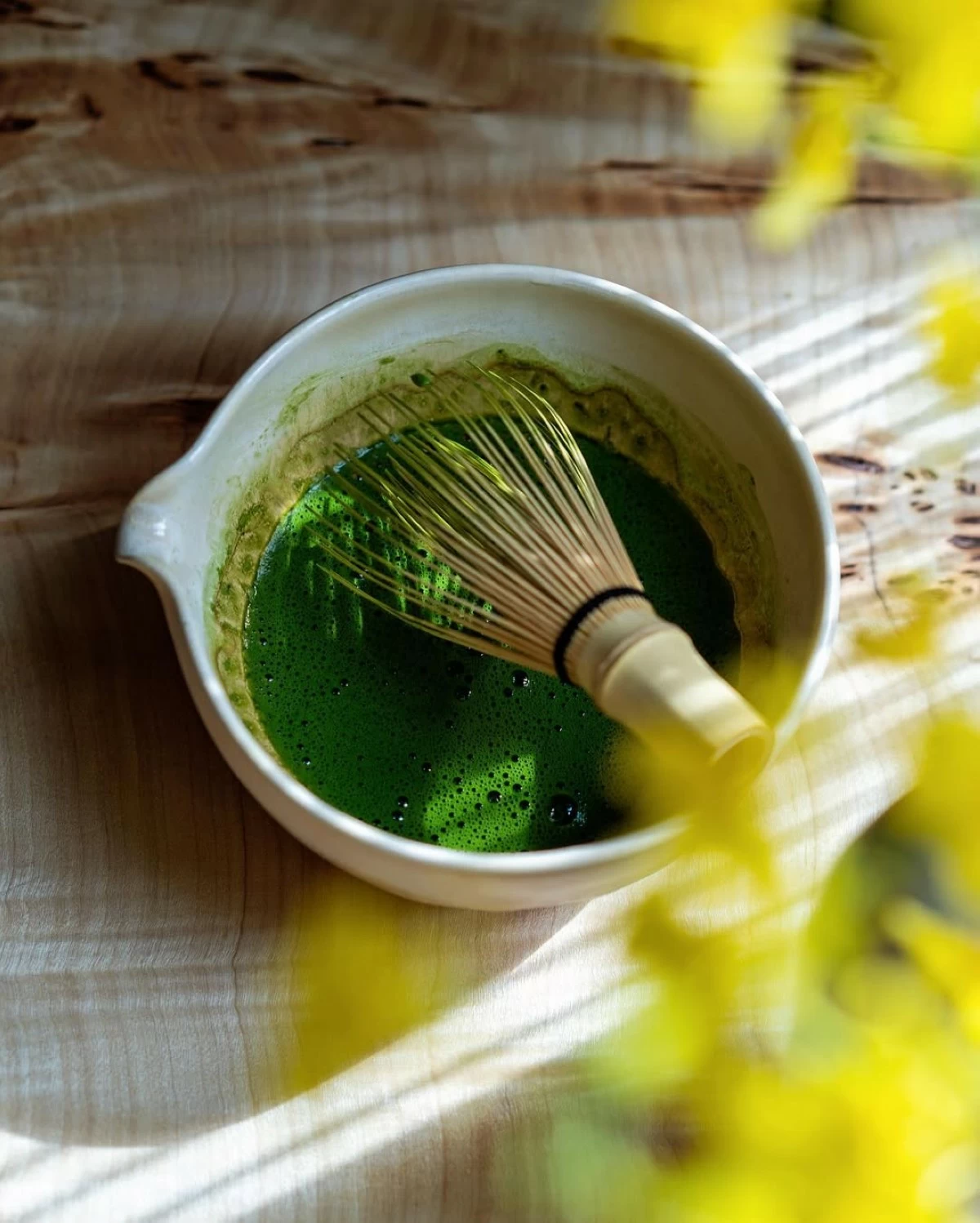
PURE FORM A bowl of traditionally prepared matcha, whisked simply with hot water, highlighting the tea’s natural bitterness, depth, and umami.
The rest of the world met matcha very differently.
Outside Japan, matcha entered daily life through cafés, not tea rooms. It appeared first as an alternative order, then slowly became a signature drink. Its appeal was partly functional, a smoother form of caffeine, but largely emotional. Matcha suggested calm productivity and wellness without sacrifice.
Milk softened its bitterness. Sweetness made it accessible. Soon, matcha stopped tasting like tea at all.
As cafés competed for attention, matcha became endlessly adaptable. It was paired with oat milk, coconut milk, vanilla, strawberry, and mango. It moved easily from drinks to pastries to ice cream. On social media, its color became its own currency. Matcha was no longer just consumed; it was performed.
Ironically, this comforting, flavored version of matcha is the one least recognizable to Japan.
This cultural gap becomes clearer as Japanese matcha brands expand internationally.
Wasachi, a popular matcha café from Tokyo, recently opened its first international branch at Fully Booked Power Plant Mall in Makati City. Founded by Kyoto native Takuma Yamanaka, Wasachi approaches matcha with a distinctly Japanese mindset. Its aesthetic is minimalist. Its flavors are restrained. The focus remains firmly on the matcha itself.
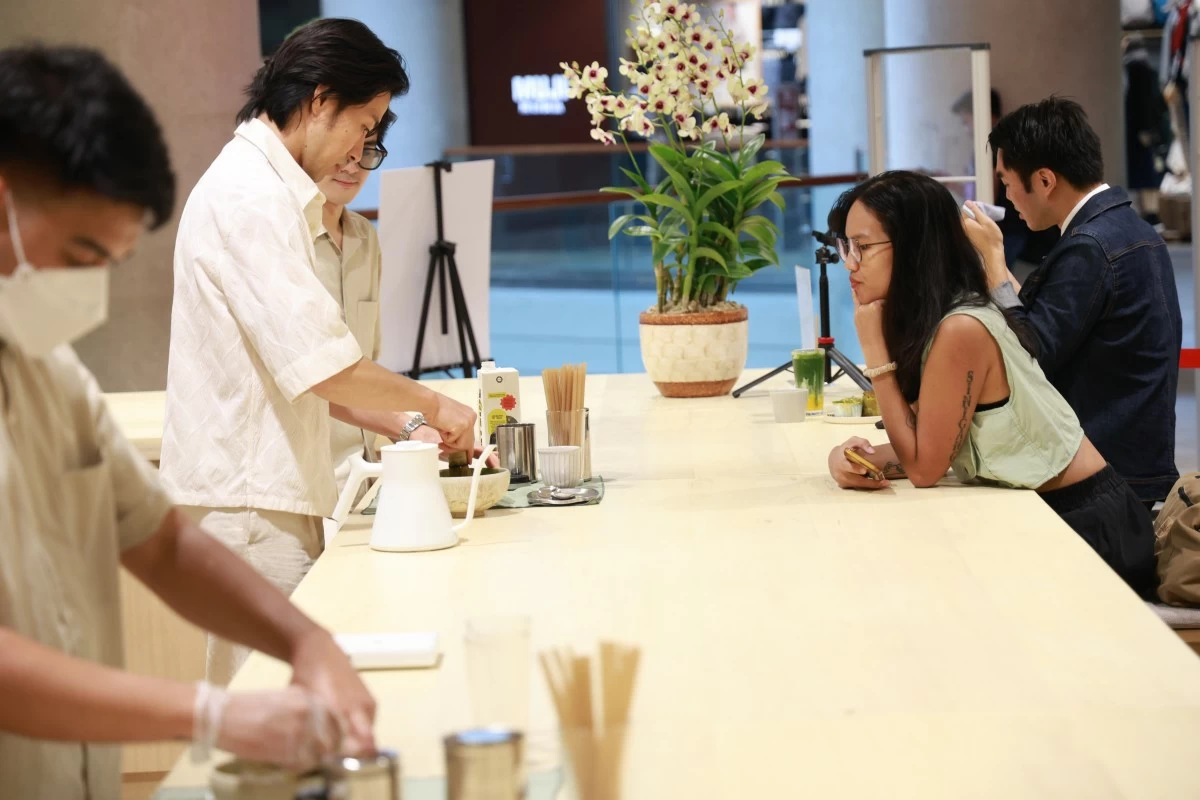
QUIET RITUAL Yamanaka prepares matcha for a guest, underscoring the calm, attentive service that defines Wasachi’s approach to tea.
Even the café’s placement inside a bookstore feels intentional. This is matcha meant to slow you down, not fuel a rush. While lattes are available, they are treated carefully. The matcha is not drowned out by milk or sugar. Instead, the drinks aim to preserve the tea’s character, grassy, layered and quietly intense.
At the opening of Wasachi we attended, Takuma Yamanaka spoke about the global matcha craze with a bit of amusement. He noted that the matcha lattes now common abroad are far less prevalent in Japan, where matcha is still most often prepared simply, without milk or sweetness. With a smile, he said it is only when he travels or looks beyond Japan that he sees matcha transformed into an all-day café drink, endlessly adapted to different tastes. The contrast, he suggested, reflects how matcha has become a global language, spoken fluently outside Japan, even as its original grammar remains unchanged at home.
At the same time, Wasachi recognizes that matcha does not travel untouched. Its Philippine-exclusive mango matcha latte is a deliberate concession to local taste, pairing high-quality Japanese matcha with a fruit Filipinos know well. The result is not a novelty drink, but a negotiation between origin and audience.
That negotiation is happening everywhere, and it is beginning to show strain.
The world’s appetite for matcha has grown faster than its ability to supply it. True matcha can only be made from tencha leaves grown under specific conditions, mostly in Japan. Production is slow by design. Fields are limited. Farmers are aging. Climate disruptions have already affected harvests.
What has changed is not how matcha is made, but how quickly it is now consumed.
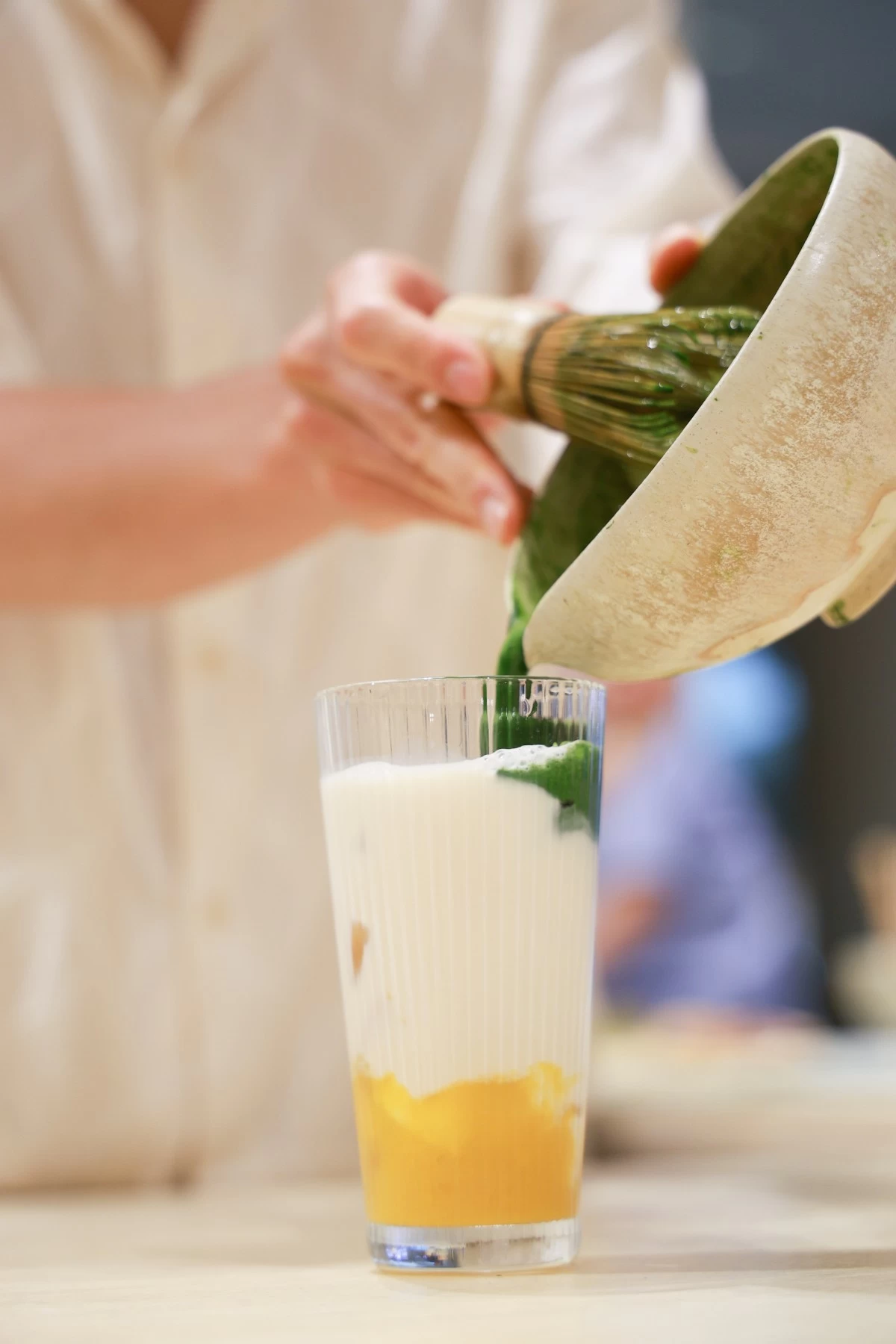
TROPICAL TURN Takuma Yamanaka prepares Wasachi’s Philippine-exclusive mango matcha latte, pairing high-quality Japanese matcha with a distinctly local flavor.
High-grade matcha is becoming harder to secure, even for producers closest to its source. Some Japanese suppliers have begun limiting exports of their finest matcha, prioritizing domestic demand. Meanwhile, international markets are increasingly filled with lower-grade powders labeled simply as “matcha,” blurring the line between culinary ingredient and traditional tea.
For cafés and consumers alike, this has consequences. Recipes are adjusted covertly. Prices creep upward. Sourcing becomes more complex. Behind the counter, not all green powders are equal, and not all cups of matcha tell the same story.
In the Philippines, matcha’s popularity reflects a broader shift in dining culture. Coffee culture has matured, and diners are more open to alternatives that feel intentional rather than habitual. Matcha fits neatly into that space. It is familiar enough to order without hesitation, but distinct enough to feel like a choice.
Yet as matcha becomes more common, the question sharpens. Is matcha still matcha when it no longer tastes like tea?
For many drinkers, the answer is simple. Matcha is comfort, color, and ritual. For others, especially those closer to its origins, the concern is real. When matcha is endlessly sweetened and flavored, its bitterness, complexity, and discipline disappear. What remains is aesthetic.
Food has always changed as it travels. Pizza no longer belongs only to Italy. Sushi no longer belongs only to Japan. Matcha, too, is being rewritten.
What makes matcha different is that it resists total reinvention. Its production cannot be scaled endlessly. Its flavor refuses to vanish entirely. Even diluted, it carries traces of where it came from.
In a world that moves quickly, matcha’s endurance may lie in what it quietly insists on — attention. Not just to what is in the cup, but to how, and why, it got there.