







NGCP, DOE track surging power demand ahead of summer peak
Published Jan 14, 2026 01:45 pm


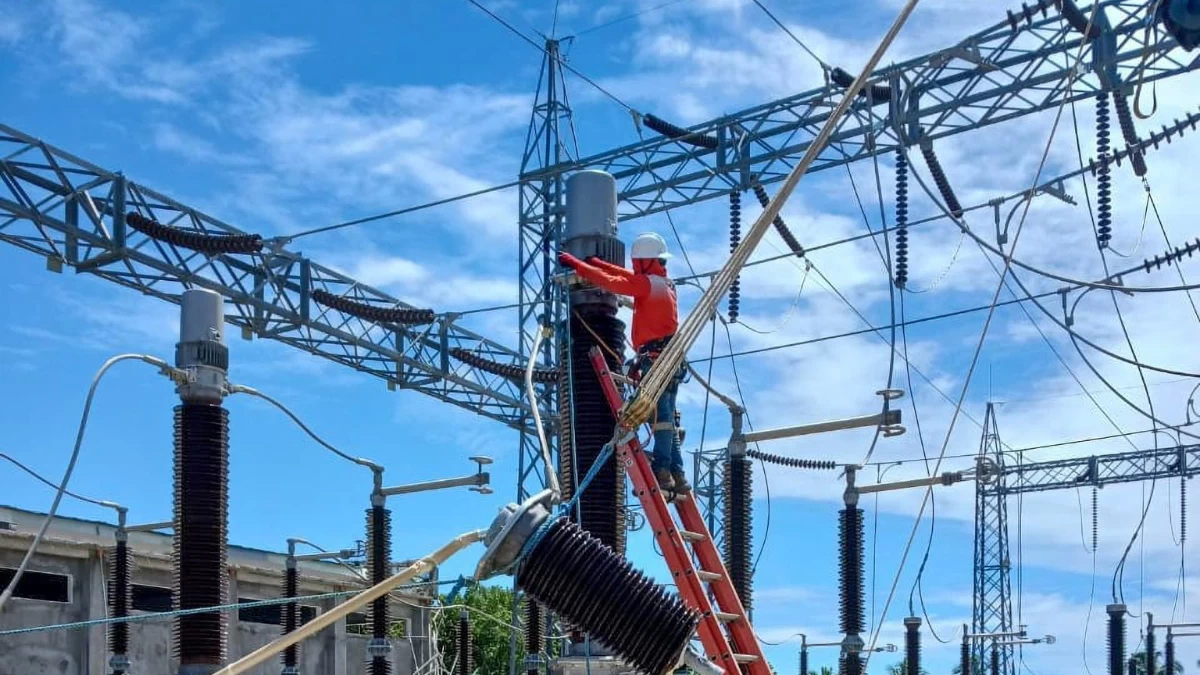
The Philippines faces a tightening power supply as rising temperatures signal the start of the dry season, prompting energy officials to shore up reserves and fast-track stalled capacity to meet the projected surge in consumption.
Energy Secretary Sharon Garin stated that while the Luzon grid currently has sufficient buffers, the Visayas remain vulnerable, and any localized demand spikes or unexpected plant outages in the region would require importing power from Mindanao to stabilize the regional grid.
“We are expecting some problems in the Visayas and Mindanao area,” she told reporters. “This doesn’t mean blackouts, but we want to have a more stable grid in that sense.”
To mitigate long-term supply risks, the Department of Energy (DOE) is pushing for a fresh wave of capacity to come online by 2026. The move serves as a corrective measure following a significant contraction in the pipeline last year, when the government terminated 84 renewable energy service contracts due to developer violations and project delays.
Garin, however, expressed optimism that clearing these “stalled” projects from the books would open high-potential areas to more capitalized and technically capable investors.
Meanwhile, the National Grid Corporation of the Philippines (NGCP) is currently finalizing its formal peak demand forecast for the summer months.
Cynthia Alabanza, a spokesperson for the privately led grid operator, noted that consumption has already exceeded previous government projections.
The acceleration is being driven by a combination of population growth and heightened economic activity, leaving officials to determine how quickly the grid must expand to keep pace, she said.
While the medium-term supply outlook remains under pressure, consumers saw a marginal reprieve in transmission costs this month.
Data released by the NGCP on Wednesday, Jan. 14 showed that the overall average transmission rate eased to ₱1.3455 per kilowatt-hour in December, a 0.68 percent decline from the ₱1.3547 per kilowatt-hour recorded in the prior period.
Ryan Datingaling, head of revenue management at NGCP, attributed the decline to a more robust supply of reserve offers.
Ancillary services charges settled at ₱0.5971 per kilowatt-hour, while transmission wheeling rates stood at ₱0.6058 per kilowatt-hour.