






Manila Bulletin
 Lifestyle
Food
Hiro Premier SM Aura opens with a wagyu masterclass, not just yakiniku
Lifestyle
Food
Hiro Premier SM Aura opens with a wagyu masterclass, not just yakiniku
Lifestyle
Food
Hiro Premier SM Aura opens with a wagyu masterclass, not just yakiniku
Hiro Premier SM Aura opens with a wagyu masterclass, not just yakiniku
At its new SM Aura branch, Hiro Premier reframes Japanese yakiniku through A5 Omi Wagyu, precision grilling and a dining experience rooted in craft rather than spectacle
Published Jan 14, 2026 07:53 am


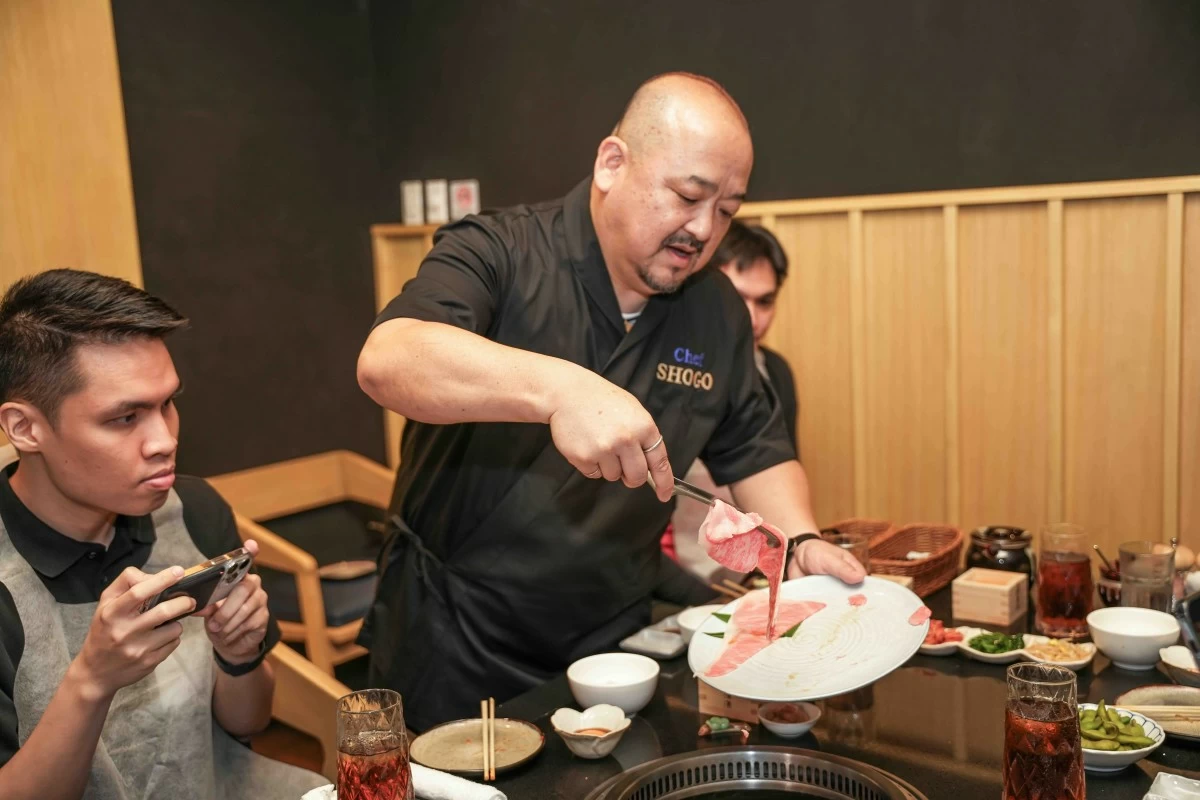
MASTER AT WORK Chef Shogo Izawa grills for guests with practiced control, turning each cut of wagyu into a lesson in timing, temperature, and respect for the ingredient.
I arrived at the opening of Hiro Premier Japanese Yakiniku at SM Aura with familiar expectations. Another yakiniku restaurant, another evening of premium beef, smoke curling above the grill, indulgence framed by abundance. It is an assumption shaped by repetition, and one that is easy to make in a dining scene now well acquainted with wagyu as shorthand for luxury.
What unfolded instead was something more deliberate, and far more Japanese in spirit.
From the outset, the experience signaled that this was not simply about grilling meat. It was about understanding it. Hiro Premier’s Wagyu Masterclass reframes yakiniku as a lesson in restraint, timing, and respect for ingredients, elevating the meal beyond appetite into awareness.
Before the first cut touched the grill, context was set. Wagyu, literally “Japanese cow,” is prized not just for richness but for its genetic predisposition to intense marbling, or shimofuri, which gives the beef its signature tenderness and depth. Here, diners are gently guided to see that marbling not as excess, but as structure, something that demands precision rather than bravado.
That perspective matters because Hiro Premier works with A5 Omi Wagyu sourced from Daikichi Black Wagyu Farm in Shiga Prefecture, the historic birthplace of Omi beef. Revered alongside Kobe and Matsusaka as one of Japan’s top three wagyu brands, Omi beef carries a 400-year legacy dating back to the Edo era. The cattle are raised without growth hormones or antibiotics, through a slow, stress-free fattening process rooted in tradition. Each cut is flown directly from Japan, preserving quality and integrity from pasture to plate.
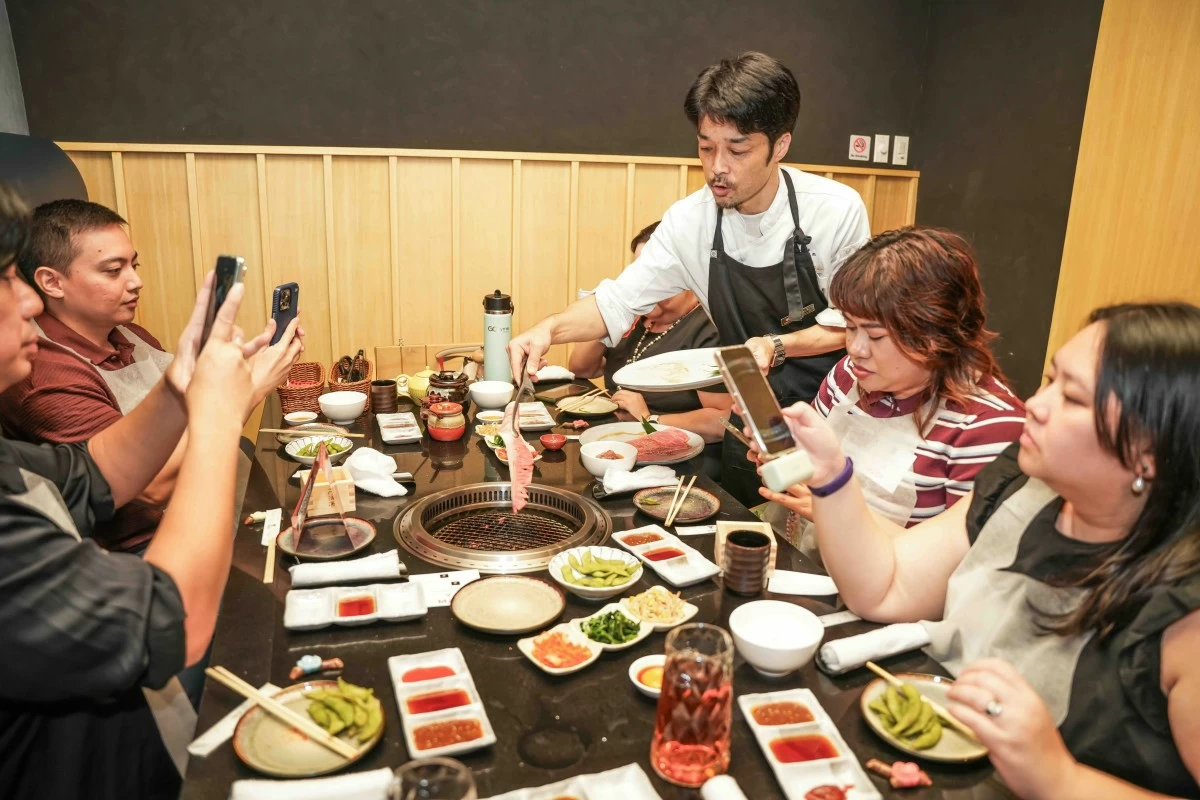
BEHIND THE SCENES The author, alongside fellow media guests, documents the opening as Hiro staff present premium wagyu beef
The lesson continues with grading. Japan’s beef grading system evaluates both yield and quality, with A5 representing the highest possible combination of usable meat and superior marbling, texture and fat quality. In practical terms, this means beef that cooks quickly, demands close attention and punishes excess heat. It is meat that rewards patience.
The menu mirrors that philosophy. Starters are composed to prepare, not overwhelm. Zuwaigani choregi salad arrives cool and clean, pairing snow crab with crisp greens and a light dressing finished with gold leaf. Kimchi and namuru moriawase introduces fermented depth alongside seasoned vegetables, while karadare kyuri, chilled cucumbers in spicy sauce, resets the palate between richer bites.
Early wagyu dishes follow. Omi Wagyu tokujo aburi is lightly seared for mere seconds, just enough to warm the fat and release aroma without masking the meat’s natural sweetness. Omi Wagyu uni nigiri sushi leans into indulgence, layering sea urchin over wagyu for a bite that is undeniably rich yet carefully portioned. The sukiyaki roll sushi, made with seared Miyazaki Arita Wagyu, miso and sriracha mayo, nods to contemporary tastes without tipping into excess.
The center of the experience, as expected, is the grill. But even here, expectation is quietly corrected. Hiro Premier follows what it calls the “Hiro way,” guided by MasterChef Shogo Izawa, a Tokyo-born chef with more than four decades of experience. Grilling is treated as a precise craft: imported Japanese grill tables, strict temperature control tailored to each cut, and staff who guide diners through timing and technique. This is not fast cooking, but deliberate, almost meditative grilling.
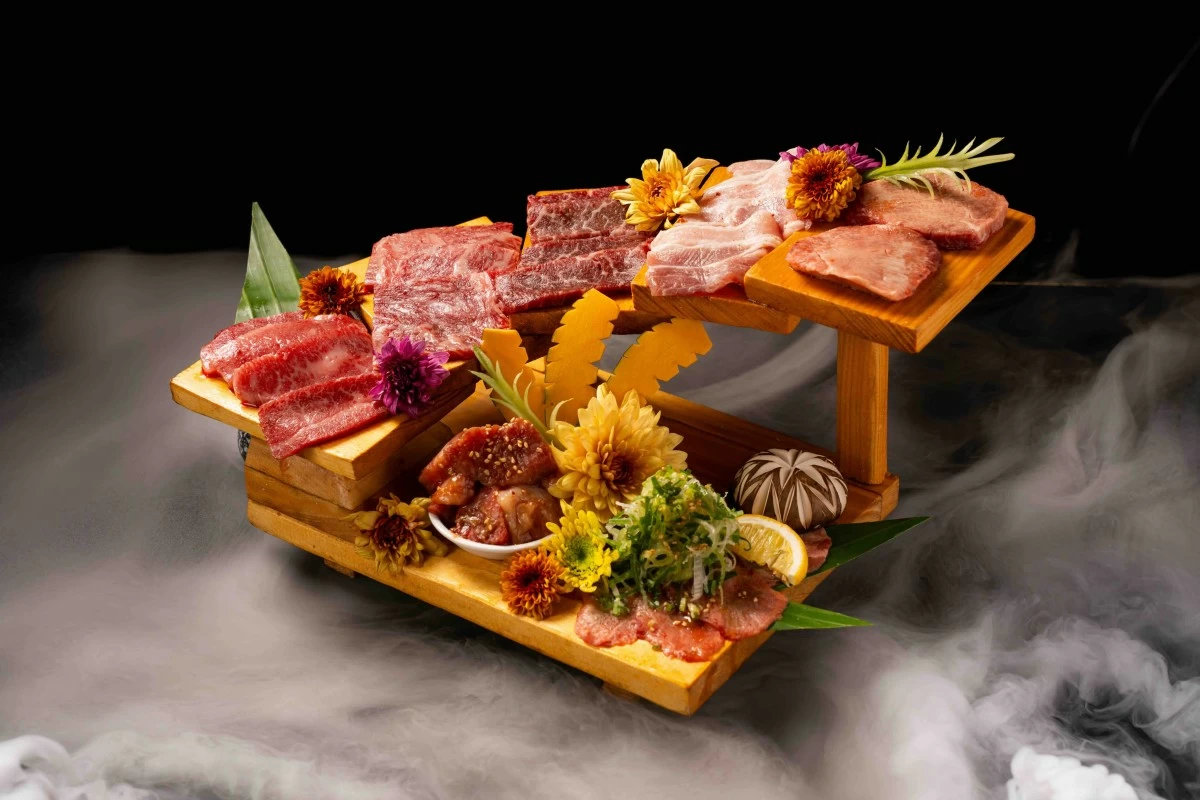
CUT ABOVE The tokusen kaidan mori, a curated selection of premium wagyu cuts, invites diners to compare marbling, texture and flavor before the grill ever heats up
The premium moriawase arrives as a composed platter of daily-selected cuts, inviting diners to observe differences in marbling, thickness and grain before tasting. Rokuten mori sharpens that focus further, presenting six premium cuts of Omi Wagyu that illustrate how subtle variations affect flavor and mouthfeel.
Karubi soup, with beef ribs and vegetables in a spicy broth, anchors the meal with warmth and familiarity. Optional sides of Japanese rice and greens serve a practical role, grounding the richness of the meat rather than competing with it. Dessert closes the experience quietly: a matcha affogato with azuki, its bitterness and sweetness offering a clean, composed finish.
The setting reinforces the tone. Hiro Premier’s SM Aura branch, located on the Skypark level, is calm and inward-looking, defined by wood, stone and soft lighting. Private rooms and individual grill seating favor focus over spectacle, aligning space with intent.
I came expecting yakiniku. What I encountered instead was a reminder of how Japanese dining often works at its best: depth over drama, instruction over indulgence, and a belief that the highest luxury is understanding what is on the plate.
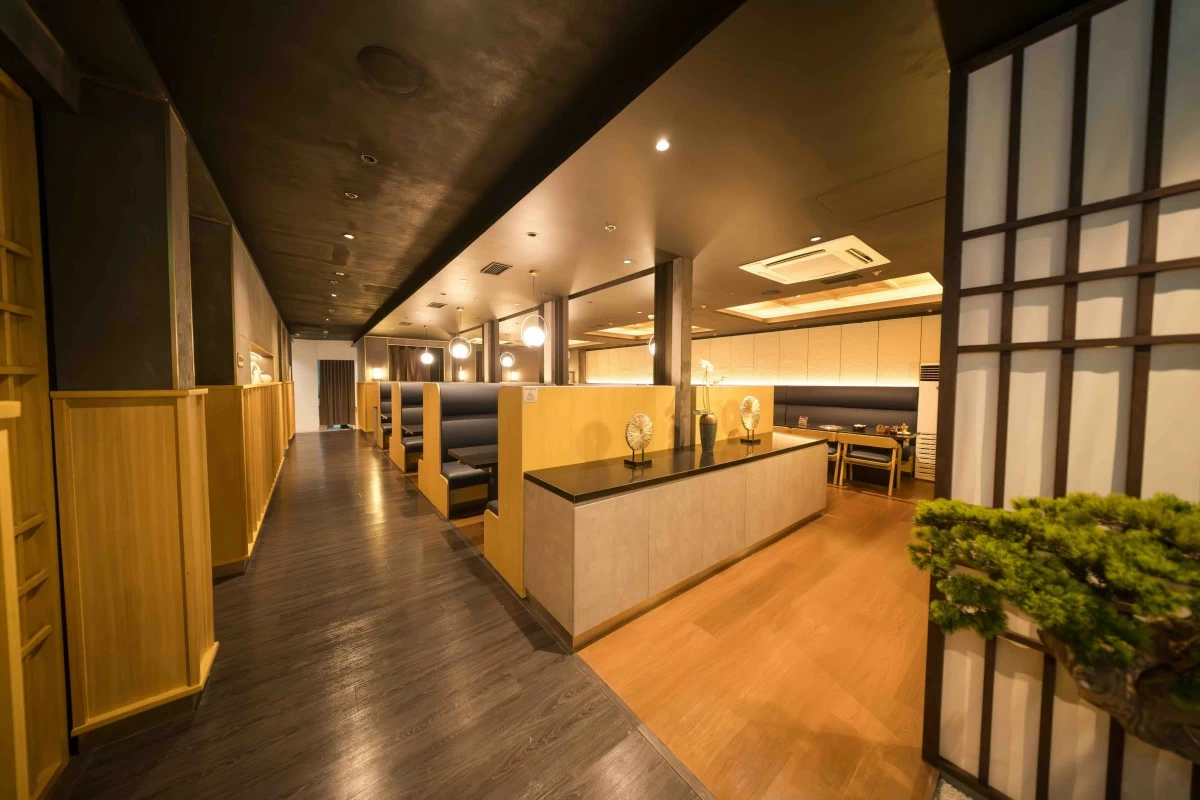
QUIET LUXE The serene, wood-and-stone interiors of Hiro Premier at SM Aura set the tone for a yakiniku experience defined by restraint, precision, and calm.