






Manila Bulletin
 Business
Banking & Finance
Lawsuits and delays: Inside the World Bank's failed attempt to fix Bureau of Customs
Business
Banking & Finance
Lawsuits and delays: Inside the World Bank's failed attempt to fix Bureau of Customs
Business
Banking & Finance
Lawsuits and delays: Inside the World Bank's failed attempt to fix Bureau of Customs
Lawsuits and delays: Inside the World Bank's failed attempt to fix Bureau of Customs
Published Jan 12, 2026 12:02 am
|
Updated Jan 10, 2026 11:56 am


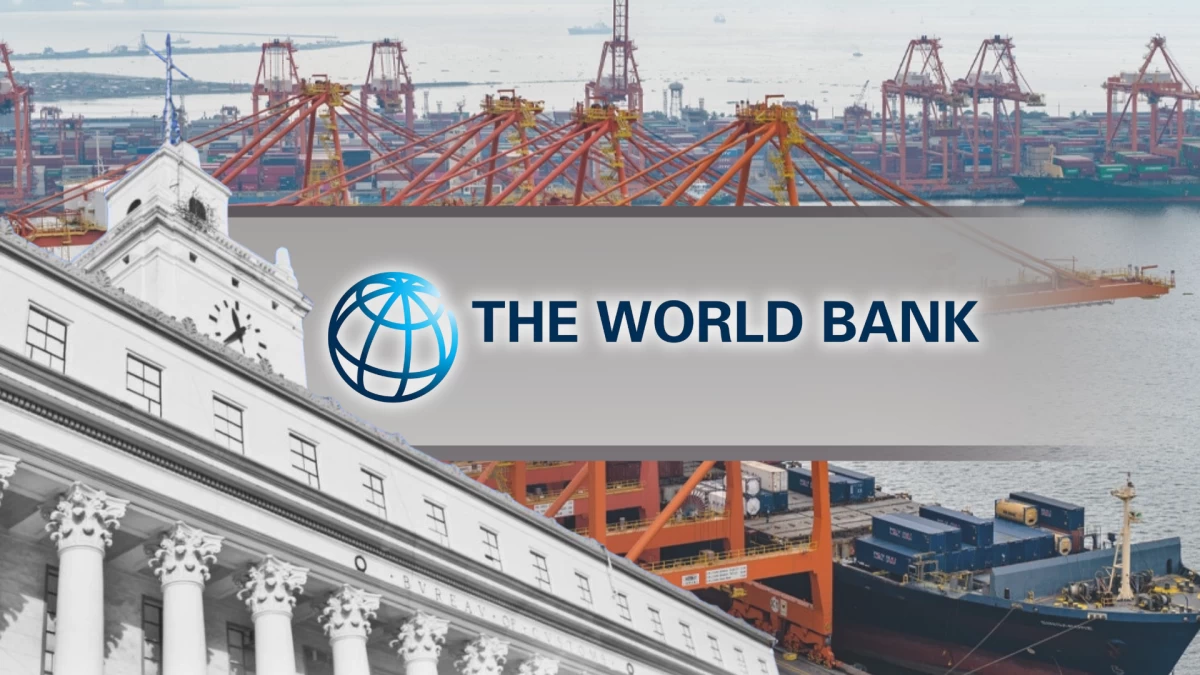
When the World Bank released its “note on cancelled operation” document on the Philippines Customs Modernization Project last week, it did more than formally close the books on an $88.28-million loan. The document read like a rare institutional post-mortem, spelling out not only why the project collapsed but also what the Washington-based multilateral lender says it learned from a reform effort that never truly left the runway.
The project, approved in October 2020 at the height of the Covid-19 pandemic, was designed to improve the efficiency of the Bureau of Customs (BOC)—the country’s second-largest revenue agency—and reduce trade costs, in line with the government’s broader agenda of trade facilitation and institutional modernization. It became effective in January 2021, and was officially launched in March 2021, with the ambition of transforming the BOC into a more modern, transparent, and technology-driven agency. At the heart of the program was the planned rollout of a new customs processing system (CPS), complemented by upgrades in information and communications technology (ICT), enterprise systems, and risk-based compliance tools.
However, Manila Bulletin first reported in December 2024 that the World Bank had scrapped the loan after years of delays, unresolved legal problems, and minimal disbursements.
Beyond the headlines, the original ambitions of the project underscore the scale of what was lost. The modernization effort was expected to significantly cut processing times and trade costs. Import clearance was supposed to be reduced from about 120 hours to roughly 80 hours by 2025, while export processing time was targeted to fall from around 42 hours to near 30 hours. These improvements were meant to be driven by a fully integrated CPS that would link cargo processing, inspection, payments, and release into a single digital platform, reduce face-to-face transactions, strengthen risk profiling, and bring Philippine customs practices closer to international standards.
Those targets now sit firmly in the realm of “what ifs.” Had the systems been rolled out as designed, the BOC might today be operating with faster cargo throughput, stronger compliance tools, and more transparent procedures—conditions often associated with both improved trade competitiveness and tighter revenue enforcement. Instead, the modernization drive stalled almost from the outset.
At the core of the failure was a legal dispute that predated the World Bank loan. A temporary restraining order (TRO) arising from a 2015 procurement case barred the BOC from bidding out the CPS, which alone accounted for more than 60 percent of the project’s value. With the central system frozen, the rest of the reform architecture had little to stand on. The World Bank acknowledged in its report that although fiduciary risks had been flagged during preparation, a critical gap remained: the appraisal process failed to fully recognize that an unresolved court case could effectively prevent procurement of the project’s core component, paralyzing implementation almost entirely.
From the lender’s perspective, the episode underscored the need for far more rigorous legal scrutiny during project design, particularly for large, complex information technology (IT) systems. Due diligence, it said, must go beyond general risk ratings and include systematic checks for existing or potential litigation that could bind an implementing agency’s hands.
Lesson 2: Institutional capacity matters as much as funding
The World Bank’s assessment also pointed inward. It noted that institutional constraints within the BOC compounded the legal deadlock. High staff turnover, difficulty in retaining technical experts, and a thinly staffed project management unit slowed responses to the court order, delayed restructuring discussions, and even held back activities that might have proceeded independently, such as consultancy support and organizational reforms.
In 2023, there was an attempt to salvage what could still be implemented. The BOC, the Department of Finance (DOF), and the World Bank agreed in principle to pursue a partial cancellation of the loan to separate CPS activities affected by the legal proceedings from other components considered operationally viable, including inspection systems, process reengineering, and human resource (HR) and enterprise resource planning upgrades. However, this window proved short-lived. In January 2024, the DOF and the BOC’s leadership reassessed the outlook of the unresolved procurement constraints and concluded that the project was no longer operationally viable.
The BOC formally requested the cancellation of the loan in May 2024, with the DOF endorsing the decision by November 2024. By late 2024, only about five percent of the loan had been disbursed. As of end-October 2025, final project expenditures stood at just $106,133, after a refund was made to the designated account—a stark figure for a project originally valued at more than $100 million including counterpart funding.
For the World Bank, this experience reinforced the importance of early and sustained engagement not only with technical counterparts but also with senior management and legal teams. In complex, ICT-driven reforms, it said, capacity building and close coordination are not secondary concerns but central pillars of implementation.
Lesson 3: Know when to restructure or exit sooner
Perhaps the most candid lesson in the report concerns timing. Years passed in a state of limbo, with resources tied up but core reforms unable to proceed. The World Bank concluded that restructuring or cancellation processes should have been initiated earlier, once it became clear that implementation was fundamentally blocked, to minimize resource wastage and prolonged uncertainty.
These reflections land at a moment when the BOC’s performance is again under scrutiny. It was reported last week that the BOC failed to meet its 2025 revenue target of ₱958.7 billion, collecting about ₱934.4 billion instead. While this exceeded the ₱916.7 billion collected in 2024, it still represented a shortfall of around 2.5 percent. The gap was attributed to factors such as weaker import volumes, a temporary rice import ban, and volatile global prices, which weighed on collections despite continued enforcement efforts.
It was against this backdrop that newly appointed Customs Commissioner Ariel F. Nepomuceno issued his first major order for 2026: the creation of the Commissioner’s Strategic Advisory Office, a unit designed to strengthen internal oversight, strategic analysis, and risk assessment within the agency. The move signaled a renewed push for tighter monitoring and more data-driven management at a bureau grappling with ambitious revenue goals and persistent operational challenges.
The juxtaposition inevitably invites another “what if.” The cancelled World Bank project was designed precisely to provide the digital backbone for the kind of analytics, automation, and risk-management capacity now being pursued through new internal structures. A functioning CPS and modernized IT ecosystem might not have insulated customs collections from global headwinds, but they could have given the BOC more powerful tools to target high-risk shipments, speed up legitimate trade, and close administrative gaps that affect both compliance and revenue performance.
In closing its report, the World Bank described the failed project as a lesson in the complex interplay of legal, procurement, and institutional risks that accompany large-scale modernization drives. Its own takeaways—the need for more rigorous legal vetting, deeper capacity building, sustained high-level engagement, and earlier decisions to restructure or exit—were framed as guidance for future operations in the Philippines and similar settings.
For the Philippines, and particularly for the BOC that’s again under pressure to deliver both efficiency and revenues, the episode stands as both a missed opportunity and a technical cautionary tale. The modernization that was supposed to cut processing times, lower trade costs, and usher in a new digital era never materialized. What remains is a detailed account of why it failed—and a clearer sense of what future reform efforts will have to confront if those ambitions are to be revived.