






Manila Bulletin
 Philippines
National
Health expert urges public to get 2026 influenza vaccine vs 'super flu'
Philippines
National
Health expert urges public to get 2026 influenza vaccine vs 'super flu'
Philippines
National
Health expert urges public to get 2026 influenza vaccine vs 'super flu'
Health expert urges public to get 2026 influenza vaccine vs 'super flu'
Published Jan 8, 2026 01:48 pm


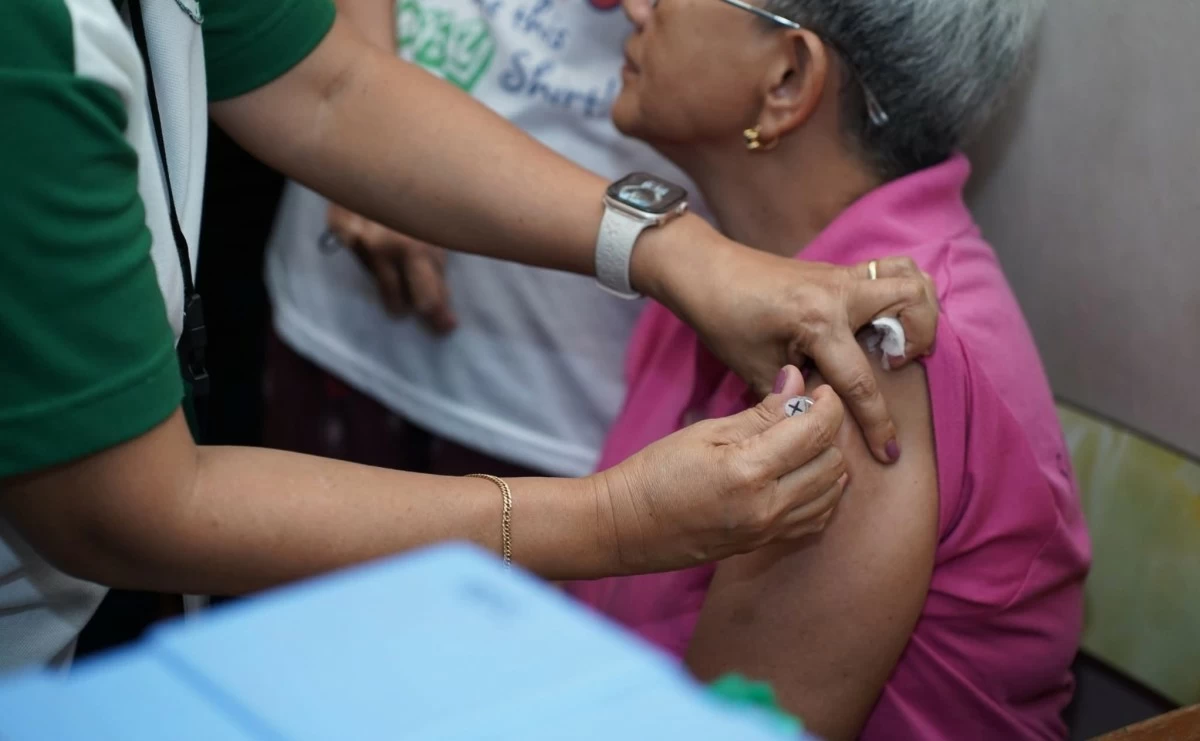
A senior citizen receives her dose of the free anti-flu vaccine administered at the Manila City Hall on Friday, Dec. 12. (Photo from Manila PIO)
Infectious disease expert Dr. Rontgene Solante urged the public to get vaccinated once the 2026 formulation of the influenza vaccine becomes available, saying it will protect against the new “super flu” variant.
In a radio interview on Thursday, Jan. 8, Solante said the “super flu” is a more aggressive subtype of H3N2 with mutations that make last year’s (2025) influenza vaccine slightly less effective. As a result, more people, especially those who were not vaccinated, are likely to get infected.
"Ibig ko sabihin, ‘yung mga nabakunahan na last year (2025 formulation of influenza vaccine), most likely will still have protection, but again, ang reminder natin dito [ay] ang influenza vaccination ay every year, so we need to recommend na for this year, 2026, meron naman bagong formulation (What I mean is, those who were vaccinated last year with the 2025 influenza vaccine are most likely still protected, but it is important to remind everyone that influenza vaccination is recommended every year, so we need to recommend that people get the updated 2026 formulation),” he said.
He said that this year’s new influenza vaccine formulation is expected to be available by February or March, urging especially the elderly and those with comorbidities to get vaccinated once it becomes available.
“It will cover for this superflu, so sabihin natin sa mga population, especially yung may mga edad, comorbidities once the flu vaccine will be available by February or March, sana magpabakuna tayo para hindi tataas ang kaso ng mga ganitong superflu sa atin (It will provide protection against this “super flu,” so the public, especially the elderly and those with comorbidities, is encouraged to get vaccinated once the influenza vaccine becomes available by February or March, to help prevent a rise in cases of this variant),” he said.
Solante explained that a new influenza vaccine formulation is usually released every year because the virus subtypes also change annually.
He also said that vaccination should ideally begin as soon as the vaccine becomes available so that people are already protected if cases rise from July or August through December.
The expert added that even if vaccinated individuals develop symptoms, their risk of hospitalization is lower compared with those who have not been vaccinated.
Aside from vaccination, he also advised the public not to ignore any symptoms and to seek medical attention promptly to prevent complications. He noted that while the “super flu” can still be deadly, it is not at the same level of severity as COVID-19.
“This virus can still lead to mortality, including complications doon sa puso, brain. Can also present with stroke or yung atake sa puso. So it is not something na ordinary lang. Kailangan pa rin tayong maging aware sa mga ganitong klaseng sakit (Including complications affecting the heart and brain. It can also trigger strokes or heart attacks, so it is not something to take lightly. We still need to remain vigilant about illnesses like this),” he said.
As of early January 2026, health agencies in the US have recorded a sharp rise in flu cases driven by the influenza A H3N2 subclade K variant, with an estimated 11 million illnesses, about 120,000 hospitalizations, and around 5,000 deaths to date, according to the US Centers for Disease Control and Prevention.