ADVERTISEMENT

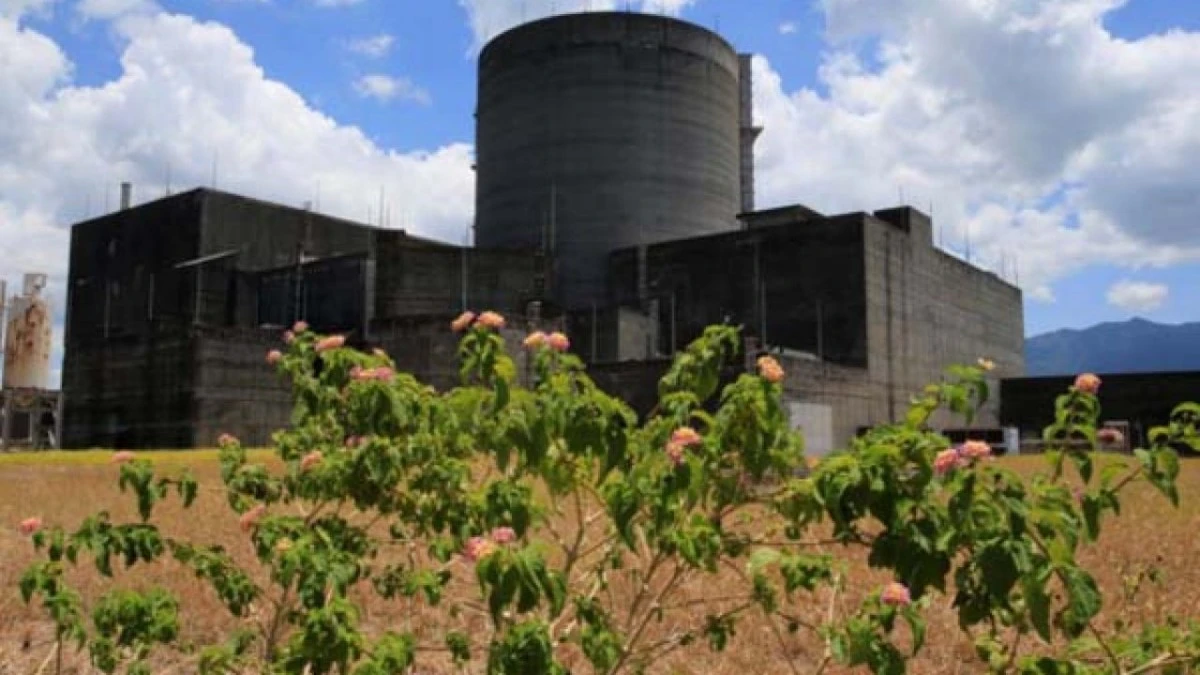
US roadblock: Westinghouse dispute stalls Bataan nuclear plant revival study

Published May 5, 2025 02:00 pm

A legal entanglement concerning intellectual property (IP) related to a reactor design, which South Korea encountered with the American firm Westinghouse Electric Company, continues to impede the targeted feasibility study intended to evaluate the potential for reactivating the mothballed 620-megawatt Bataan nuclear power facility.

A highly placed source confided exclusively to the Manila Bulletin that the United States' involvement in the agreement is still obstructing the planned study. The unresolved Westinghouse dispute casts a shadow, and progress is unlikely until Washington grants its approval.

"There's still opposition from the US side – it's a lingering concern stemming from the Westinghouse dispute case, so that needs to be resolved first with the endorsement of the governments involved," the source stated.

This insider further added, "The ongoing discussion now involves the Philippine Department of Energy (DOE) taking up that issue with the US government; and there's also a request for the Korean government to initiate a parallel discussion on this with the US."

When pressed on how the Westinghouse issue could prolong the BNPP study, the source stated plainly, "No one knows how long this will delay things – it's anyone's guess at this stage."

Beyond this concern, another significant looming challenge involves the duration for which the Koreans can maintain the allocated budget for the BNPP study, particularly with the anticipated changes in their government leadership following their scheduled June 3 elections this year.

The energy department had previously indicated that the study might have commenced in April of this year – already a delay from the initial January 2025 target. However, the source emphasized, "It did not proceed because the US government intervened."

Exclusion from dispute settlement

The source clarified that while a settlement was reached in January between Westinghouse and Korea Hydro & Nuclear Power Company (KHNP), along with Korea Electric Power Corp (KEPCO), regarding a dispute arising from Korea's planned export of its APR1400 reactor designs, "the Americans stipulated that such agreement does not cover the BNPP, so that needs to be sorted first with the US government and Westinghouse."

In 2022, KHNP aimed to export nuclear reactors to Europe, with Poland as a primary target market. However, Westinghouse intervened, leading to the filing of an IP dispute in a US court. Westinghouse claimed that the APR1400 reactor design incorporates US-origin technology developed under a 1997 licensing agreement.

Westinghouse maintained that it would object to the export of the APR1400 Korean-designed reactors without US government approval. In contrast, KHNP and KEPCO argued that they independently developed the technology, thus US export control laws should not apply to their specific reactor technologies.

According to US export control laws, specifically 10 CFR Part 810, any export of US-origin nuclear technology requires approval from the US Department of Energy. Westinghouse primarily argued that because its technology is integrated into the APR1400 reactor, Korea cannot legally export the design without the American government's consent.

Nevertheless, following the settlement agreement with Westinghouse this year, industry observers believed South Korea's nuclear export ambitions might proceed smoothly. However, concerning their deal with the Philippines, it appears that this is not yet the case.

In the proposed new study for the BNPP, a key objective is to re-evaluate the cost of reviving the dormant nuclear plant. The 2017 study estimated this cost at $1.0 billion. However, with significant shifts in global economic fundamentals, experts suggest that the cost could have already increased substantially since then.

PhilAtom Bill facing obstacles

Apart from the delays in the BNPP study, the Philippine Atomic Energy Regulatory Authority (PhilATOM) bill, which proposes the establishment of an independent regulatory body for the domestic nuclear industry, may also be encountering setbacks, potentially requiring the legislative measure to be refiled in the next Congress.

While the House of Representatives successfully navigated the bill through its approval stages, progress in the Senate has been slow. Insiders suggest that its chances of receiving final action in the remaining period of the 19th Congress are dwindling.

"To be realistic, the bill may no longer secure Senate approval in the current Congress…I don’t think the Senate can address this quickly in the remaining session days before June. It might need to be refiled in the next Congress," a source from the Senate Committee on Energy noted.

Currently, the Senate has placed the committee report under ‘ordinary business,’ indicating low priority, making it unlikely that the legislative piece will gain final approval when sessions resume in the coming weeks.

Related Tags

American firm Westinghouse Electric Company Bataan Nuclear Power Plant Department of Energy (DOE) BNPP
ADVERTISEMENT
.most-popular .layout-ratio{ padding-bottom: 79.13%; } @media (min-width: 768px) and (max-width: 1024px) { .widget-title { font-size: 15px !important; } }

{{ articles_filter_1561_widget.title }}

.most-popular .layout-ratio{ padding-bottom: 79.13%; } @media (min-width: 768px) and (max-width: 1024px) { .widget-title { font-size: 15px !important; } }

{{ articles_filter_1562_widget.title }}

.most-popular .layout-ratio{ padding-bottom: 79.13%; } @media (min-width: 768px) and (max-width: 1024px) { .widget-title { font-size: 15px !important; } }

{{ articles_filter_1563_widget.title }}

{{ articles_filter_1564_widget.title }}

.mb-article-details { position: relative; } .mb-article-details .article-body-preview, .mb-article-details .article-body-summary{ font-size: 17px; line-height: 30px; font-family: "Libre Caslon Text", serif; color: #000; } .mb-article-details .article-body-preview iframe , .mb-article-details .article-body-summary iframe{ width: 100%; margin: auto; } .read-more-background { background: linear-gradient(180deg, color(display-p3 1.000 1.000 1.000 / 0) 13.75%, color(display-p3 1.000 1.000 1.000 / 0.8) 30.79%, color(display-p3 1.000 1.000 1.000) 72.5%); position: absolute; height: 200px; width: 100%; bottom: 0; display: flex; justify-content: center; align-items: center; padding: 0; } .read-more-background a{ color: #000; } .read-more-btn { padding: 17px 45px; font-family: Inter; font-weight: 700; font-size: 18px; line-height: 16px; text-align: center; vertical-align: middle; border: 1px solid black; background-color: white; } .hidden { display: none; }
function initializeAllSwipers() { // Get all hidden inputs with cms_article_id document.querySelectorAll('[id^="cms_article_id_"]').forEach(function (input) { const cmsArticleId = input.value; const articleSelector = '#article-' + cmsArticleId + ' .body_images'; const swiperElement = document.querySelector(articleSelector); if (swiperElement && !swiperElement.classList.contains('swiper-initialized')) { new Swiper(articleSelector, { loop: true, pagination: false, navigation: { nextEl: '#article-' + cmsArticleId + ' .swiper-button-next', prevEl: '#article-' + cmsArticleId + ' .swiper-button-prev', }, }); } }); } setTimeout(initializeAllSwipers, 3000); const intersectionObserver = new IntersectionObserver( (entries) => { entries.forEach((entry) => { if (entry.isIntersecting) { const newUrl = entry.target.getAttribute("data-url"); if (newUrl) { history.pushState(null, null, newUrl); let article = entry.target; // Extract metadata const author = article.querySelector('.author-section').textContent.replace('By', '').trim(); const section = article.querySelector('.section-info ').textContent.replace(' ', ' '); const title = article.querySelector('.article-title h1').textContent; // Parse URL for Chartbeat path format const parsedUrl = new URL(newUrl, window.location.origin); const cleanUrl = parsedUrl.host + parsedUrl.pathname; // Update Chartbeat configuration if (typeof window._sf_async_config !== 'undefined') { window._sf_async_config.path = cleanUrl; window._sf_async_config.sections = section; window._sf_async_config.authors = author; } // Track virtual page view with Chartbeat if (typeof pSUPERFLY !== 'undefined' && typeof pSUPERFLY.virtualPage === 'function') { try { pSUPERFLY.virtualPage({ path: cleanUrl, title: title, sections: section, authors: author }); } catch (error) { console.error('ping error', error); } } // Optional: Update document title if (title && title !== document.title) { document.title = title; } } } }); }, { threshold: 0.1 } ); function showArticleBody(button) { const article = button.closest("article"); const summary = article.querySelector(".article-body-summary"); const body = article.querySelector(".article-body-preview"); const readMoreSection = article.querySelector(".read-more-background"); // Hide summary and read-more section summary.style.display = "none"; readMoreSection.style.display = "none"; // Show the full article body body.classList.remove("hidden"); } document.addEventListener("DOMContentLoaded", () => { let loadCount = 0; // Track how many times articles are loaded const offset = [1, 2, 3, 4, 5, 6, 7, 8, 9, 10]; // Offset values const currentUrl = window.location.pathname.substring(1); let isLoading = false; // Prevent multiple calls if (!currentUrl) { console.log("Current URL is invalid."); return; } const sentinel = document.getElementById("load-more-sentinel"); if (!sentinel) { console.log("Sentinel element not found."); return; } function isSentinelVisible() { const rect = sentinel.getBoundingClientRect(); return ( rect.top < window.innerHeight && rect.bottom >= 0 ); } function onScroll() { if (isLoading) return; if (isSentinelVisible()) { if (loadCount >= offset.length) { console.log("Maximum load attempts reached."); window.removeEventListener("scroll", onScroll); return; } isLoading = true; const currentOffset = offset[loadCount]; window.loadMoreItems().then(() => { let article = document.querySelector('#widget_1690 > div:nth-last-of-type(2) article'); intersectionObserver.observe(article) loadCount++; }).catch(error => { console.error("Error loading more items:", error); }).finally(() => { isLoading = false; }); } } window.addEventListener("scroll", onScroll); });

Sign up by email to receive news.