







Former president Rodrigo Duterte’s defense team has formally challenged the International Criminal Court’s jurisdiction over alleged crimes committed during his presidency.
Duterte lawyers challenge ICC's authority to try Rody
Published May 2, 2025 08:27 am
|
Updated May 2, 2025 04:47 pm


At A Glance
- In a 38-page filing dated May 1, the defense urged the ICC Pre-Trial Chamber to dismiss the case, arguing that the Court no longer has the authority to proceed after the Philippines withdrew from the Rome Statute in March 2019.
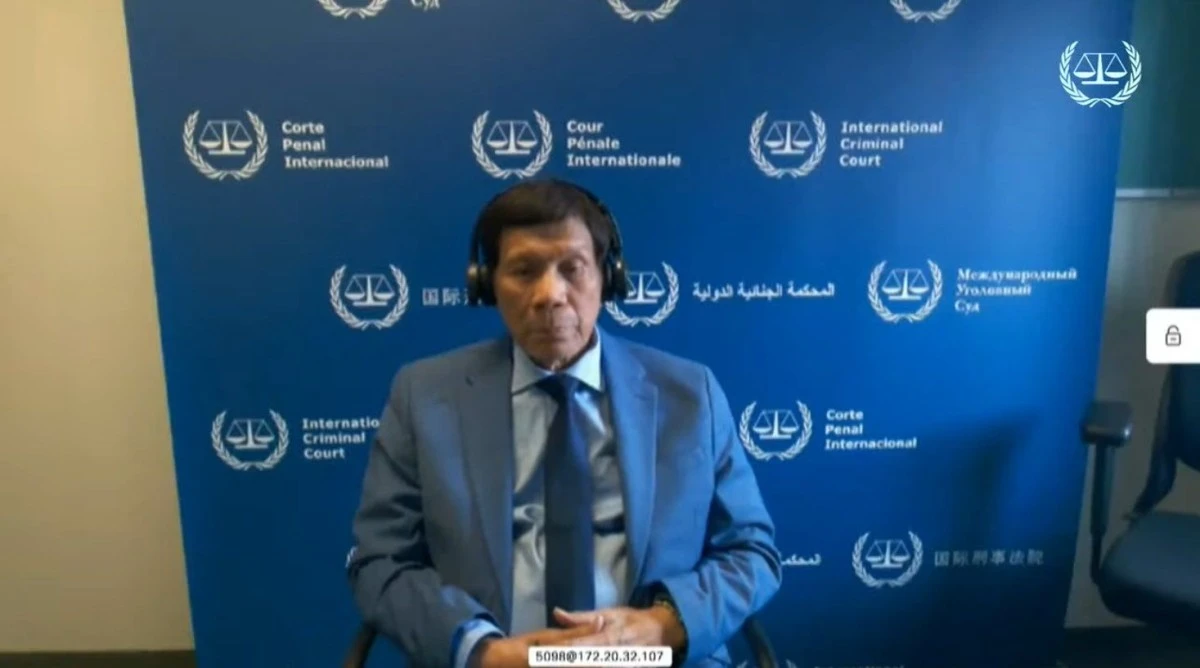
In a 38-page filing dated May 1, the defense urged the ICC Pre-Trial Chamber to dismiss the case, arguing that the Court no longer has the authority to proceed after the Philippines withdrew from the Rome Statute in March 2019.
“The Court’s jurisdiction must be triggered before the withdrawal has become effective,” the defense, citing ICC judges Gocha Lordkipanidze and Marc Perrin de Brichambaut, stated in its submission.
"Put differently, once the State’s withdrawal has become effective, the Prosecutor can no longer open an investigation," it added.
The defense emphasized that under the Rome Statute, a country must still be a party to the treaty at the time the Court decides to exercise jurisdiction.
"Textually, this indicates that a State must be a party to the Rome Statute contemporaneously with the Court’s decision to exercise jurisdiction," the team wrote.
They also took issue with the ICC’s reliance on Article 127(2) to justify continuing proceedings after withdrawal.
"No interpretation of Article 127(2) can trump the plain language of Article 12(2), which requires that, as a 'pre-condition to the exercise of jurisdiction,' a State be contemporaneously a party to the Rome Statute," the defense said.
Duterte's defense team further argued that the preliminary examination conducted by the ICC Prosecutor does not count as a legal proceeding under the ICC’s authority.
"There is no reasonable interpretation of the Rome Statute that supports the view that a 'matter under consideration' would include a ‘preliminary examination,'" they explained.
The defense also stressed that Article 127(2) refers to actions by the Court’s judges, not the Prosecutor.
"A comprehensive and systematic analysis of the Rome Statute and the Rules of Procedure and Evidence makes it clear that the Prosecutor is not subsumed within the expression 'the Court,'" the filing read.
"In nearly all instances where the term 'by the Court' is used, it refers to the judiciary to the exclusion of the Prosecutor," it furthered.
The team dismissed comparisons made by the ICC to prior cases such as the Burundi and Abd Al Rahman situations.
"The Burundi Decision is of little relevance since … the decision to authorize an investigation was issued prior to the date of Burundi’s effective withdrawal," the defense asserted.
"The Abd-Al-Rahman Decision … does not support the Chamber’s argument. … There was no issue in respect of a State withdrawal from the Rome Statute," they added.
In a press briefing on Friday, May 2, Communications Undersecretary Claire Castro said this recent filing of Duterte's defense is part of due process.
"Kung ang defense sa nila ay walang jurisdiction ang ICC (If their defense is that the ICC has no jurisdiction over the Philippines), then that's part of due process. Let them be," she said.
"Kung ano ang magiging tugon po dito ng ICC, eh nasa kamay na po 'yan ng ICC (It's up to the ICC how it will respond to it)," she added.
Meanwhile, Castro reiterated that the Philippine government will not cooperate with the ICC after Duterte's lawyers claimed that the Marcos administration conveyed this position in writing.
"In an exchange of letters, President Marcos even gave a written undertaking to the effect that his government would not 'assist the ICC, in any way, shape or form,'" Duterte's lawyers said.
According to the Palace Press Officer, it does not matter if such a letter exists or not.
"Kahit siguro po walang letter, hindi naman po talaga tayo makikialam kung ano po ang magiging mandato ng ICC (Even if there's no letter, we will not interfere with the ICC's mandate)," Castro said.
"It has been said many times," she added.
The Philippines ratified the Rome Statute in 2011, making it effective on Nov. 1 of the same year. It submitted a formal notice of withdrawal in March 2018, which took effect on March 17, 2019.
Duterte was arrested and transferred to the ICC on March 11 for crimes against humanity. He first appeared before the ICC on March 14 for a pre-trial hearing. His confirmation of charges hearing is set for Sept. 23.