ADVERTISEMENT

Reducing risk, severity of damage when 'The Big One' strikes

Published Apr 1, 2025 06:55 pm

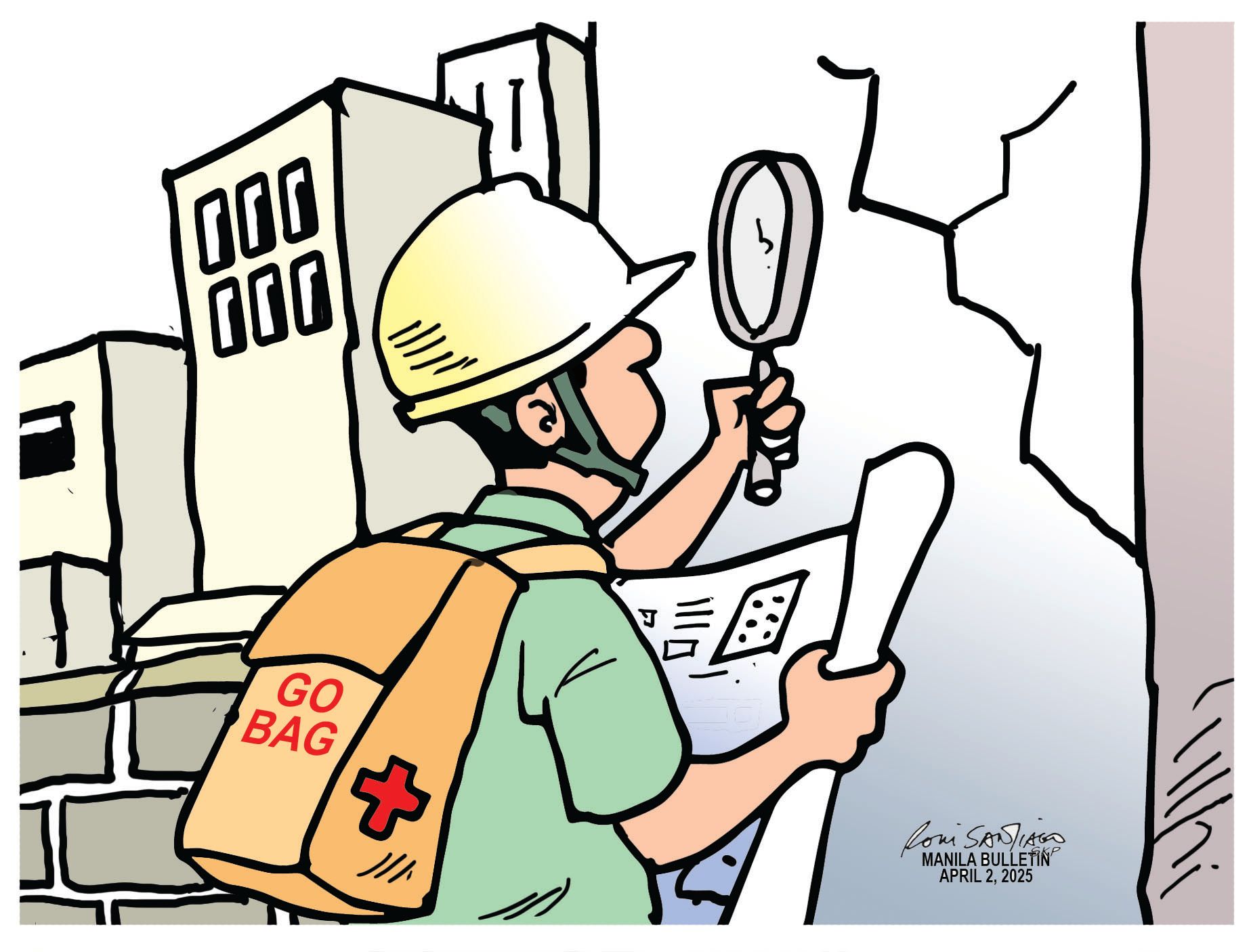
E CARTOON APR 2, 2025 (1).jpg

The recent series of devastating earthquakes in Myanmar, Thailand, and Tonga should serve as harsh reminders of the vulnerability of seismic hotspots like the Philippines. These events highlight the unpredictability and catastrophic consequences of earthquakes, especially in countries like ours, which sit along the Pacific Ring of Fire.


With the devastating effects of the tremors, we must consider the inevitable: the West Valley Fault which is primed for another major earthquake or the so-called “The Big One.” With its potential to wreak havoc on Metro Manila and surrounding provinces, the question remains: Are we truly ready?
A study of the West Valley Fault conducted by the Japan International Cooperation Agency (JICA) in 2004 showed that in a worst case scenario, a 7.2-magnitude quake in Metro Manila would cause severe damage to infrastructure and result in a death toll of over 30,000 to 50,000 and over 160,000 serious injuries.


With this in mind, the government must prioritize and accelerate its efforts to prepare the country for the eventuality of a large-scale earthquake. One of the most critical aspects of this preparation lies in strengthening our infrastructure. A significant issue is that many of our buildings are still not built to withstand the magnitude of tremors expected from an earthquake along the West Valley Fault. While modern regulations call for earthquake-resistant construction, enforcement is often inconsistent. Buildings and infrastructures must be thoroughly assessed, reinforced, and, where necessary, retrofitted to meet seismic standards.


To address this, government agencies such as the National Disaster Risk Reduction and Management Council must not only intensify inspections but also impose stricter penalties for non-compliance with building codes. Ensuring that all new constructions adhere to earthquake-resilient designs is essential, but the government's efforts should not end there. Retrofitting old and poorly constructed buildings in key areas, particularly in Metro Manila where the population density is highest, should be an urgent priority. The recent earthquake in Tonga, which caused only minor damage despite being a magnitude 7.0 event, underscores the importance of earthquake-proofing even for the most resilient infrastructure.


Local government units must be proactive in conducting public awareness campaigns to educate citizens on the risks and responses in case of an earthquake. This includes teaching people how to evacuate safely, recognize early warning signs, and take shelter during tremors. Schools, hospitals, and offices should conduct regular drills and simulations to prepare the public for "The Big One." With the knowledge that the Philippines is constantly at risk of earthquakes above magnitude 7, public education becomes an essential part of disaster readiness.


Preparation should extend beyond knowledge. Every Filipino household must have an emergency plan in place, including readily accessible emergency kits with basic supplies such as water, food, first-aid, flashlights, and batteries. Families should also identify safe spaces within their homes—areas that will offer the most protection in the event of a quake. This personal preparedness can significantly reduce panic and confusion when disaster strikes.
The reality of preparing for “The Big One” is that it requires long-term commitment and substantial investment. By ensuring buildings adhere to regulations, strengthening emergency preparedness, and fostering a culture of resilience, we can minimize the impact of such a catastrophic event.


The clock is ticking. Every delay in strengthening our infrastructure or educating our citizens about earthquake preparedness moves us closer to the inevitable. Therefore, we must become proactive in our efforts to protect lives and property. With the right policies, rigorous enforcement, and a unified approach to disaster preparedness, we can reduce the risk and severity of damage when the "Big One" inevitably strikes.

Related Tags

EDITORIAL Manila Bulletin
ADVERTISEMENT
.most-popular .layout-ratio{ padding-bottom: 79.13%; } @media (min-width: 768px) and (max-width: 1024px) { .widget-title { font-size: 15px !important; } }

{{ articles_filter_1561_widget.title }}

.most-popular .layout-ratio{ padding-bottom: 79.13%; } @media (min-width: 768px) and (max-width: 1024px) { .widget-title { font-size: 15px !important; } }

{{ articles_filter_1562_widget.title }}

.most-popular .layout-ratio{ padding-bottom: 79.13%; } @media (min-width: 768px) and (max-width: 1024px) { .widget-title { font-size: 15px !important; } }

{{ articles_filter_1563_widget.title }}

{{ articles_filter_1564_widget.title }}

.mb-article-details { position: relative; } .mb-article-details .article-body-preview, .mb-article-details .article-body-summary{ font-size: 17px; line-height: 30px; font-family: "Libre Caslon Text", serif; color: #000; } .mb-article-details .article-body-preview iframe , .mb-article-details .article-body-summary iframe{ width: 100%; margin: auto; } .read-more-background { background: linear-gradient(180deg, color(display-p3 1.000 1.000 1.000 / 0) 13.75%, color(display-p3 1.000 1.000 1.000 / 0.8) 30.79%, color(display-p3 1.000 1.000 1.000) 72.5%); position: absolute; height: 200px; width: 100%; bottom: 0; display: flex; justify-content: center; align-items: center; padding: 0; } .read-more-background a{ color: #000; } .read-more-btn { padding: 17px 45px; font-family: Inter; font-weight: 700; font-size: 18px; line-height: 16px; text-align: center; vertical-align: middle; border: 1px solid black; background-color: white; } .hidden { display: none; }
function initializeAllSwipers() { // Get all hidden inputs with cms_article_id document.querySelectorAll('[id^="cms_article_id_"]').forEach(function (input) { const cmsArticleId = input.value; const articleSelector = '#article-' + cmsArticleId + ' .body_images'; const swiperElement = document.querySelector(articleSelector); if (swiperElement && !swiperElement.classList.contains('swiper-initialized')) { new Swiper(articleSelector, { loop: true, pagination: false, navigation: { nextEl: '#article-' + cmsArticleId + ' .swiper-button-next', prevEl: '#article-' + cmsArticleId + ' .swiper-button-prev', }, }); } }); } setTimeout(initializeAllSwipers, 3000); const intersectionObserver = new IntersectionObserver( (entries) => { entries.forEach((entry) => { if (entry.isIntersecting) { const newUrl = entry.target.getAttribute("data-url"); if (newUrl) { history.pushState(null, null, newUrl); let article = entry.target; // Extract metadata const author = article.querySelector('.author-section').textContent.replace('By', '').trim(); const section = article.querySelector('.section-info ').textContent.replace(' ', ' '); const title = article.querySelector('.article-title h1').textContent; // Parse URL for Chartbeat path format const parsedUrl = new URL(newUrl, window.location.origin); const cleanUrl = parsedUrl.host + parsedUrl.pathname; // Update Chartbeat configuration if (typeof window._sf_async_config !== 'undefined') { window._sf_async_config.path = cleanUrl; window._sf_async_config.sections = section; window._sf_async_config.authors = author; } // Track virtual page view with Chartbeat if (typeof pSUPERFLY !== 'undefined' && typeof pSUPERFLY.virtualPage === 'function') { try { pSUPERFLY.virtualPage({ path: cleanUrl, title: title, sections: section, authors: author }); } catch (error) { console.error('ping error', error); } } // Optional: Update document title if (title && title !== document.title) { document.title = title; } } } }); }, { threshold: 0.1 } ); function showArticleBody(button) { const article = button.closest("article"); const summary = article.querySelector(".article-body-summary"); const body = article.querySelector(".article-body-preview"); const readMoreSection = article.querySelector(".read-more-background"); // Hide summary and read-more section summary.style.display = "none"; readMoreSection.style.display = "none"; // Show the full article body body.classList.remove("hidden"); } document.addEventListener("DOMContentLoaded", () => { let loadCount = 0; // Track how many times articles are loaded const offset = [1, 2, 3, 4, 5, 6, 7, 8, 9, 10]; // Offset values const currentUrl = window.location.pathname.substring(1); let isLoading = false; // Prevent multiple calls if (!currentUrl) { console.log("Current URL is invalid."); return; } const sentinel = document.getElementById("load-more-sentinel"); if (!sentinel) { console.log("Sentinel element not found."); return; } function isSentinelVisible() { const rect = sentinel.getBoundingClientRect(); return ( rect.top < window.innerHeight && rect.bottom >= 0 ); } function onScroll() { if (isLoading) return; if (isSentinelVisible()) { if (loadCount >= offset.length) { console.log("Maximum load attempts reached."); window.removeEventListener("scroll", onScroll); return; } isLoading = true; const currentOffset = offset[loadCount]; window.loadMoreItems().then(() => { let article = document.querySelector('#widget_1690 > div:nth-last-of-type(2) article'); intersectionObserver.observe(article) loadCount++; }).catch(error => { console.error("Error loading more items:", error); }).finally(() => { isLoading = false; }); } } window.addEventListener("scroll", onScroll); });

Sign up by email to receive news.