ADVERTISEMENT

'Toward zero waste in fashion and textiles'

Published Mar 29, 2025 04:01 pm

E CARTOON MAR 30, 2025 (1).jpg

There is a global waste crisis that is driving the planet toward destruction. It is fueled by man’s unsustainable production and consumption practices which waste management facilities are ill-equipped to handle.


We are familiar with how we consume and dispose things, lured by constant advertising that touches the emotion, and presents every new product as a necessary item. That emotion to buy — and eventually dispose — products generate from 2.1 billion to 2.3 billion tons of municipal solid waste annually. Every year the figure increases and the annual waste generation will hit 3.8 billion tons by 2050 if no urgent action is done now.


Today, March 30, is International Day of Zero Waste, declared by the United Nations General Assembly on Dec. 14, 2022, with a resolution following other high-level decisions focused on pollution, such as the UN Environment Assembly resolution “End plastic pollution: towards an internationally legally binding instrument.”


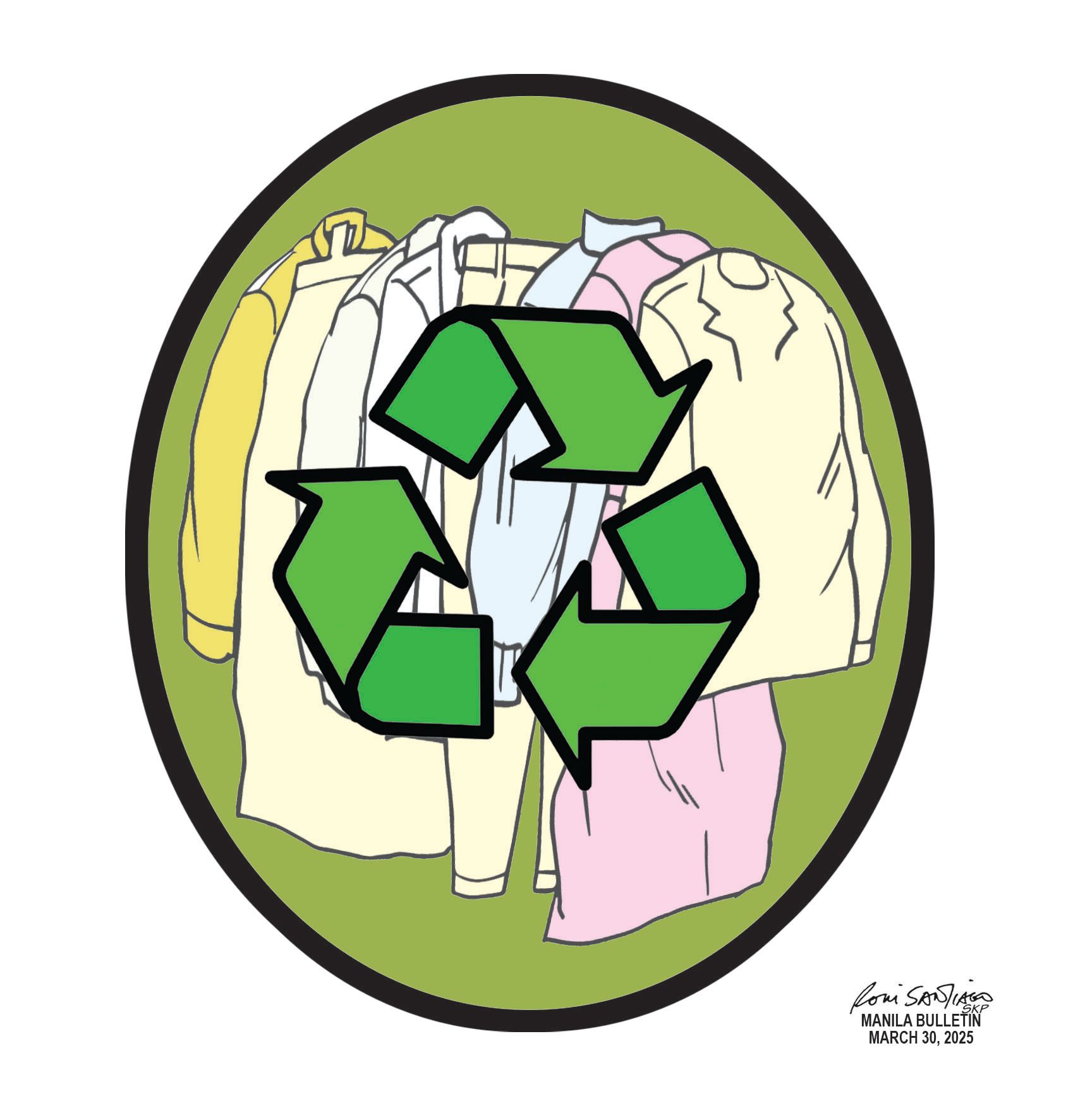
This year, the theme focuses on “Toward zero waste in fashion and textiles.” According to the UN statement, clothing production doubled from 2000 to 2015, producing 92 million tons of textile waste globally which produces two to eight percent of global greenhouse gas emissions.


“This equates to a garbage truck full of clothing incinerated or sent to landfills every second.”


This problem is clearly a waste pollution crisis and requires systemic change through sustainable production and consumption, and circular solutions. A zero-waste approach is key to this transition.


Again, consumers are reminded to reuse, repair, and recycle. “Shifting away from fast fashion and investing in durable, high-quality clothing not only conserves resources but also honors traditional sustainability approaches,” the UN advised.


Government and private sector cooperation is needed to manage the global waste pollution problem through a zero-waste approach.


Designing products that are durable, repairable, and recyclable is a responsibility that the private sector should take on. The producers should embrace “circular business models that curb chemical pollution, reduce production volumes, use sustainable materials, and help rebuild biodiversity. Innovation and accountability should guide business strategies.”


Most of all, governments play a critical role by enforcing Extended Producer Responsibility (EPR) schemes, regulating harmful chemicals, investing in recycling infrastructure, and incentivizing sustainable business models to drive the transition to a circular economy.


Each citizen needs to contribute to the goal of achieving zero-waste. Start by doubling the number of times a garment is worn. That would reduce greenhouse gas emissions by 44 percent!


The UN has made a strong statement to make people realize that their decisions on consumption habits contribute to the solution of waste pollution which threatens the health of mankind. Waste pollution costs the global economy hundreds of billions of dollars every year. And it aggravates the triple planetary crisis: the crisis of climate change, the crisis of nature, land and biodiversity loss, and the crisis of pollution and waste.

Related Tags

Editorial Manila Bulletin
ADVERTISEMENT
.most-popular .layout-ratio{ padding-bottom: 79.13%; } @media (min-width: 768px) and (max-width: 1024px) { .widget-title { font-size: 15px !important; } }

{{ articles_filter_1561_widget.title }}

.most-popular .layout-ratio{ padding-bottom: 79.13%; } @media (min-width: 768px) and (max-width: 1024px) { .widget-title { font-size: 15px !important; } }

{{ articles_filter_1562_widget.title }}

.most-popular .layout-ratio{ padding-bottom: 79.13%; } @media (min-width: 768px) and (max-width: 1024px) { .widget-title { font-size: 15px !important; } }

{{ articles_filter_1563_widget.title }}

{{ articles_filter_1564_widget.title }}

.mb-article-details { position: relative; } .mb-article-details .article-body-preview, .mb-article-details .article-body-summary{ font-size: 17px; line-height: 30px; font-family: "Libre Caslon Text", serif; color: #000; } .mb-article-details .article-body-preview iframe , .mb-article-details .article-body-summary iframe{ width: 100%; margin: auto; } .read-more-background { background: linear-gradient(180deg, color(display-p3 1.000 1.000 1.000 / 0) 13.75%, color(display-p3 1.000 1.000 1.000 / 0.8) 30.79%, color(display-p3 1.000 1.000 1.000) 72.5%); position: absolute; height: 200px; width: 100%; bottom: 0; display: flex; justify-content: center; align-items: center; padding: 0; } .read-more-background a{ color: #000; } .read-more-btn { padding: 17px 45px; font-family: Inter; font-weight: 700; font-size: 18px; line-height: 16px; text-align: center; vertical-align: middle; border: 1px solid black; background-color: white; } .hidden { display: none; }
function initializeAllSwipers() { // Get all hidden inputs with cms_article_id document.querySelectorAll('[id^="cms_article_id_"]').forEach(function (input) { const cmsArticleId = input.value; const articleSelector = '#article-' + cmsArticleId + ' .body_images'; const swiperElement = document.querySelector(articleSelector); if (swiperElement && !swiperElement.classList.contains('swiper-initialized')) { new Swiper(articleSelector, { loop: true, pagination: false, navigation: { nextEl: '#article-' + cmsArticleId + ' .swiper-button-next', prevEl: '#article-' + cmsArticleId + ' .swiper-button-prev', }, }); } }); } setTimeout(initializeAllSwipers, 3000); const intersectionObserver = new IntersectionObserver( (entries) => { entries.forEach((entry) => { if (entry.isIntersecting) { const newUrl = entry.target.getAttribute("data-url"); if (newUrl) { history.pushState(null, null, newUrl); let article = entry.target; // Extract metadata const author = article.querySelector('.author-section').textContent.replace('By', '').trim(); const section = article.querySelector('.section-info ').textContent.replace(' ', ' '); const title = article.querySelector('.article-title h1').textContent; // Parse URL for Chartbeat path format const parsedUrl = new URL(newUrl, window.location.origin); const cleanUrl = parsedUrl.host + parsedUrl.pathname; // Update Chartbeat configuration if (typeof window._sf_async_config !== 'undefined') { window._sf_async_config.path = cleanUrl; window._sf_async_config.sections = section; window._sf_async_config.authors = author; } // Track virtual page view with Chartbeat if (typeof pSUPERFLY !== 'undefined' && typeof pSUPERFLY.virtualPage === 'function') { try { pSUPERFLY.virtualPage({ path: cleanUrl, title: title, sections: section, authors: author }); } catch (error) { console.error('ping error', error); } } // Optional: Update document title if (title && title !== document.title) { document.title = title; } } } }); }, { threshold: 0.1 } ); function showArticleBody(button) { const article = button.closest("article"); const summary = article.querySelector(".article-body-summary"); const body = article.querySelector(".article-body-preview"); const readMoreSection = article.querySelector(".read-more-background"); // Hide summary and read-more section summary.style.display = "none"; readMoreSection.style.display = "none"; // Show the full article body body.classList.remove("hidden"); } document.addEventListener("DOMContentLoaded", () => { let loadCount = 0; // Track how many times articles are loaded const offset = [1, 2, 3, 4, 5, 6, 7, 8, 9, 10]; // Offset values const currentUrl = window.location.pathname.substring(1); let isLoading = false; // Prevent multiple calls if (!currentUrl) { console.log("Current URL is invalid."); return; } const sentinel = document.getElementById("load-more-sentinel"); if (!sentinel) { console.log("Sentinel element not found."); return; } function isSentinelVisible() { const rect = sentinel.getBoundingClientRect(); return ( rect.top < window.innerHeight && rect.bottom >= 0 ); } function onScroll() { if (isLoading) return; if (isSentinelVisible()) { if (loadCount >= offset.length) { console.log("Maximum load attempts reached."); window.removeEventListener("scroll", onScroll); return; } isLoading = true; const currentOffset = offset[loadCount]; window.loadMoreItems().then(() => { let article = document.querySelector('#widget_1690 > div:nth-last-of-type(2) article'); intersectionObserver.observe(article) loadCount++; }).catch(error => { console.error("Error loading more items:", error); }).finally(() => { isLoading = false; }); } } window.addEventListener("scroll", onScroll); });

Sign up by email to receive news.