ADVERTISEMENT

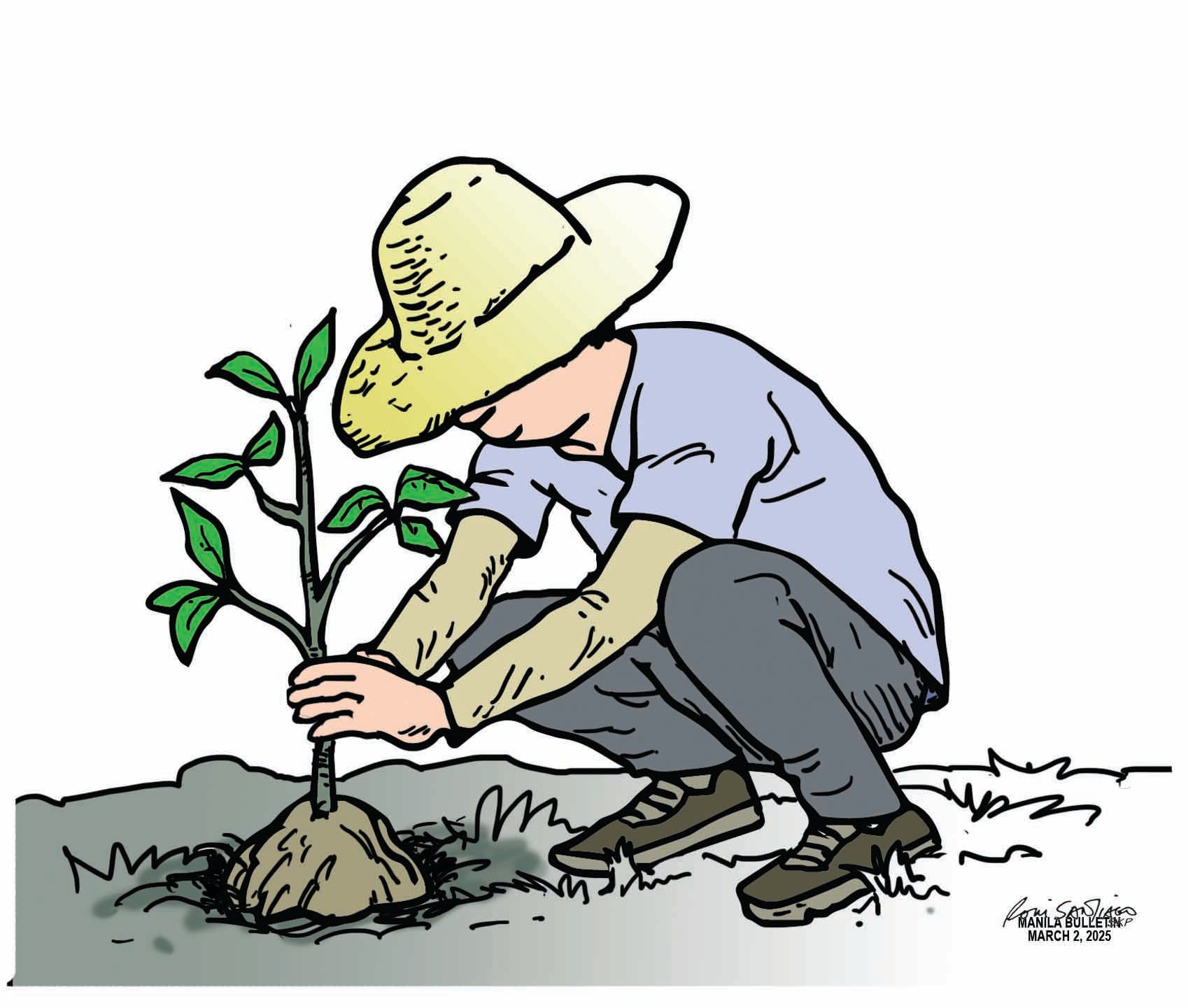
Forests for Life: A call to plant 3 million trees for a greener future

Published Mar 1, 2025 04:07 pm

E CARTOON MAR 2, 2025.jpg

The urgency of reforestation continues to be sounded by dozens of government and non-government organizations around the world, their targets for planting trees now in the trillions. Still, there are forests that need more trees.


Two weeks ago, the Department of Environment and Natural Resources (DENR) unveiled the Forest for Life: 3M Trees by 2028 initiative, aiming to plant three million trees by 2028. It seeks to restore critical forest ecosystems, enhance biodiversity, improve water resources, and mitigate soil erosion.


DENR officials led by Secretary Maria Antonia Yulo-Loyzaga highlighted the pressing need for reforestation. Maps presented revealed that approximately 1.2 million hectares of forest land require reforestation. With three million trees covering roughly 6,000 hectares, it’s evident that substantial efforts are needed to address the vast areas awaiting restoration. This scenario presents ample opportunities for private corporations and organizations to support the reforestation initiative.


The Forests for Life program has identified specific areas for tree planting, including Ilocos Norte, Rizal, Leyte, Bataan, Bukidnon, and Lanao del Norte. The success of this initiative hinges on collaboration between government entities and the private sector. Private individuals and companies are encouraged to invest in the program, with packages starting as low as ₱100 per tree over a three-year period.


The Forests for Life initiative builds on the government’s long history of tree-planting programs. One of the largest and most ambitious was the National Greening Program (NGP), launched in 2011 through Executive Order No. 26. The NGP aimed to plant 1.5 billion trees across 1.5 million hectares of degraded forestlands from 2011 to 2016.


Reforestation offers a multitude of benefits beyond the mere presence of trees. It enhances biodiversity, creates livelihood opportunities, and promotes eco-tourism, thereby stimulating local economies. Moreover, trees play a pivotal role in carbon sequestration. The Forests for Life program aims for a cumulative carbon sequestration of 500,000 tonnes of CO2 from 2025 to 2028, and a total of 3.5 million tonnes by 2038. This significant reduction in greenhouse gases underscores the program’s commitment to combating climate change.


On a global scale, the Trillion Trees initiative, a collective effort by BirdLife International, the Wildlife Conservation Society, and WWF, which started in 2016, strives to protect and restore forests worldwide. Their mission is to conserve, restore, and grow one trillion trees by 2030, emphasizing the critical role forests play in maintaining ecological balance and supporting biodiversity. Similarly, the World Economic Forum’s One Trillion Trees initiative mobilizes the private sector, facilitates multi-stakeholder partnerships, and supports innovation to achieve its reforestation goals.


Whether it’s a million, a billion or a trillion trees, it all starts with one tree that a citizen plants today. It also starts with an understanding on the life of a tree. A nonprofit organization in the United States named Neighborhood Forest started a reforestation program in 2010 to “give every child the priceless joy of planting and watching trees grow.” And they are not aiming for the big numbers, giving some 67,000 kids their very own tree last Earth Day and now aiming to reach 100,000 kids for Earth Day 2025.


The success of these programs underscores the importance of sustained commitment and collaboration. Reforestation is not merely about planting trees; it’s about ensuring their growth into healthy forests, protecting them from illegal activities, and integrating sustainable land management policies. Governments must provide robust support for these efforts, and every citizen has a role in preserving our natural resources.

Related Tags

EDITORIAL Manila Bulletin
ADVERTISEMENT
.most-popular .layout-ratio{ padding-bottom: 79.13%; } @media (min-width: 768px) and (max-width: 1024px) { .widget-title { font-size: 15px !important; } }

{{ articles_filter_1561_widget.title }}

.most-popular .layout-ratio{ padding-bottom: 79.13%; } @media (min-width: 768px) and (max-width: 1024px) { .widget-title { font-size: 15px !important; } }

{{ articles_filter_1562_widget.title }}

.most-popular .layout-ratio{ padding-bottom: 79.13%; } @media (min-width: 768px) and (max-width: 1024px) { .widget-title { font-size: 15px !important; } }

{{ articles_filter_1563_widget.title }}

{{ articles_filter_1564_widget.title }}

.mb-article-details { position: relative; } .mb-article-details .article-body-preview, .mb-article-details .article-body-summary{ font-size: 17px; line-height: 30px; font-family: "Libre Caslon Text", serif; color: #000; } .mb-article-details .article-body-preview iframe , .mb-article-details .article-body-summary iframe{ width: 100%; margin: auto; } .read-more-background { background: linear-gradient(180deg, color(display-p3 1.000 1.000 1.000 / 0) 13.75%, color(display-p3 1.000 1.000 1.000 / 0.8) 30.79%, color(display-p3 1.000 1.000 1.000) 72.5%); position: absolute; height: 200px; width: 100%; bottom: 0; display: flex; justify-content: center; align-items: center; padding: 0; } .read-more-background a{ color: #000; } .read-more-btn { padding: 17px 45px; font-family: Inter; font-weight: 700; font-size: 18px; line-height: 16px; text-align: center; vertical-align: middle; border: 1px solid black; background-color: white; } .hidden { display: none; }
function initializeAllSwipers() { // Get all hidden inputs with cms_article_id document.querySelectorAll('[id^="cms_article_id_"]').forEach(function (input) { const cmsArticleId = input.value; const articleSelector = '#article-' + cmsArticleId + ' .body_images'; const swiperElement = document.querySelector(articleSelector); if (swiperElement && !swiperElement.classList.contains('swiper-initialized')) { new Swiper(articleSelector, { loop: true, pagination: false, navigation: { nextEl: '#article-' + cmsArticleId + ' .swiper-button-next', prevEl: '#article-' + cmsArticleId + ' .swiper-button-prev', }, }); } }); } setTimeout(initializeAllSwipers, 3000); const intersectionObserver = new IntersectionObserver( (entries) => { entries.forEach((entry) => { if (entry.isIntersecting) { const newUrl = entry.target.getAttribute("data-url"); if (newUrl) { history.pushState(null, null, newUrl); let article = entry.target; // Extract metadata const author = article.querySelector('.author-section').textContent.replace('By', '').trim(); const section = article.querySelector('.section-info ').textContent.replace(' ', ' '); const title = article.querySelector('.article-title h1').textContent; // Parse URL for Chartbeat path format const parsedUrl = new URL(newUrl, window.location.origin); const cleanUrl = parsedUrl.host + parsedUrl.pathname; // Update Chartbeat configuration if (typeof window._sf_async_config !== 'undefined') { window._sf_async_config.path = cleanUrl; window._sf_async_config.sections = section; window._sf_async_config.authors = author; } // Track virtual page view with Chartbeat if (typeof pSUPERFLY !== 'undefined' && typeof pSUPERFLY.virtualPage === 'function') { try { pSUPERFLY.virtualPage({ path: cleanUrl, title: title, sections: section, authors: author }); } catch (error) { console.error('ping error', error); } } // Optional: Update document title if (title && title !== document.title) { document.title = title; } } } }); }, { threshold: 0.1 } ); function showArticleBody(button) { const article = button.closest("article"); const summary = article.querySelector(".article-body-summary"); const body = article.querySelector(".article-body-preview"); const readMoreSection = article.querySelector(".read-more-background"); // Hide summary and read-more section summary.style.display = "none"; readMoreSection.style.display = "none"; // Show the full article body body.classList.remove("hidden"); } document.addEventListener("DOMContentLoaded", () => { let loadCount = 0; // Track how many times articles are loaded const offset = [1, 2, 3, 4, 5, 6, 7, 8, 9, 10]; // Offset values const currentUrl = window.location.pathname.substring(1); let isLoading = false; // Prevent multiple calls if (!currentUrl) { console.log("Current URL is invalid."); return; } const sentinel = document.getElementById("load-more-sentinel"); if (!sentinel) { console.log("Sentinel element not found."); return; } function isSentinelVisible() { const rect = sentinel.getBoundingClientRect(); return ( rect.top < window.innerHeight && rect.bottom >= 0 ); } function onScroll() { if (isLoading) return; if (isSentinelVisible()) { if (loadCount >= offset.length) { console.log("Maximum load attempts reached."); window.removeEventListener("scroll", onScroll); return; } isLoading = true; const currentOffset = offset[loadCount]; window.loadMoreItems().then(() => { let article = document.querySelector('#widget_1690 > div:nth-last-of-type(2) article'); intersectionObserver.observe(article) loadCount++; }).catch(error => { console.error("Error loading more items:", error); }).finally(() => { isLoading = false; }); } } window.addEventListener("scroll", onScroll); });

Sign up by email to receive news.