








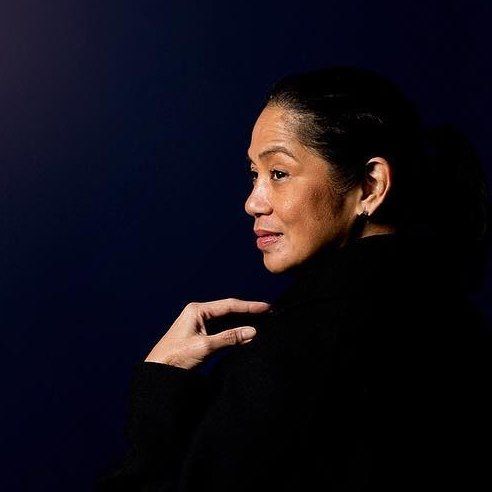
Some people leave behind a book, a painting, a building, a song. Margarita Forés, who passed away on Feb. 11 at the Upper House hotel in Hong Kong on her way home from Morocco, left us a table—a table overflowing, abundant, generous, the kind that never empties because the more you share, the more there is to give.
Her life was a feast, a never-ending ode to beauty and flavor. She didn’t just cook—she translated the poetry of ingredients, the craft of techniques into something we could taste, something with which we could fill ourselves.
From Italy, whose cuisine she began to master when, armed with no formal culinary training whatsoever, she went to Florence in 1986 to undertake a four-month intensive training in Italian cooking as well as the Italian language, she took the very best and made it Filipino, from her porchetta infused with native herbs to her handmade agnolotti stuffed with kesong puti. Her craft and devotion to it sprang from her resolve to learn to cook Italian to the best of her abilities, which took her under the wing of three of the most respected of Italy’s chefs—Milan’s Ada Parasiliti, Rome’s Joe Betoja, and Florence’s Masha Innoscenti.
Although she immersed herself in the ins and outs of Italian cooking, she did so as a Filipino, our own traditions, techniques, approaches, and attitudes to food and eating, especially our vast arsenal of ingredients, never far from her mind. Armed with what she called “eureka,” the joyful discovery that the gems of both Filipino and Italian cuisine could be combined, she sought to make her mark as a chef, building an empire out of it, beginning with the Italian casual dining establishment Cibo, which she opened in 1997 at the Glorietta shopping complex in Makati City.
She has since always made a point of honoring our own bounty, even as her group of restaurants expanded quickly over the decades to include Pepato, Lusso, Cibo di M, the Loggia, and Grace Park. Her relentless pursuit of excellence—her drive to make her restaurants stand among the world’s best—never meant looking outward at the expense of home. If anything, it deepened her roots, grounding her vision in the Philippines and, even more intimately, in Negros, particularly Bacolod. It was there, in the heart of sugar country, that she found not just inspiration but identity, weaving the richness of Negrense produce and traditions into the fabric of her cuisine, elevating adlai as an alternative grain long before it became fashionable, for instance, and putting ulam at the center of fine dining, proving that elegance and comfort could exist on the same plate.
No matter how far her name traveled, it always carried the unmistakable taste of home. Every plate was a story, every meal a love letter. “I’m Ilonggo, you know,” she would say time and again, as if it was enough to explain both her inspirations and accomplishments. How she loved—with her hands, with her fire, with her unwavering belief that food, done right, could be more than nourishment. It could be memory, it could be home.
In 2016, the world took notice and named her Asia’s Best Female Chef. Two years later, the land that first ignited her passion honored her as Cavaliere of the Ordine della Stella d’Italia (Honorary Knight of the Order of the Star of Italy), a rare and distinguished recognition for someone who had extolled Italian flavors and, instead of imitating them, reimagined them with Filipino soul.
Last year, she announced that she was ready to put her name on the door. Margarita, her most personal restaurant yet, was to be a culmination of everything she had built, every lesson she had learned, every dream she had dared to chase. Scheduled to open this quarter, it has been designed to be a strong statement that this acclaimed chef, already a legend, has so much more to give to this country and its people, which she had served, for all of 38 years. It was, as she pointed out, also designed to transcend even her.
Now, the kitchen is quiet, but the table remains. And we, the fortunate ones who sat at it, who ate and drank and laughed under the warmth of her artistry and passions will keep returning. Because that’s how you honor someone like Margarita Forés. You gather, you share, you remember.
And, always, you eat.