






Manila Bulletin
 Philippines
National
Año warns Communist violence persists despite ceasefire claims by CPP
Philippines
National
Año warns Communist violence persists despite ceasefire claims by CPP
Philippines
National
Año warns Communist violence persists despite ceasefire claims by CPP
Año warns Communist violence persists despite ceasefire claims by CPP
Published Dec 27, 2025 11:40 am


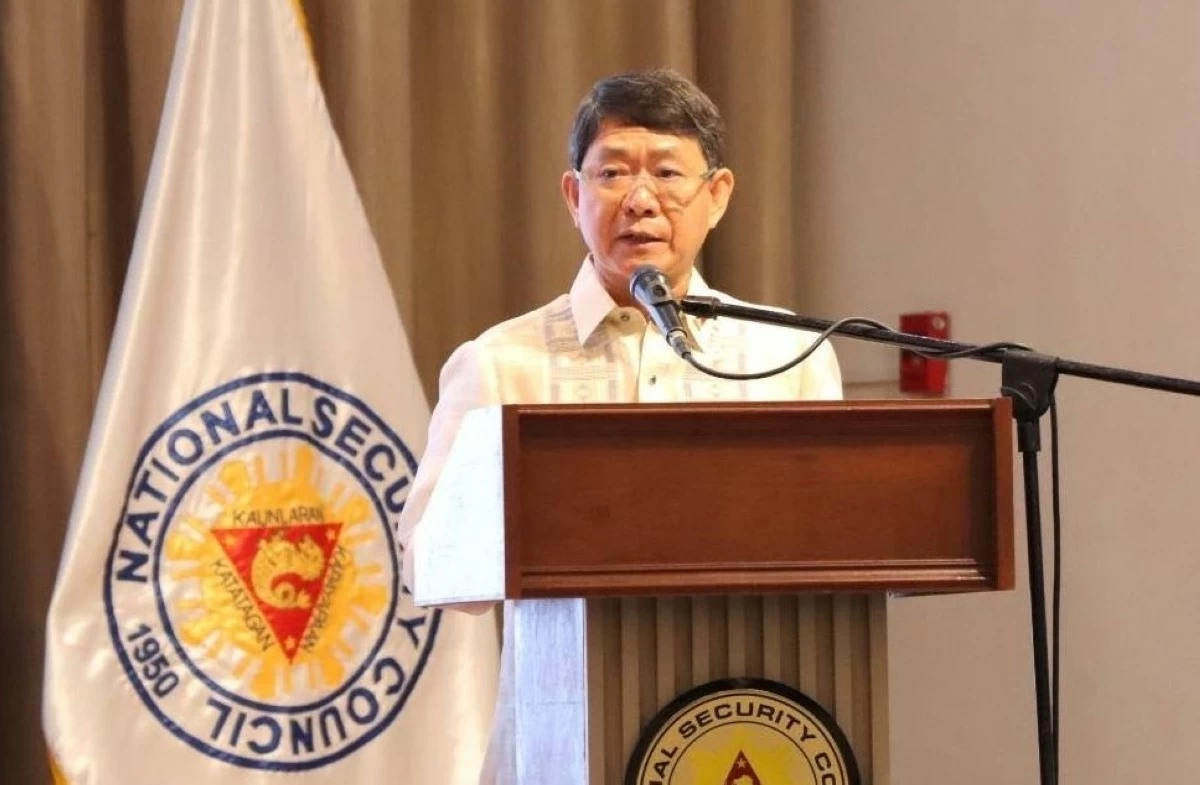
National Security Adviser Eduardo Año (Photo: National Security Council)
The National Security Council (NSC) said the armed campaign of the Communist Party of the Philippines (CPP) remains active despite its declaration of a unilateral ceasefire.
The CPP marked the second day of its four-day truce on Saturday, Dec. 27, but National Security Adviser (NSA) Eduardo Año said recent deadly encounters with the New People’s Army (NPA), the armed wing of the CPP, during the holiday season are proof that violence continues on the ground.
“Declarations of temporary ceasefires, when coupled with explicit calls for continued armed readiness, merely show insincerity for genuine public safety and community welfare,” he said.
Last week, the CPP the CPP announced a ceasefire order for its armed wing, the NPA, from 12 a.m. of Dec. 25 to 11:59 p.m. of Dec. 26, and from 12 a.m. of Dec. 31 to 11:59 p.m. of Jan. 1.
The CPP directed its units to go on “active defense mode” during the period. The group said the move was in solidarity with holiday celebrations and to mark its 57th party anniversary on Dec. 26.
Days before the truce took effect, two soldiers were killed when anti-personnel mines were detonated by NPA rebels in Balatan, Camarines Sur on Dec. 20.
Seven suspected NPA members were also killed in separate clashes with the military in Lagonoy, Camarines Sur and Las Navas, Northern Samar from Dec. 19 to 23.
On Dec. 3, two soldiers also died in an NPA encounter in San Jose De Buan, Samar.
“For 57 years, the Communist Party of the Philippines - New People’s Army (CPP–NPA’s) armed campaign had exacted a heavy toll on the Filipino people, resulting in loss of lives, displacement, economic disruption, and persistent insecurity, especially in geographically isolated and disadvantaged rural communities,” Año said.
“Recent armed encounters, including incidents that caused fatalities even during the holiday period, demonstrate that violence remains an active and continuing means to achieve their objectives,” he added.
The NSA said temporary ceasefire declarations by the CPP lacks credibility, and added that these are undermined by open calls for armed readiness.
The Department of National Defense (DND) and Armed Forces of the Philippines (AFP) did not reciprocate the declaration of ceasefire by the CPP.
Año stressed that democratic dissent is protected under the Constitution. It said armed struggle to achieve political goals is not acceptable in a democratic system.
Meanwhile, the NSA reiterated its commitment to the National Action Plan for Unity, Peace, and Development (NAP-UPD), which is carried out through a whole-of-nation approach led by the National Task Force to End Local Communist Armed Conflict (NTF-ELCAC).
The strategy focuses on ending the conflict through lawful and people-centered measures including rebel disengagement, reintegration, livelihood aid, and stronger local governance.
Año noted that the government continues to offer amnesty to qualified former rebels. He described the amnesty offer as a “clear path back to civilian life.”
He called on the remaining armed members to surrender and rejoin society, and urged the public, especially the youth, to reject the glorification of violence and support peaceful reform.
The NSA said ending the decades-long insurgency requires collective resolve and progress depends on denying violence legitimacy and delivering security and development to affected communities.