







A Filipino tasting menu by the sea in Bohol
Chef Bettina Arguelles opens Tiya's House, South Palms Panglao MGallery's destination dining space, with a regional tasting menu rooted in place, memory, and local ingredients
Published Dec 17, 2025 08:18 am
|
Updated Dec 17, 2025 05:53 pm


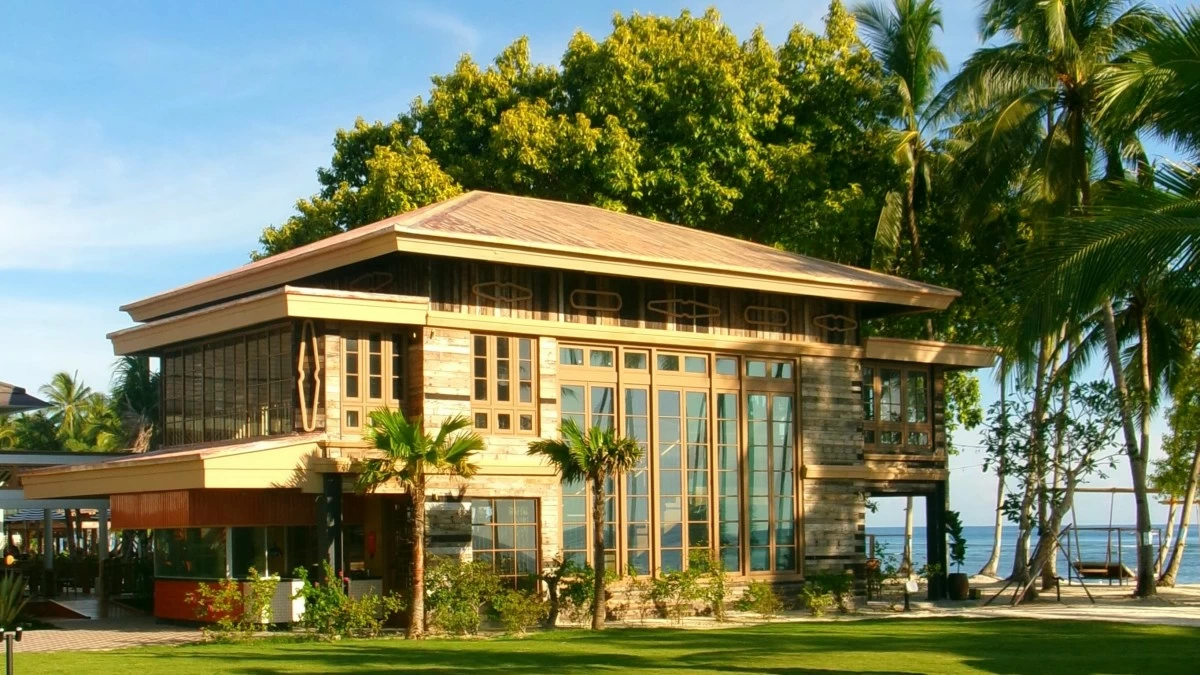
ANCESTRAL TABLE The exterior of Tiya’s House at South Palms Panglao, its beachfront structure setting the tone for an intimate dining experience rooted in Filipino hospitality and place
Only in the tropics, and perhaps only in the Philippines, does the Christmas season arrive like this. Morning sunlight spills easily across a beachfront resort. The sea breeze moves without effort. Waves settle into a steady, calming rhythm. Somewhere, softly projected from hidden speakers, the familiar strains of the “A Charlie Brown Christmas” soundtrack drift through the air as guests make their way to breakfast. It is an unhurried, almost surreal pairing: jazz-inflected holiday music and bare feet on sand. It is a scene that feels entirely local and deeply comforting. I would not trade it for anything.
That was how my day began at South Palms Panglao MGallery in Bohol, where I had been invited to experience Tiya’s House, the resort’s new destination dining concept led by Chef Bettina Arguelles. The setting alone sets expectations. Tiya’s House is housed in an ancestral beachfront structure, designed less like a restaurant and more like a home that opens itself deliberately to conversation, memory and food. From the start, the experience feels intentional, grounded in place, and quietly ambitious.
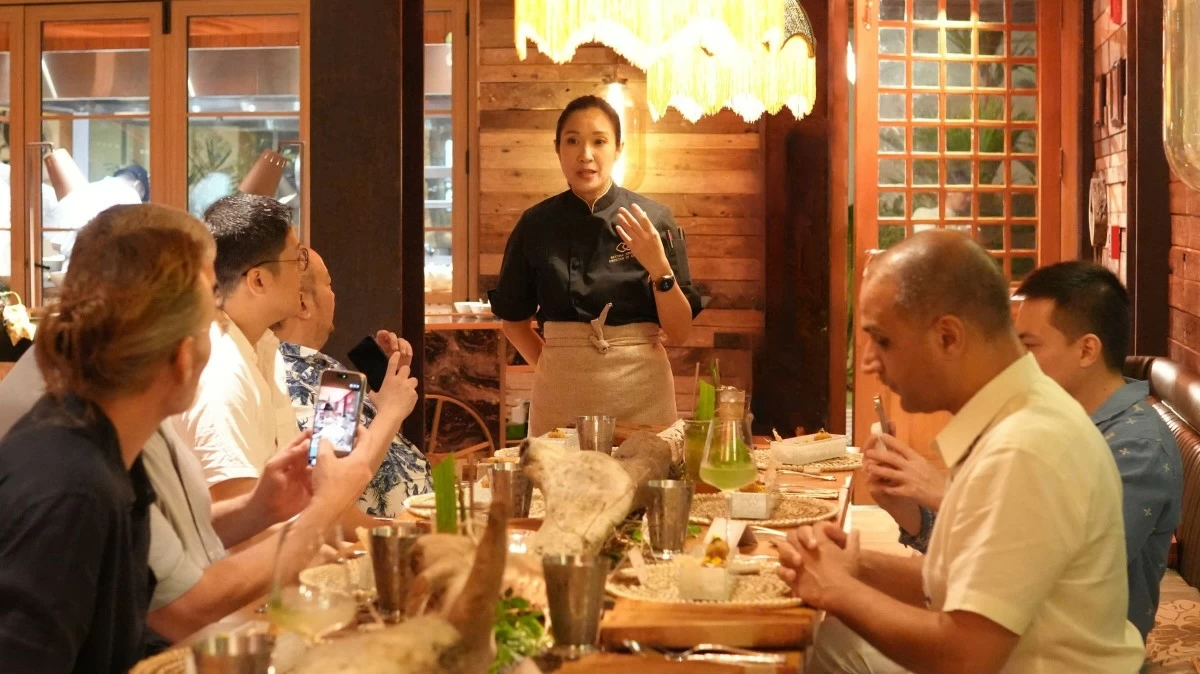
TABLE TALK Chef Bettina Arguelles explains the dishes at Tiya’s House, guiding diners through the stories, ingredients and regional roots behind each course
Tiya’s House positions itself as Bohol’s first degustación experience, structured around the idea that Filipino cuisine is best understood through its regions. Inside are three private dining rooms named after Luzon, Visayas and Mindanao, each representing a culinary territory. Monthly degustación dinners invite chefs to tell stories through food, using ingredients, techniques and flavors that are increasingly rare, often overlooked and sometimes at risk of disappearing altogether.
Chef Bettina, the first Filipina executive chef of Sofitel Philippine Plaza Manila, helms the inaugural series we experienced last Dec. 10. Her approach is rooted in memory and urgency. “There are ingredients and techniques that are dying because no one wants to make them anymore—they’re time-consuming, too labor-intensive,” she says. “I’m working with flavors we grew up with that the next generation might never taste. That’s what drives this menu.”
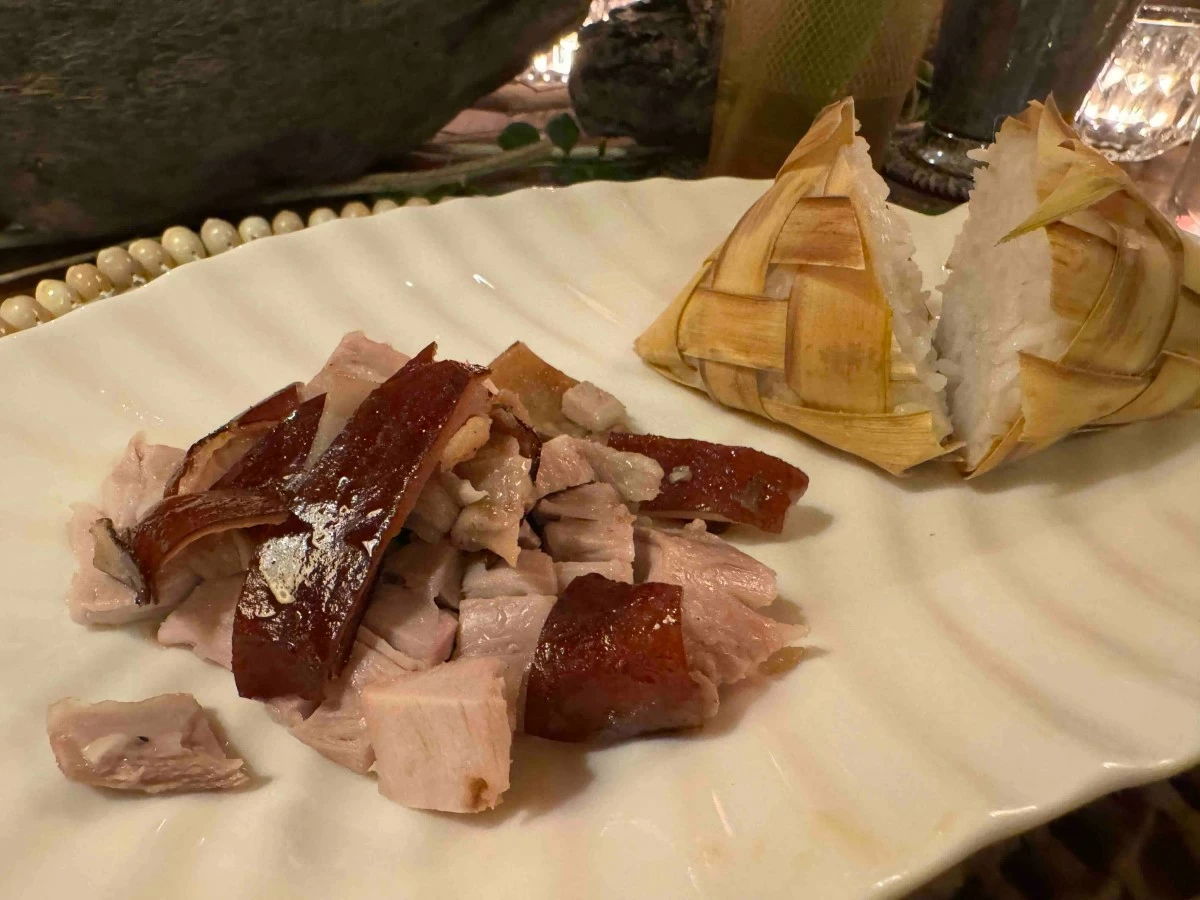
ROOTED FEAST Lechong baboy ramo served with puso and tuslob buwa at Tiya’s House, a dish that brings regional flavors and communal tradition to the center of the table
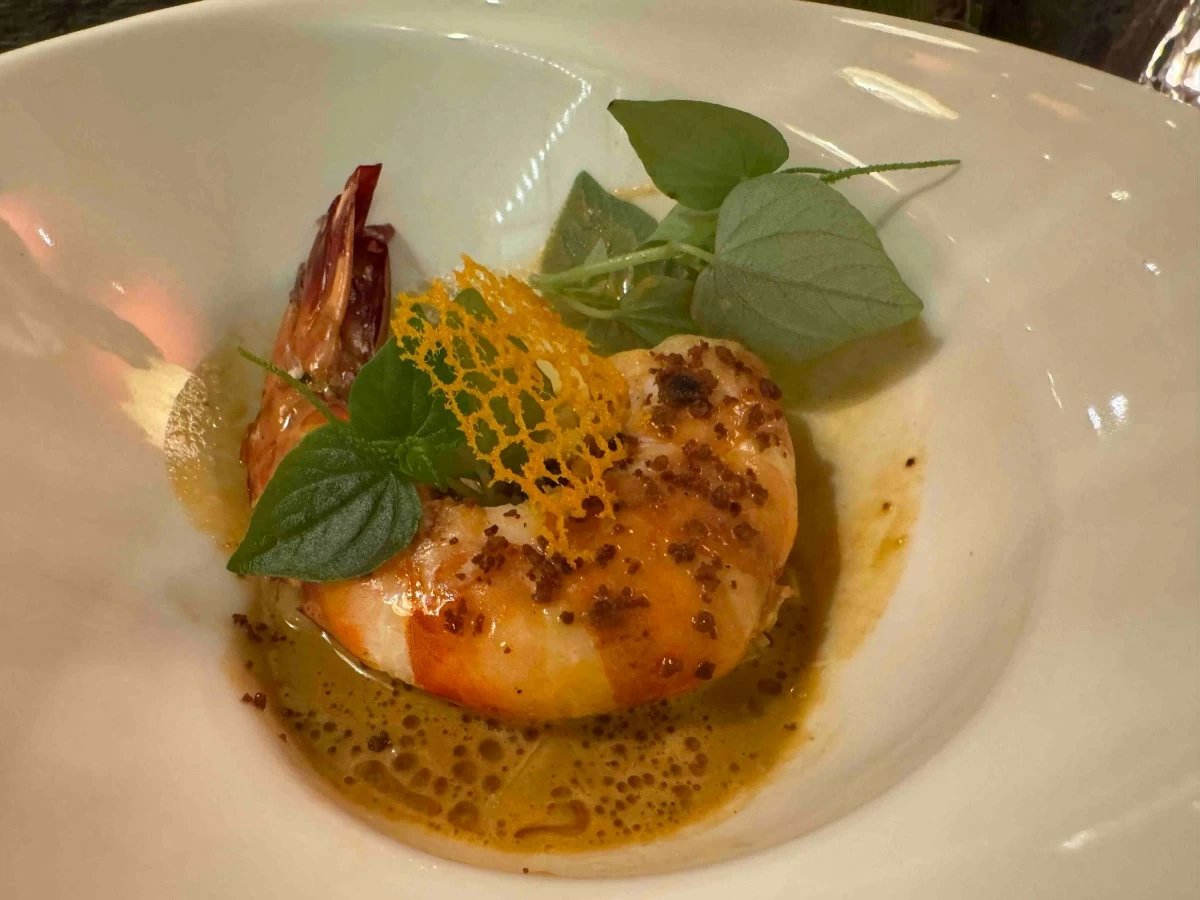
SEA NOTE Prawn halabos with pancit buko at Tiya’s House, where briny sweetness and gentle heat highlight the menu’s coastal roots.
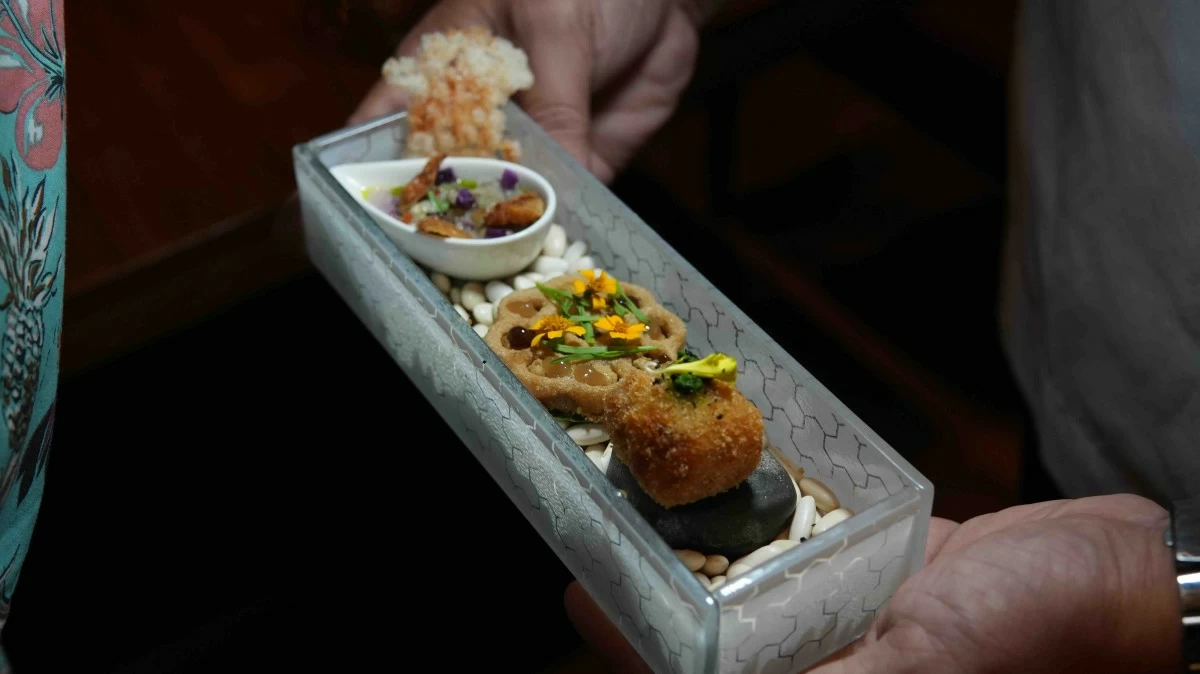
OPENING BITES A trio of starters at Tiya’s House- oyster sinuglaw with tapioca chips, calderetang kambing croquettes and inasal chicken liver pate
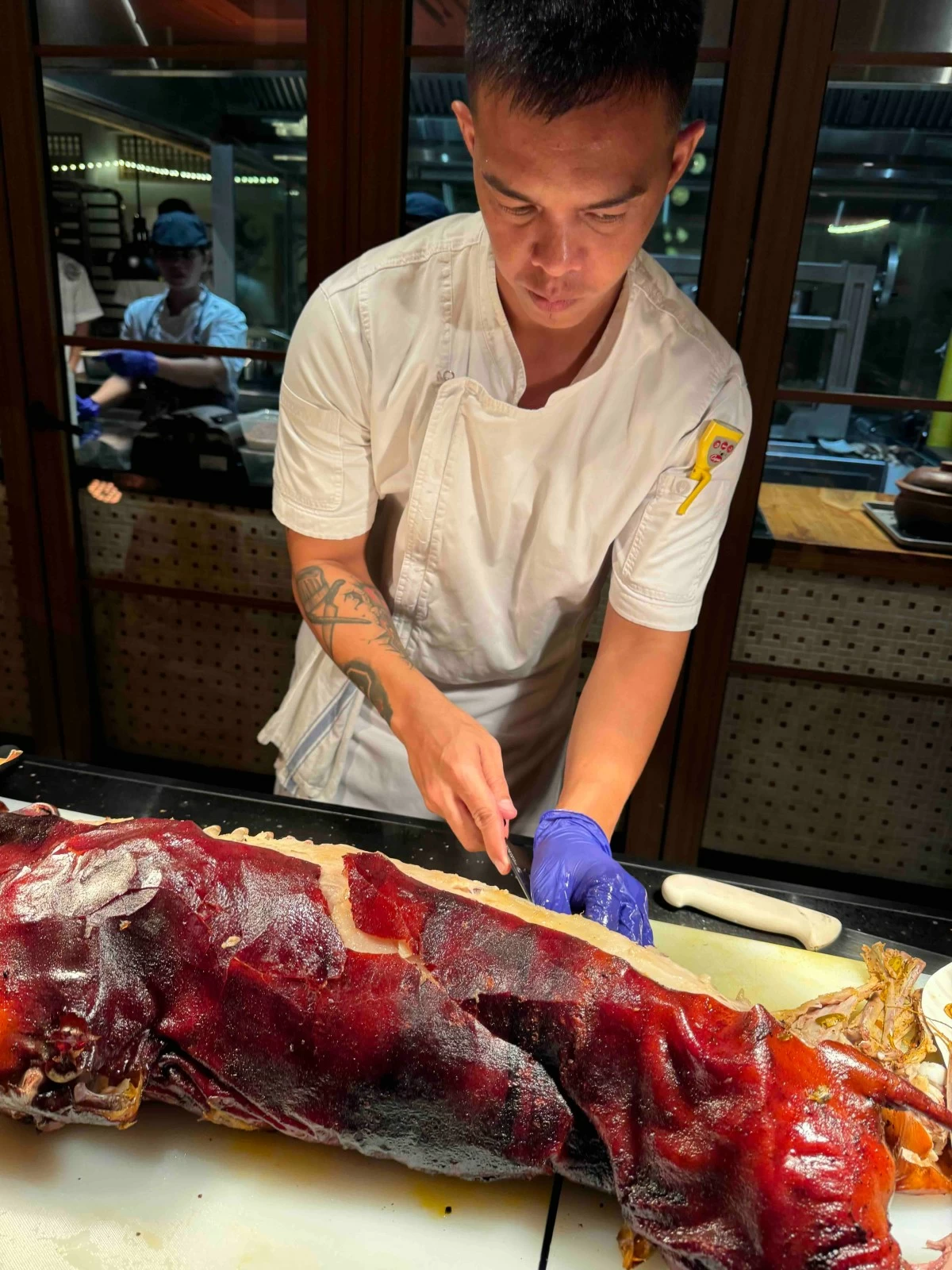
WHOLE HOG Lechong baboy ramo is carved at Tiya’s House, a dramatic moment that anchors the degustación in tradition, ritual, and shared celebration
The dinner unfolds as a gradual introduction to place and produce rather than a single, linear meal. It opens on the upper level as daylight fades, with cocktails poured against a backdrop of sea and sky. Light bites soon appear, including chichacorn and cassava chips, setting an unhurried tone. Before moving on, diners are briefly walked through the evening’s ingredients, drawn from farms and waters across Luzon, the Visayas, and Mindanao, a quiet primer for what is to come.
The first proper courses are served downstairs, beginning with a selection of pulutan designed for sharing. An inasal-style chicken liver pâté anchors the spread, joined by ensaladang talong accented with bihod bottarga. A halabos na hipon paired with pancit buko follows, before a Tausug pyanggang arrives, its deep smokiness from charred coconut offset by fresh herbs.
From there, the menu moves into heartier territory, with dishes that reference regional cooking while keeping presentation understated. Lechon kawali nods to KBL flavors through a batwan puree, followed by a duck confit cocido. The sequence culminates in lechong baboy ramo served in two preparations, accompanied by tuslob buwa, a Cebuano street food sauce seldom encountered in formal dining rooms. The evening ends on a restrained note with dessert: a combination of tablea flan, kesong puti paired with tropical fruit, and guyabano sorbet.
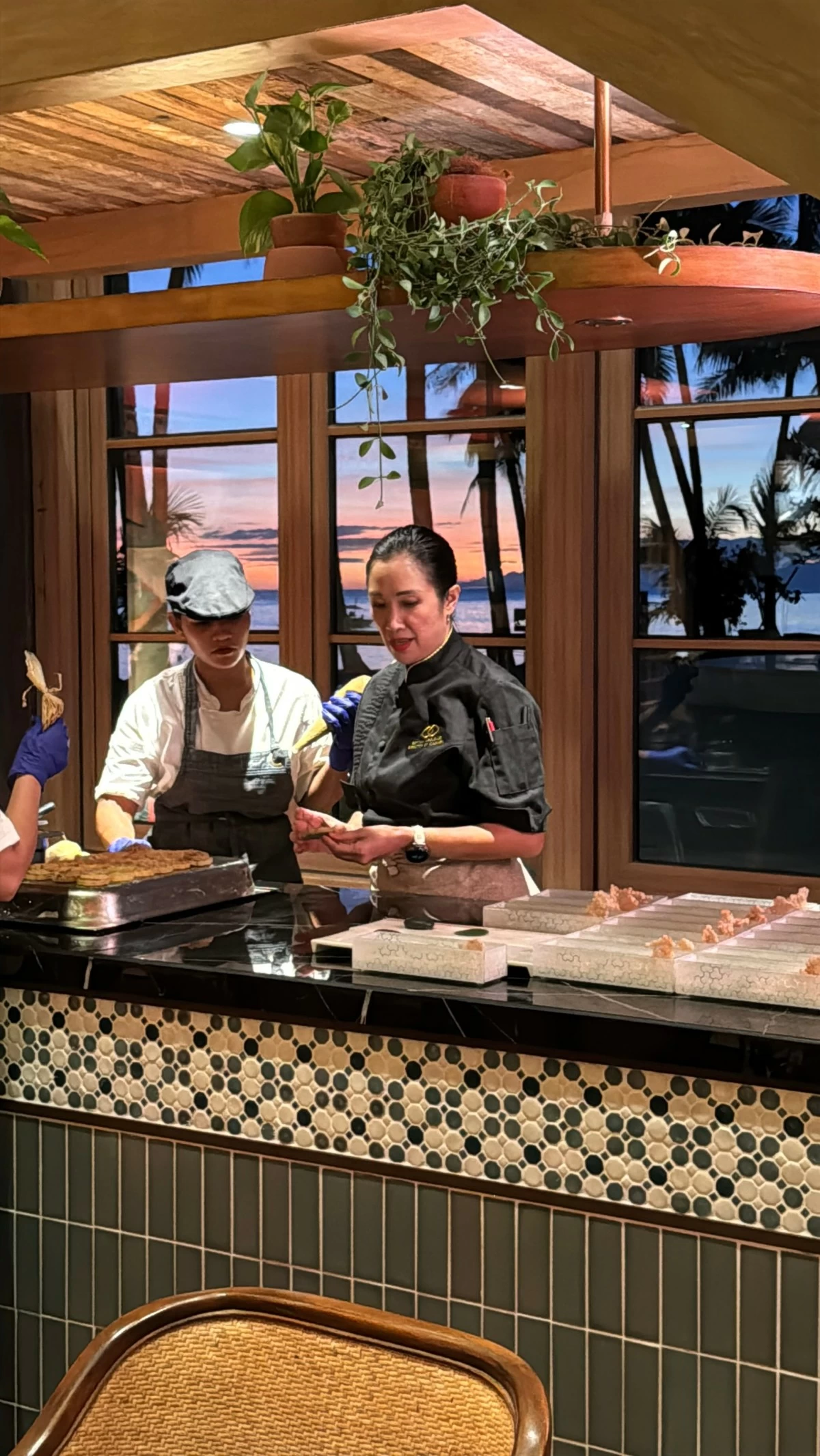
SUNSET SERVICE Chef Bettina Arguelles at work inside Tiya’s House, framed by the purple-hued sunset of Panglao Beach beyond the window
Sourcing is central to the narrative. Chef Bettina works closely with local producers and farmers, choosing ingredients that reflect both seasonality and place. Mangrove clams come from local fishermen. Baboy ramo is sourced from South Farm. Lemongrass is grown within the resort grounds. Carissa carandas is brought in from a friend’s farm in Bacolod. Asin tibuok, Bohol’s rare, hand-crafted salt made through a 400-year-old tradition, seasons nearly everything on the menu.
“No matter how humble an ingredient may seem, it deserves a spotlight,” Chef Bettina says.
That respect for locality extends beyond the plate. Tiya’s Bar highlights native Filipino spirits, including tapuey, used in cocktails such as the Tiya’s Katawa, which incorporates homegrown tarragon, kalabo and citrus, and the Bagoong Highball, made with bagoong-washed smoked tapuey.
For Danish Khan, general manager of South Palms Panglao MGallery, Tiya’s House is about translating values into space. “Tiya’s House came from our three core principles: the art of being Tiya—the matriarchal spirit of Filipino hospitality, the potting shed where our bartender cultivates local herbs for our signature drinks, and our fishing heritage,” he says. “This is how we honor our Boholano roots while pushing Bohol’s dining scene forward.”
This visit marked my second stay at South Palms. I had attended the resort’s opening last August, when everything still felt new and briskly paced. This time, the rhythm was different. Slower. More settled. I found time to walk the length of the beach, use the fitness facilities, and eat at leisure across the property’s other dining outlets, including Uma, the regional restaurant, and Manja, which focuses on Mediterranean flavors.
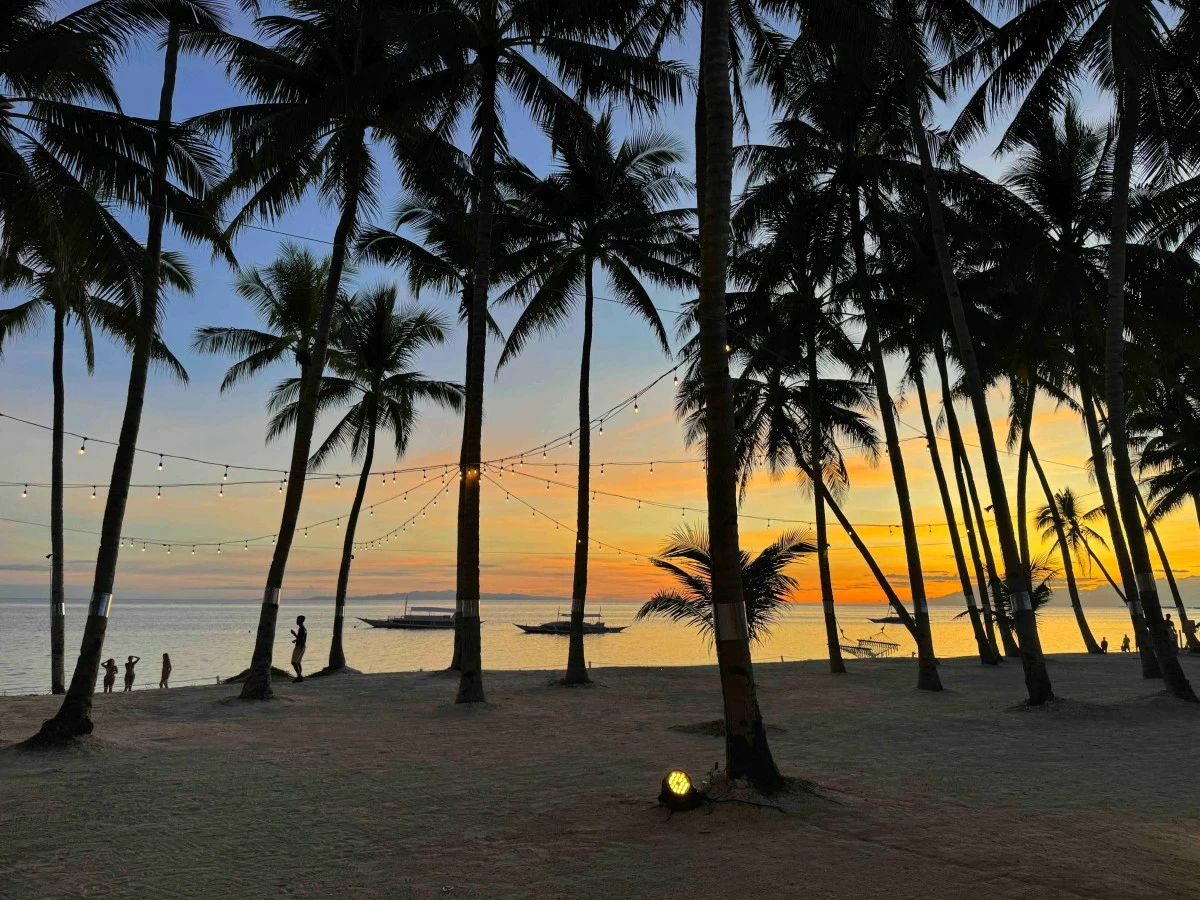
TWILIGHT CALM The serene beach of South Palms Panglao as day slips into twilight, with soft light settling over the sand and sea at the close of another island afternoon
I also experienced Lola’s Sanctuary, the resort’s wellness space, where I tried the Hilod Dalisay, a 90-minute ancestral body-purifying ritual rooted in traditional Boholano cleansing practices. The treatment uses finely ground asin tibuok blended with lemongrass and virgin coconut oil, applied in slow, deliberate strokes meant to draw out impurities and restore balance. It leaves the body calm and the mind unhurried, a fitting counterpoint to the sensory richness of the dining experience.
In the end, South Palms reveals itself best when time is allowed to stretch. Food, music, sea air and memory all move together. And somewhere between a Christmas jazz tune and the taste of salt made by hand, the experience becomes unmistakably, and quietly, Filipino.