







When Bacolod became the center of the Slow Food universe
The first Terra Madre Asia and Pacific brings together chefs, farmers, and delegates shaping the future of food
Published Dec 10, 2025 07:55 am


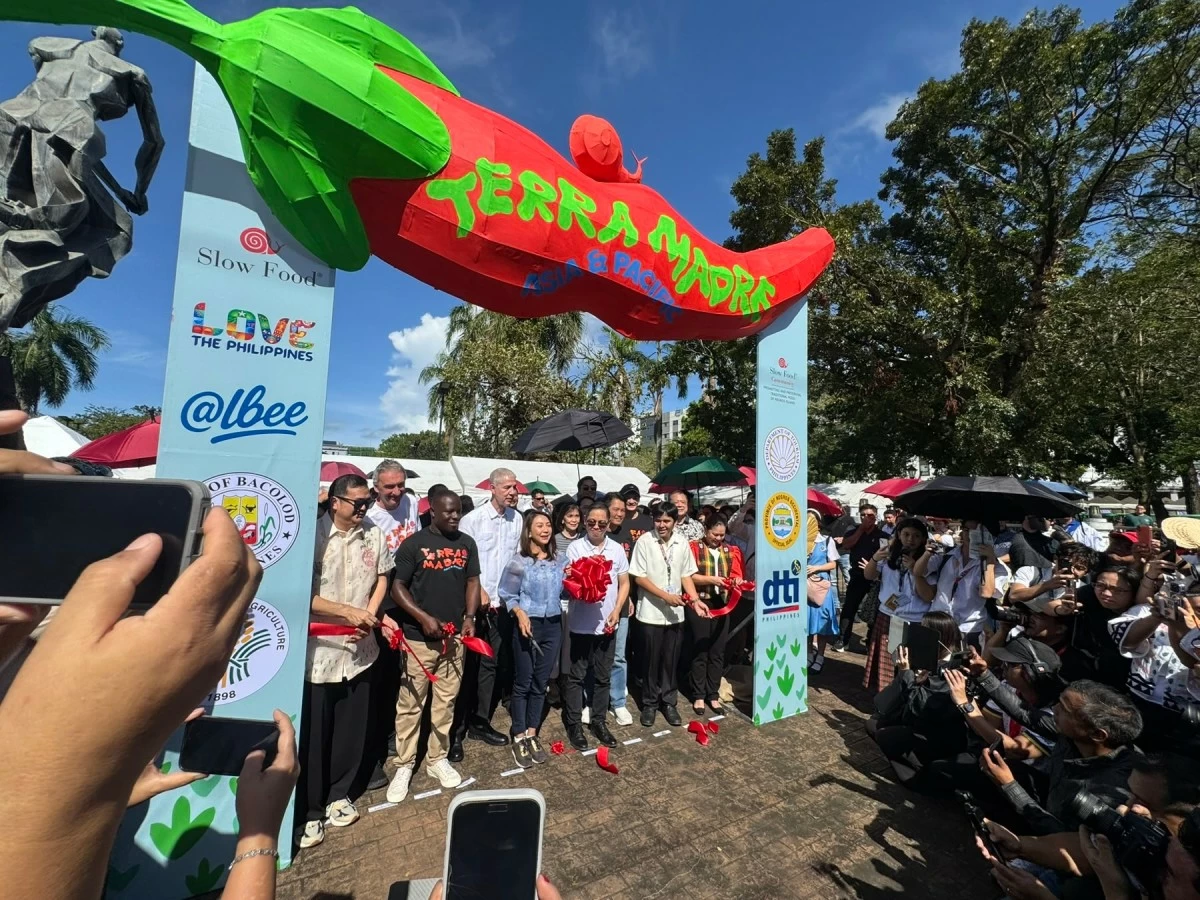
OPENING MOMENT
Slow Food International councilor Ramon Uy Jr., Slow Food director general Paolo di Croce, Slow Food International president Edward Mukiibi, Negros Occidental Governor Bong Lacson, Tourism Secretary Christina Garcia Frasco, TESDA Director General Kiko Benitez, and Bacolod lone district representative Albee Benitez lead the ribbon cutting that opens Terra Madre Asia and Pacific at the Capitol Park and Lagoon in Bacolod City.
On the first night of Terra Madre, I saw chefs, and I will just not name them, pour tequila straight into the mouth of another chef in celebration of a hard day’s work, talking about food, farming, and all the tenets of Terra Madre, and then cooking all day for people around the globe. I said to my fellow media colleague, “These chefs do know how to party,” and indeed they do, but the work they do, they deserve it.
By morning, the city felt quieter. Bacolod carried a kind of warmth after the previous night’s revelry, the air still holding traces of broth, garlic, and the sweetness that seems to cling to Negros. The week of Terra Madre Asia and Pacific (TMAP) had only begun, yet the atmosphere suggested something historic was unfolding. Delegates, cooks, farmers, and producers moved toward the Capitol Lagoon, which had turned into a temporary village for conversations about the future of food.
What unfolded between Nov. 18 and 23 was more than a regional gathering. For the first time, TMAP was held outside Turin, Italy. The setting felt fitting. Negros Occidental has been a leader in organic agriculture for nearly two decades, with more than 20,000 hectares farmed through organic methods. It has also become a destination for sustainable gastronomy through partnerships between government, private groups, and communities.
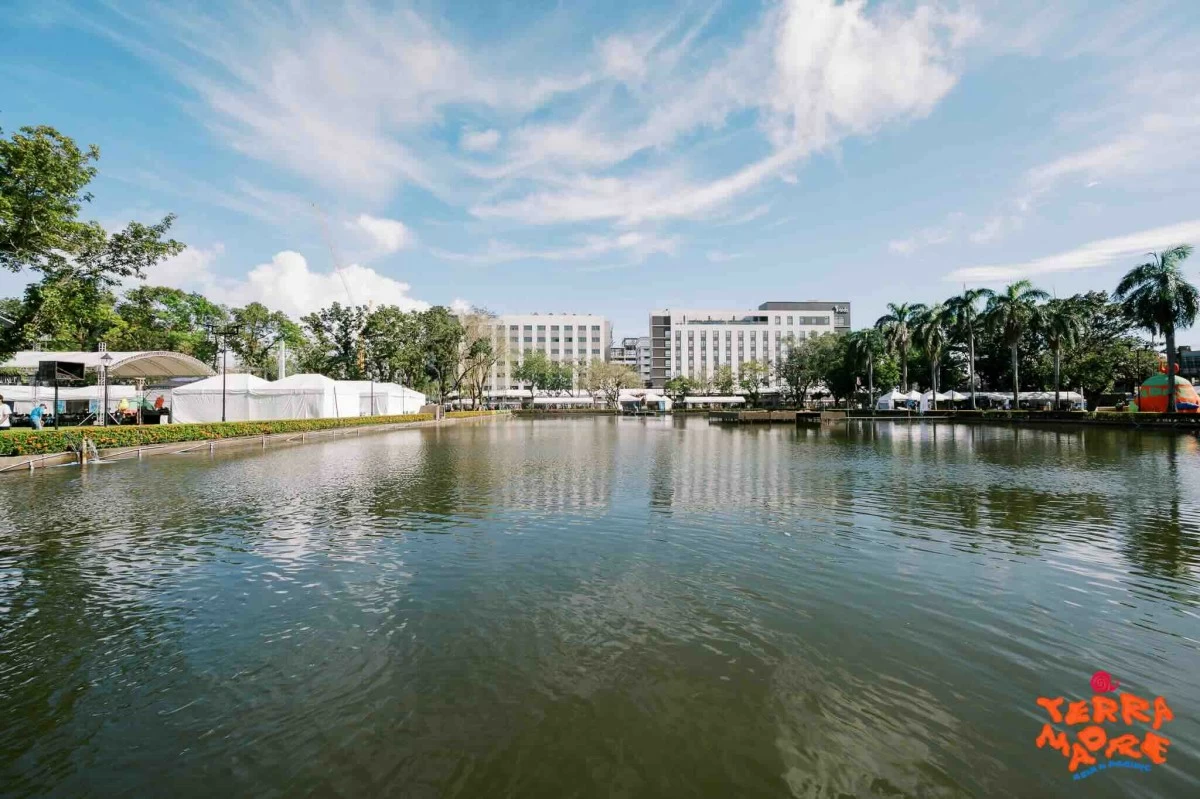
ISLAND REFLECTION The Capitol Lagoon in Bacolod City provides a calm backdrop during Terra Madre Asia and Pacific, framing the week’s events with one of Negros’s most recognizable landmarks.
The pavilion at the park centered on the idea of food as a continuum that stretches from upland farms to the coasts. Visitors walked through exhibits that connected regions, ingredients, and producers. Conversations often circled back to seeds, marine conservation, farmer-led systems, and the need to protect flavor by protecting the people who keep it alive. The theme, From Soil to Sea, became visible through the workshops and taste sessions that brought children, students, and the public into contact with ingredients they rarely see.
The sense of urgency was clear on opening day. Tourism Secretary Christina Garcia Frasco reminded the audience of climate impacts felt in Visayas communities. “As we reflect on the realities of climate change, the mission of Terra Madre becomes even more urgent,” she said. “Events like this remind us that building, sustainable, and equitable food systems is not an abstract ideal.”
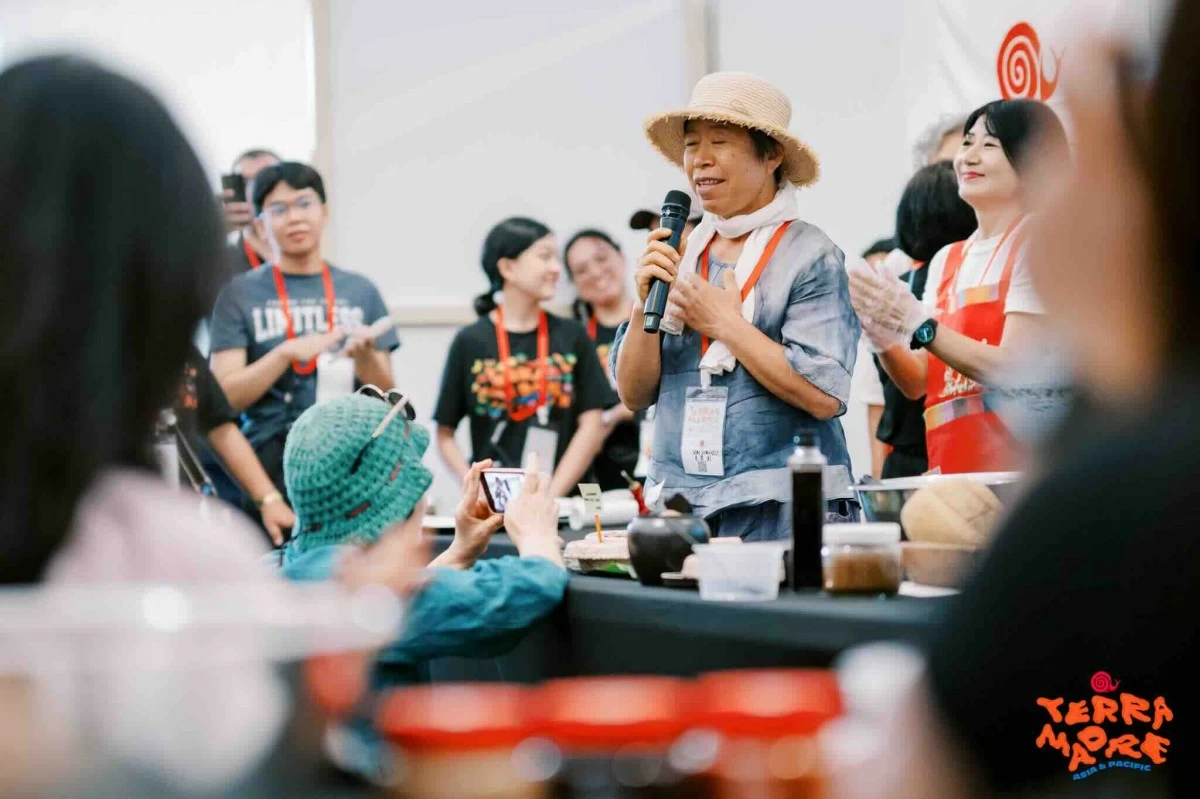
FIELD WISDOM A farmer shares community knowledge during a TMAP talk, grounding the discussion in lived experience and local food traditions.
Slow Food leadership echoed the need for immediate action rooted in biodiversity and community knowledge. Edward Mukiibi, president of Slow Food International, said, “Life cannot exist without biodiversity.” He added that lasting climate solutions must grow from the ground up and said, “The solutions we need already exist within our communities and within Slow Food farms.”
Negros did not arrive at this moment by accident. Much of the groundwork was laid by people who have spent years pushing the island toward a more sustainable food future. Reena Gamboa, who leads the local Slow Food community, and Ramon “Chin Chin” Uy Jr., who represents Southeast Asia in the Slow Food council, were instrumental in bringing the event to Bacolod and shaping its direction.
What emerged from their combined efforts is a picture of Bacolod as a city where agricultural advocacy, policy support, and everyday food culture intersect with unusual clarity.
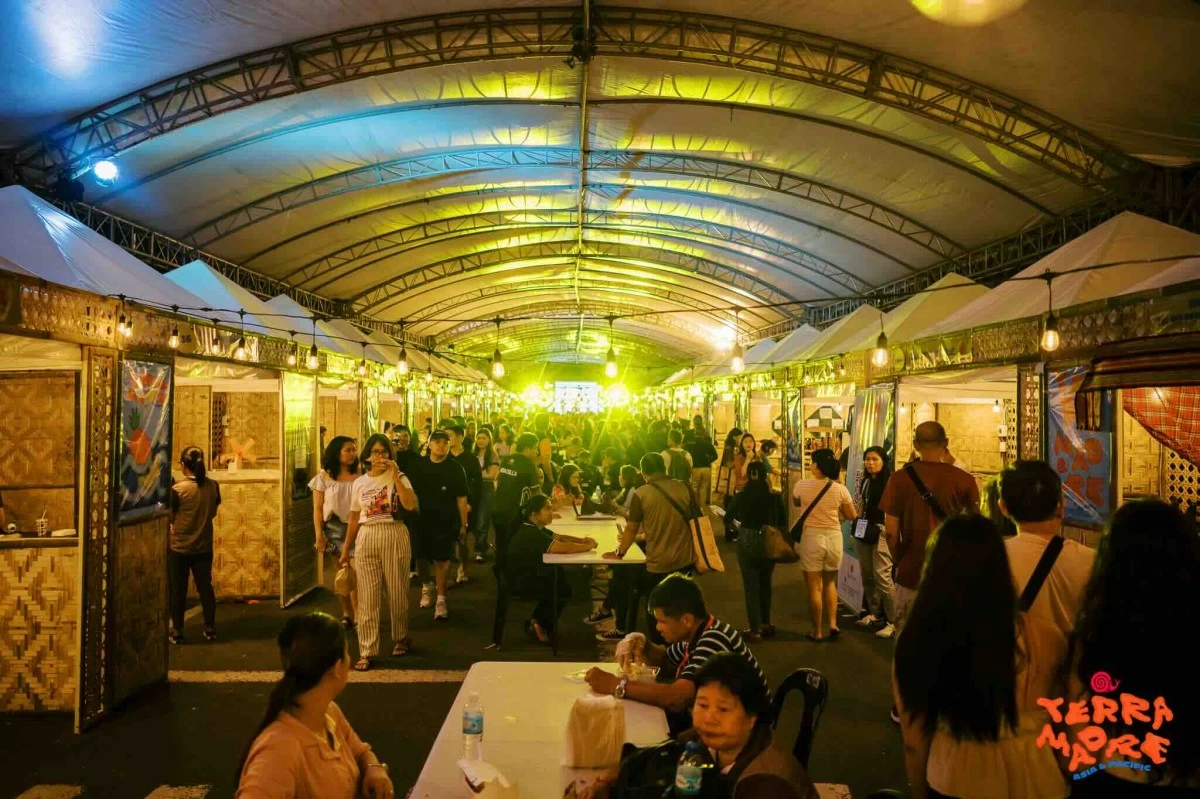
TASTE MAP Food stalls at Terra Madre Asia and Pacific allowed guests to see, smell, and sample ingredients and dishes from regions across the Philippines.
For Reena Gamboa, the executive director of Terra Madre Asia and Pacific, the week felt transformative. “This first edition has been overwhelming,” she said. “These five days have shown us the richness of natural resources in the region. Farmers, cooks, and food producers have formed new alliances and realized their potential to advocate for a shift towards good, clean, and fair food. Terra Madre Asia and Pacific has given us a voice to promote our food biodiversity and culinary heritage, and it has inspired the entire Slow Food network to drive change toward the next edition.”
Paolo Di Croce, director general of Slow Food, noted the significance of the Philippines within the movement. “I want to highlight how the Philippines stand as a remarkable example of diversity, sustainability, and quality,” he said. “This is why they will remain at the heart of our movement’s development in this part of the world.”
Around the lagoon, the ideas raised onstage became tangible. Seafood from Capiz was served with oysters cracked open for visitors, while diwal from Iloilo glimmered in the afternoon light. A session on nipa palm vinegar demonstrated how traditional methods are increasingly threatened by modernization. Nearby, food stalls offered freshly made piaya and Ilocos empanada, along with freshly roasted beef and lechon. Coco Mama, the Boracay-born dessert brand known for its creamy coconut ice cream served in a real shell with assorted toppings, also drew crowds through the presence of its founders, Nowie and Odette Potenciano, who joined the TMAP festivities.
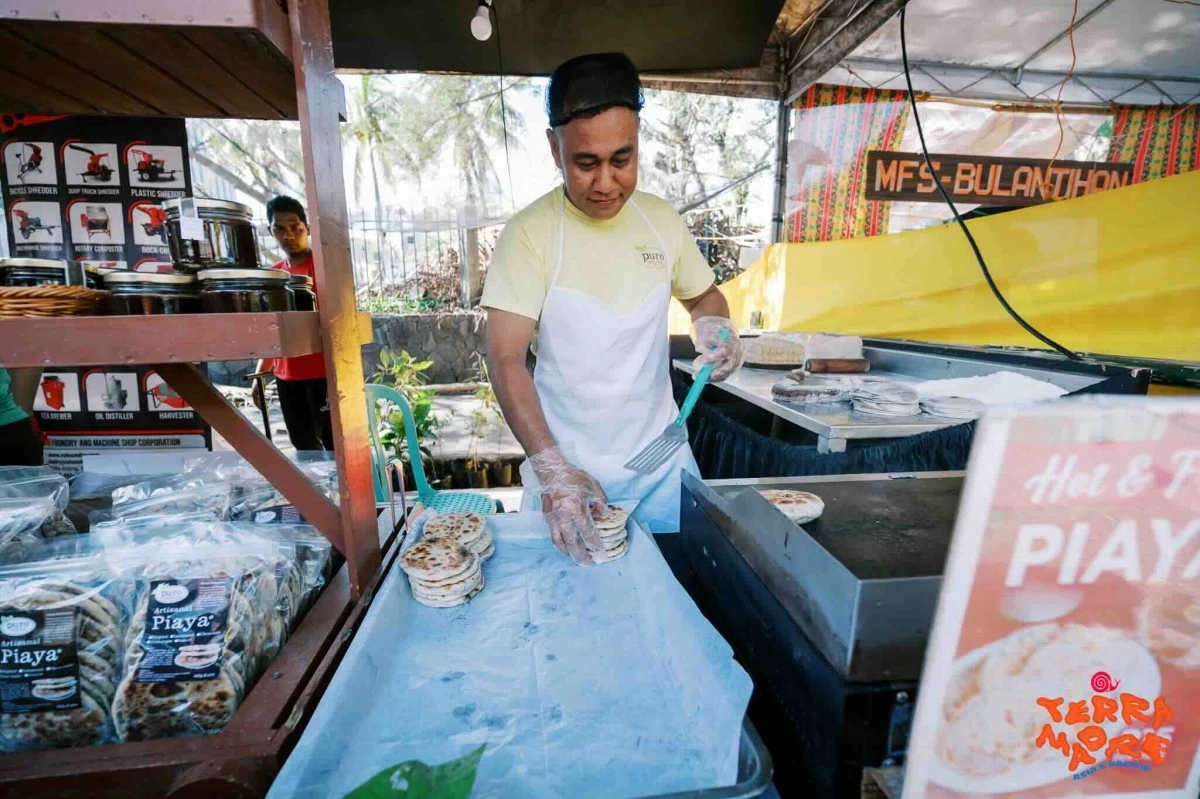
SWEET SKILL A vendor prepares freshly made piaya at the event, showcasing one of Negros’s most iconic street specialties.
There was an asin tibuok stall as well, just recently inscribed by UNESCO into the List of Intangible Cultural Heritage in Need of Urgent Safeguarding during the 20th Session of the Intergovernmental Committee for the Safeguarding of the Intangible Cultural Heritage in New Delhi, India last Dec. 9.
The chefs became storytellers. Josh Boutwood spoke from the perspective of a two Michelin star chef who still grounds his work in Philippine ingredients. The country’s one star chefs, along with respected culinary figures like Myrna Segismundo, Rhea Rizzo, Angelo Comsti, and Tina Legarda, guided attendees through discussions about technique, community, and the shared responsibility to preserve flavor traditions. Their presence connected fine dining with the slow work of farms and fisheries.
Delegates arrived from more than 25 countries and filled the park with overlapping languages and aromas. Some listened to coffee farmers from Pasil explain their harvest. Others joined families grinding spices in the educational area. The island’s identity as the first Slow Food Travel destination in the Philippines added another layer. Visitors could trace their meals back to cacao farms, coffee trails, fish farms, and heritage homes in Silay, where culinary traditions are still practiced in ancestral kitchens.
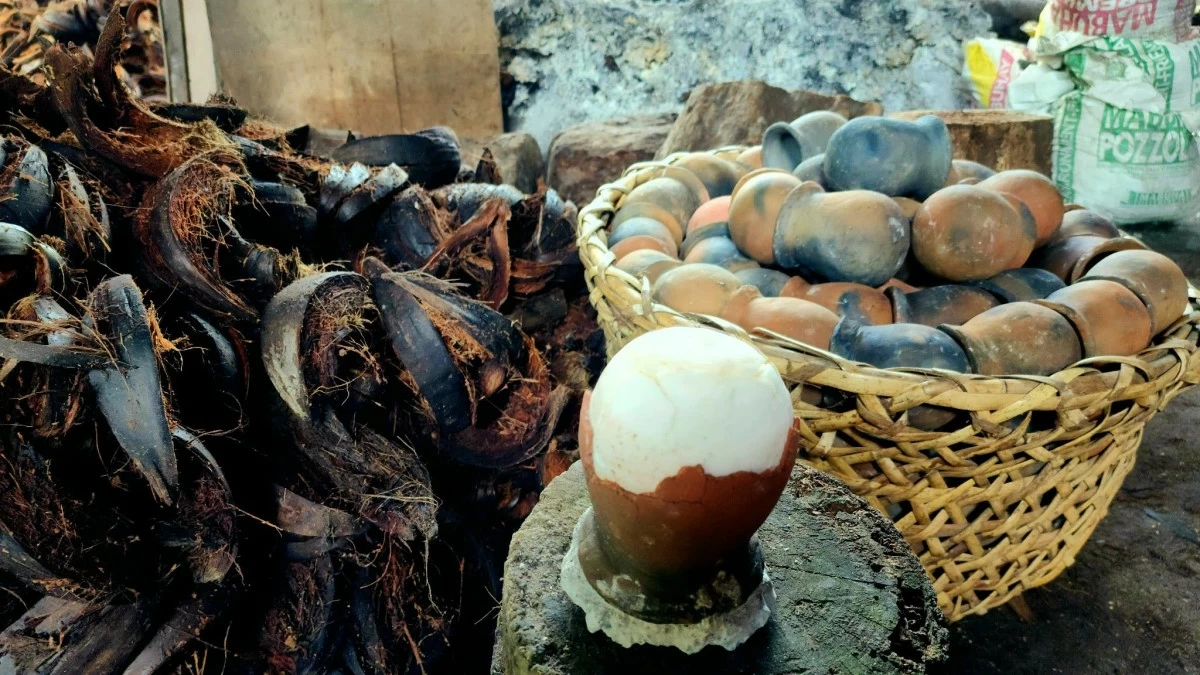
SALT HERITAGE Asin tibuok, the iconic Bohol artisanal sea salt, shows its distinctive dome shape formed from slow, traditional methods that have defined generations of coastal craft. (Photo by Roel Hoang Manipon, NCCA)
Negros’s marine resources formed part of the week’s story. With a 32,000 hectare marine reserve, the province champions sustainable fishing and conservation efforts that protect biodiversity. Seafood dishes like kinilaw demonstrated how traditional methods support both culture and ecology.
As the final day arrived, the lagoon slowly returned to its usual calm. Delegates spoke about future collaborations and the next edition of Terra Madre Asia and Pacific in 2027. The week revealed what the island had long been building. Policy makers, farmers, chefs, and communities had shaped a collective vision for sustainable food that felt real and workable, not abstract.
I left Bacolod recalling the meals I tasted and the people behind them. The island felt like a place rehearsing a future where food is grown with care, cooked with intention, and shared with dignity. Terra Madre in Negros showed that change begins in the everyday decisions of the people who feed us.
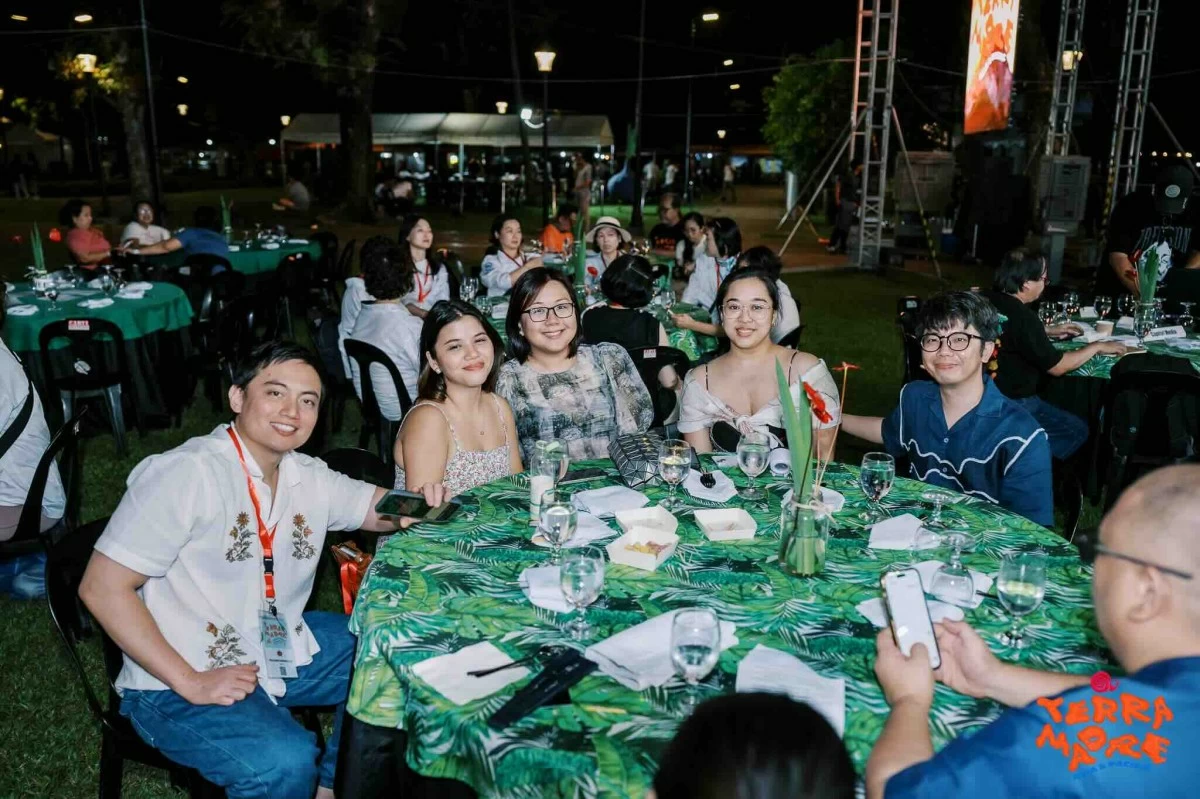
PRESS PASS The author joins fellow media delegates at the Terra Madre Asia and Pacific grounds, capturing stories and moments from the weeklong gathering in Bacolod.