







A Negrense Christmas on the table
For public relations professional Treena Tecson, the flavors of Bacolod and Sagay — from lechon to Black Sambo — carry the memories of family and tradition
Published Nov 26, 2025 05:18 pm


As the holiday rush settles into the final weeks of November, the country edges closer to the heart of what is widely called the world’s longest Christmas season. Carols fill the malls, parols brighten windows, and households begin preparing the dishes that will anchor their Noche Buena tables. The celebration stretches across the archipelago, yet the spotlight often falls on Manila and Luzon, leaving many regional stories untold.
This feature turns to Negros Occidental, where Christmas is shaped by the flavors of Bacolod and Sagay. It is a perspective rooted in memory and tradition, told through the experiences of public relations professional Treena Cueva Tecson, whose own holidays were defined by dishes that carried her family’s history.
Treena grew up in Negros Occidental before establishing a career in lifestyle and hospitality public relations in Manila. She is also the founder of True Chocolate PH, established in 2017, and one of the country’s leading voices in chocolate and cacao. A Certified Chocolate Taster with Level 1 and 2 certifications from the International Institute of Chocolate and Cacao Tasting, she also holds a Certificate in Cacao Evaluation and Flavor Profiling. Her work as a chocolate maker and cacao evaluator, along with her role as a National Cacao Judge for the Cacao of Excellence Awards, has made her a passionate advocate for Philippine cacao and craft chocolate, as well as an active member of the Philippine Cacao Industry Association.
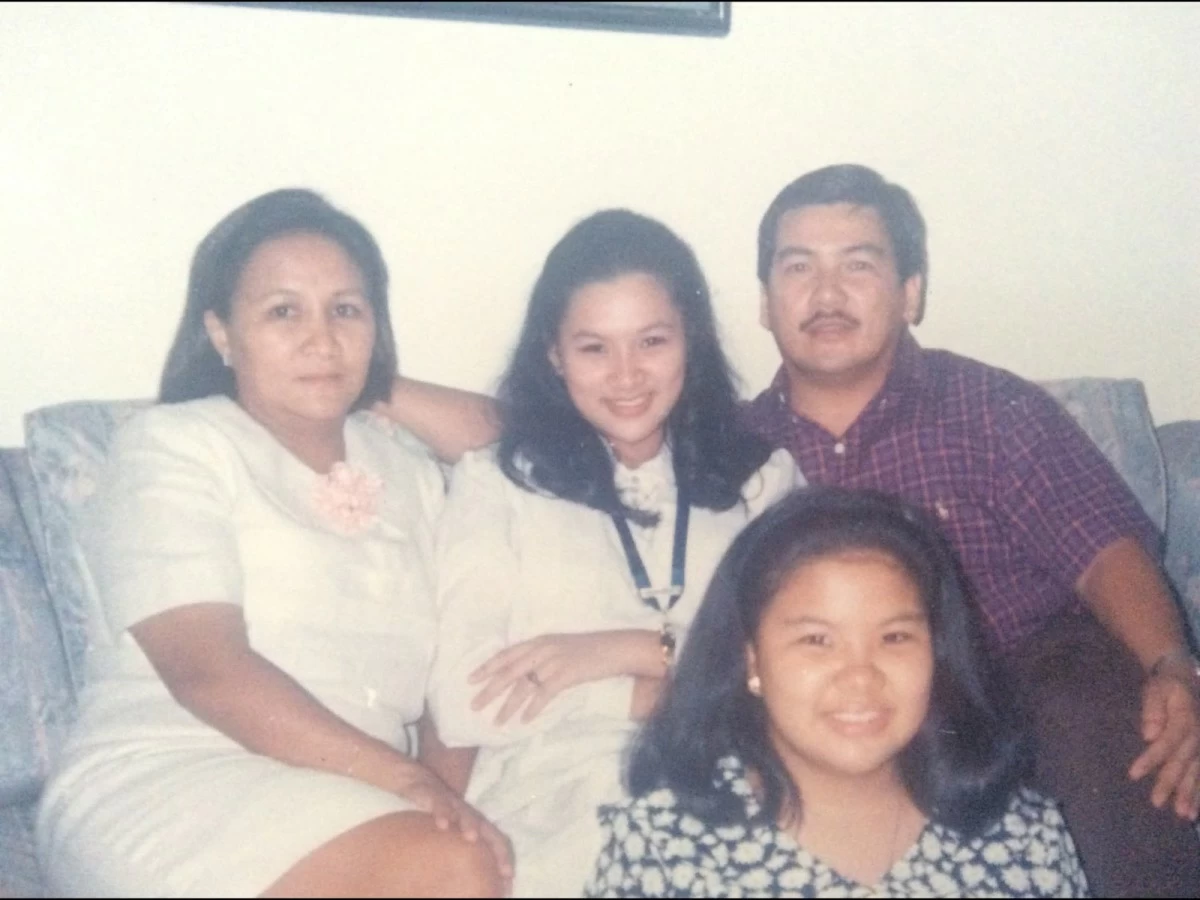
Family photo. From left: Erminda, Treena, Todit, and Trixie
Yet when Christmas approaches, the flavors she longs for remain the same ones she grew up with. For her, the taste of a Negrense Christmas is inseparable from memory.
“Without a doubt, my favorite Christmas delicacy is lechon, specifically from Enting’s of Sagay,” Treena said. The skin, roasted to a golden crisp, and the meat, perfumed with lemongrass and batuan, marked every Christmas Eve. Her father would carve into the pig even before it reached the table, nibbling on the ears and tail.
Even after her family moved to Manila, the tradition followed. Lechon was flown in from Negros, and her mother would make paksiw from the leftovers the next day. To Treena, it was more than a dish. It was a bond with home, with neighbors, and with a childhood spent in the company of a master lechonero, Enting Lobaton, who was a family friend long before his food became a Bacolod institution.
The lechon anchored the table, but it was surrounded by dishes that carried just as much meaning. Paella Valenciana, made with sticky rice, chicken, seafood, and chorizo, was always present. Her lola’s embutido and callos were fixtures too, and in true Negrense fashion, the ham was fried in sugar and paired with rice.
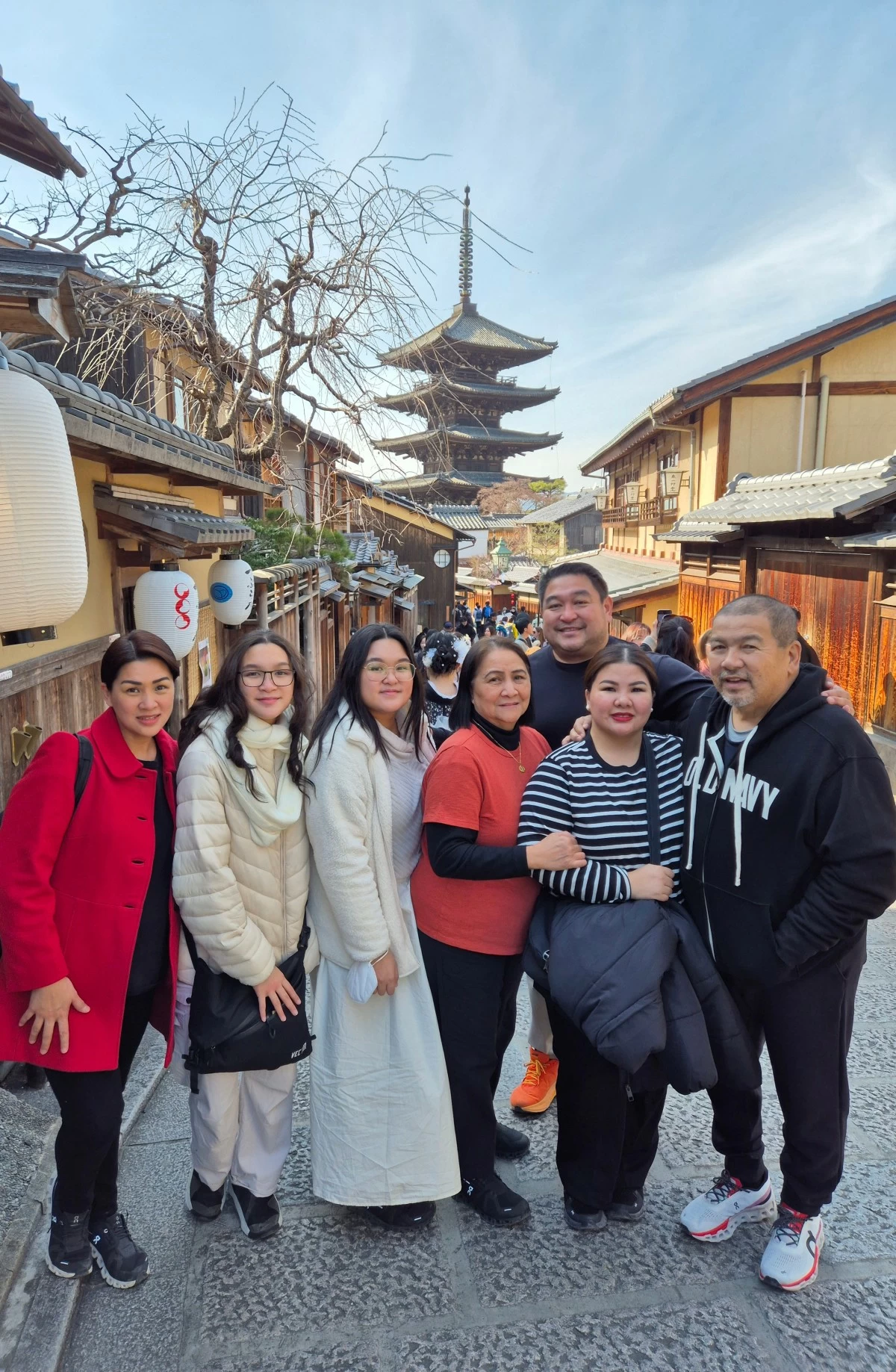
Treena’s family during a recent vacation in Japan.
“An abundant feast is an expression of love and hospitality,” Treena said. “As the moms and titas of Bacolod always say, ‘Mas mayo pa sobra indi lang mag kulang,’ which means it’s better to have too much than to run out of food.”
Desserts completed the ritual. Her mother’s fruit salad, macaroni salad, and leche flan were joined by Vargas Kitchen’s Brazos de Mercedes, a stand-in for what they had back home. Black Sambo, a two-layer gelatin dessert with chocolate on top and cream beneath, was a particular favorite.
“Almost every household and restaurant in Bacolod serves it,” Treena said. “It has become such a part of the city’s identity.”
Black Sambo also tied her to her school days. “My sister and I actually learned how to make it in high school at St. Scholastica’s Academy Bacolod, where it was a standard recipe taught in Home Economics class. It is a two-layer gelatin dessert, the top layer is made with chocolate, and the bottom layer is cream-based, finished with a drizzle of chocolate syrup. Simple, nostalgic, and uniquely Bacolod.”
The connection between taste and memory runs deep. French writer Marcel Proust once described how the flavor of a madeleine dipped in tea unlocked vivid recollections of his childhood, a phenomenon now called the Proustian moment. Treena experiences something similar each holiday. The crackle of lechon skin or the cool sweetness of Black Sambo instantly returns her to Sagay and Bacolod, to kitchens full of clatter, and to the laughter of relatives who are gone now but live on in flavor.
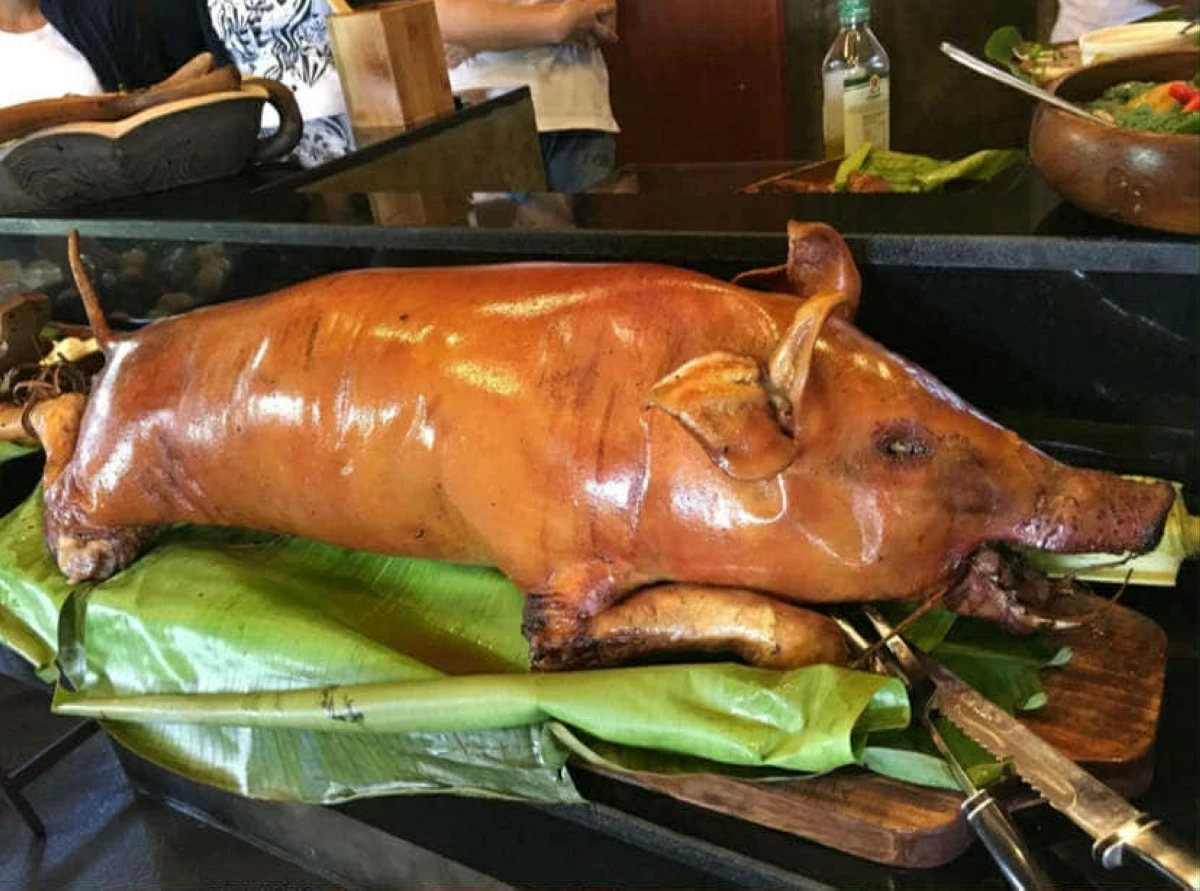
Lechon from Enting’s of Sagay
This is the essence of Christmas in the Philippines, where the world’s longest holiday season is celebrated not just with decorations and music but with food that roots families to place and history. For Negrenses, that food is marked by generosity. A Noche Buena table must never run out. Visitors are welcomed as family. To serve abundantly is to love abundantly.
Even in Manila, Treena insists on keeping the tradition intact. “Keeping the spirit alive means having all of our favorite traditional holiday dishes on the Noche Buena table even if we are in Manila. We either bring dishes over from Bacolod, or find the closest version here, because it just isn’t Christmas without those flavors that tie us back to home.”
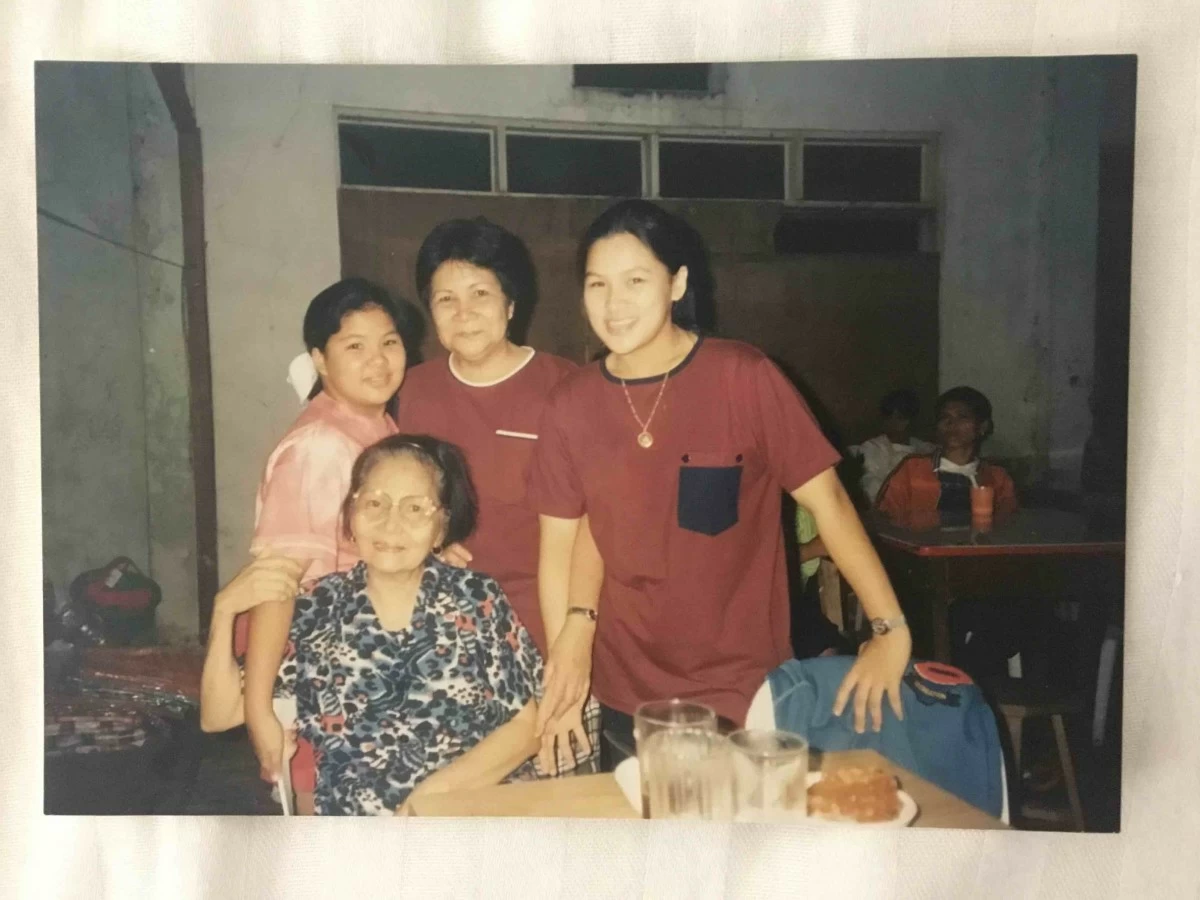
Treena with her two grandmothers, Mama Minda on her maternal side and Lola Nydia on her paternal side, joined by her sister Trixie.
When asked what she would insist on serving to introduce someone to a true Negrense Christmas, Treena answered quickly. “The top dishes would be lechon, specifically from Enting’s of Sagay, and Paella Valenciana because these two dishes are always present during special occasions such as weddings, birthdays and most especially Christmas. For dessert, it would have to be Black Sambo.”
Her picks say it all. The crisp pork, the golden rice, the two-toned dessert. Together they form a portrait of Negrense hospitality, of a family gathered around a table with more food than they could ever finish, of laughter carrying late into the night.
Each year, as November signals the season’s peak and the country prepares for December gatherings, Treena returns to those memories. A spoonful of Black Sambo or a slice of sugared ham is more than taste. It is a key to childhood, to a place where time slows and Christmas never quite ends.
And, in telling her story, we glimpse Christmas dining from a Negrense perspective, one often overlooked in a country where holiday feasts are too often described only through Manila’s lens.