

ADVERTISEMENT

Terra Madre spotlights Philippines as rising gastronomic hub

Published Nov 19, 2025 03:14 pm

At A Glance

  • Terra Madre Asia & Pacific 2025 runs from Nov. 19 to 23 at the Provincial Capitol Lagoon in Bacolod City.
  • Hosted by the Department of Tourism (DOT) with Slow Food International, Negros Occidental, Bacolod City, and national agencies.
  • Highlights Filipino culinary heritage, sustainable practices, and community-driven food creativity.
  • Empowers local farmers, fisherfolk, and food artisans while connecting them to international markets.
  • Features Slow Food Travel Pavilion, regional street food booths, chef-led showcases, and a Community Kitchen.
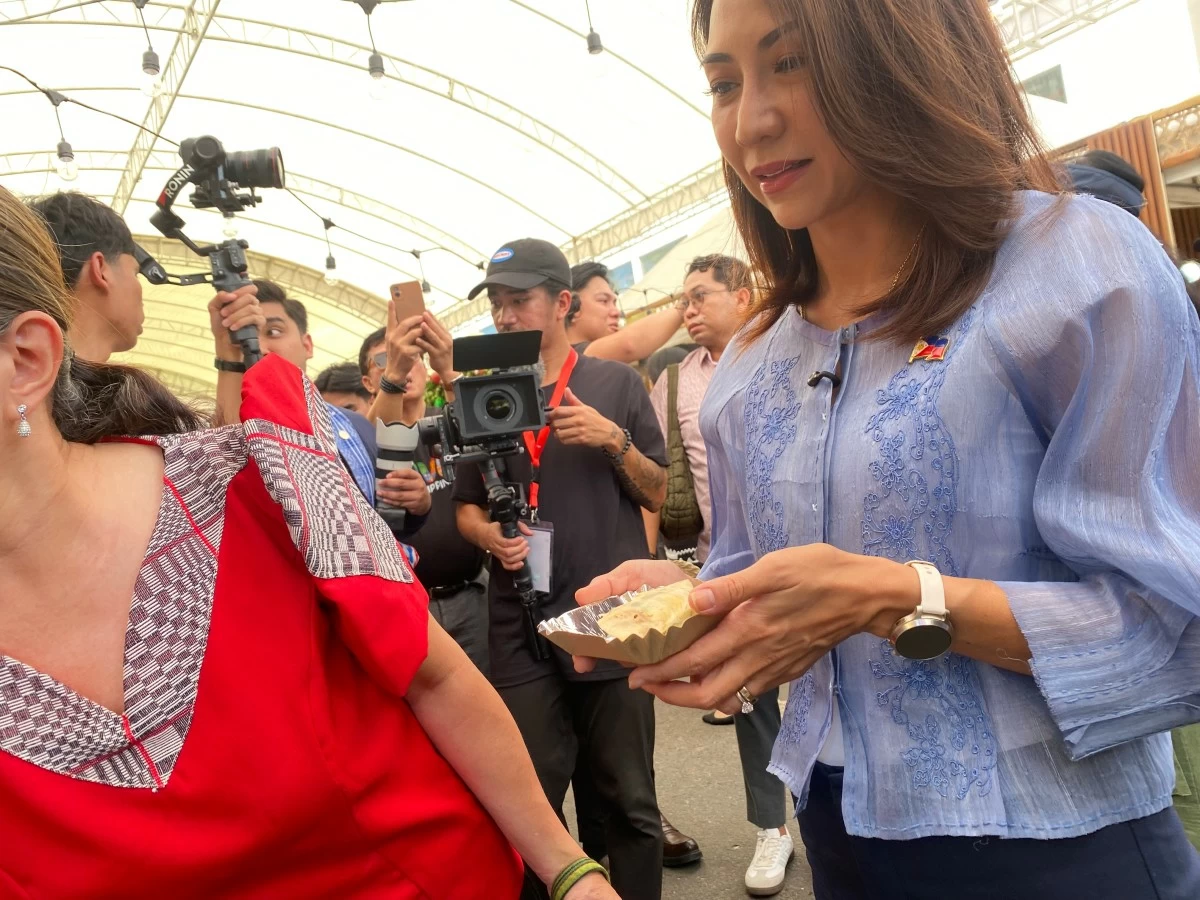
DOT Secretary Christina Garcia-Frasco visits a street food booth during the first-ever Terra Madre Asia & Pacific 2025 at the Provincial Capitol Lagoon in Bacolod City on November 19, 2025, highlighting the Philippines’ rich culinary heritage and local food artisans. (Trixee Rosel/MB)
The Department of Tourism (DOT) showcased the Philippines’ effort to turn local food traditions into global influence as it hosted the first-ever Terra Madre Asia & Pacific 2025 at the Provincial Capitol Lagoon in Bacolod City on Wednesday, Nov. 19.
DOT Secretary Christina Garcia-Frasco said the five-day event, running from Nov. 19 to 23, strengthens the country’s culinary presence in the region by highlighting sustainable practices, community-driven creativity, and the richness of Filipino food heritage.
She added that Terra Madre empowers local communities, including small farmers, fisherfolk, and food artisans, by giving their work an international platform, validating their role in food security, and connecting their products to new markets.
The event also opens opportunities for Filipino chefs and producers to showcase their craft to international advocates who value authenticity, traceability, and tradition, helping local culinary talents gain recognition and partnerships abroad.
Frasco emphasized that Terra Madre allows international guests to experience Filipino culture through dishes prepared within local communities, where “every ingredient reflects our land, every flavor tells our history, and every meal embodies our hospitality.”
The DOT chief said the partnership between the DOT and Slow Food positions Bacolod City, the Negros Island Region, and the Philippines as a gateway to gastronomy tourism, with each dish reflecting local livelihoods and cultural richness.
Presented in partnership with Slow Food International, the Provincial Government of Negros Occidental, the City of Bacolod, and national agencies, the event builds on the momentum from Michelin’s historic recognition in the Philippines.
It also reinforces the country’s aspiration to become a global culinary capital under the leadership of President Ferdinand R. Marcos Jr.
Anchored on the theme “From Soil to Sea: A Slow Food Journey Through Tastes & Traditions,” Terra Madre Asia & Pacific gathers chefs, farmers, fisherfolk, artisans, policymakers, and advocates from across the Asia-Pacific region to promote sustainable, inclusive, and community-rooted gastronomy.
The DOT’s Slow Food Travel Pavilion features immersive experiences from the Cordilleras, Metro Manila, CALABARZON, Central Visayas, and Western Visayas, while regional street food booths showcase dishes from all Philippine regions, including the Bangsamoro Autonomous Region in Muslim Mindanao.
Bacolod’s more than 20,000 hectares of organic farmland and Negros Occidental’s 32,000-hectare marine reserve provide a rich backdrop for the gathering, reflecting the region’s commitment to organic agriculture, sustainable fishing, and biodiversity conservation.
Visitors can also enjoy chef-led showcases, curated Slow Food Travel tours connecting them to local producers, a Community Kitchen featuring dishes from 61 barangays, and a market linking organic farmers directly to buyers.
Founded in Italy in 1989, Slow Food continues to champion clean, good, and fair food, preserve indigenous food culture, and strengthen global understanding of food’s role in community identity and tourism.

Related Tags

Terra Madre Asia & Pacific 2025 DOT Christina Garcia-Frasco Bacolod City Filipino cuisine local farmers and artisans
ADVERTISEMENT
.most-popular .layout-ratio{ padding-bottom: 79.13%; } @media (min-width: 768px) and (max-width: 1024px) { .widget-title { font-size: 15px !important; } }

{{ articles_filter_1561_widget.title }}

.most-popular .layout-ratio{ padding-bottom: 79.13%; } @media (min-width: 768px) and (max-width: 1024px) { .widget-title { font-size: 15px !important; } }

{{ articles_filter_1562_widget.title }}

.most-popular .layout-ratio{ padding-bottom: 79.13%; } @media (min-width: 768px) and (max-width: 1024px) { .widget-title { font-size: 15px !important; } }

{{ articles_filter_1563_widget.title }}

{{ articles_filter_1564_widget.title }}

.mb-article-details { position: relative; } .mb-article-details .article-body-preview, .mb-article-details .article-body-summary{ font-size: 17px; line-height: 30px; font-family: "Libre Caslon Text", serif; color: #000; } .mb-article-details .article-body-preview iframe , .mb-article-details .article-body-summary iframe{ width: 100%; margin: auto; } .read-more-background { background: linear-gradient(180deg, color(display-p3 1.000 1.000 1.000 / 0) 13.75%, color(display-p3 1.000 1.000 1.000 / 0.8) 30.79%, color(display-p3 1.000 1.000 1.000) 72.5%); position: absolute; height: 200px; width: 100%; bottom: 0; display: flex; justify-content: center; align-items: center; padding: 0; } .read-more-background a{ color: #000; } .read-more-btn { padding: 17px 45px; font-family: Inter; font-weight: 700; font-size: 18px; line-height: 16px; text-align: center; vertical-align: middle; border: 1px solid black; background-color: white; } .hidden { display: none; }
function initializeAllSwipers() { // Get all hidden inputs with cms_article_id document.querySelectorAll('[id^="cms_article_id_"]').forEach(function (input) { const cmsArticleId = input.value; const articleSelector = '#article-' + cmsArticleId + ' .body_images'; const swiperElement = document.querySelector(articleSelector); if (swiperElement && !swiperElement.classList.contains('swiper-initialized')) { new Swiper(articleSelector, { loop: true, pagination: false, navigation: { nextEl: '#article-' + cmsArticleId + ' .swiper-button-next', prevEl: '#article-' + cmsArticleId + ' .swiper-button-prev', }, }); } }); } setTimeout(initializeAllSwipers, 3000); const intersectionObserver = new IntersectionObserver( (entries) => { entries.forEach((entry) => { if (entry.isIntersecting) { const newUrl = entry.target.getAttribute("data-url"); if (newUrl) { history.pushState(null, null, newUrl); let article = entry.target; // Extract metadata const author = article.querySelector('.author-section').textContent.replace('By', '').trim(); const section = article.querySelector('.section-info ').textContent.replace(' ', ' '); const title = article.querySelector('.article-title h1').textContent; // Parse URL for Chartbeat path format const parsedUrl = new URL(newUrl, window.location.origin); const cleanUrl = parsedUrl.host + parsedUrl.pathname; // Update Chartbeat configuration if (typeof window._sf_async_config !== 'undefined') { window._sf_async_config.path = cleanUrl; window._sf_async_config.sections = section; window._sf_async_config.authors = author; } // Track virtual page view with Chartbeat if (typeof pSUPERFLY !== 'undefined' && typeof pSUPERFLY.virtualPage === 'function') { try { pSUPERFLY.virtualPage({ path: cleanUrl, title: title, sections: section, authors: author }); } catch (error) { console.error('ping error', error); } } // Optional: Update document title if (title && title !== document.title) { document.title = title; } } } }); }, { threshold: 0.1 } ); function showArticleBody(button) { const article = button.closest("article"); const summary = article.querySelector(".article-body-summary"); const body = article.querySelector(".article-body-preview"); const readMoreSection = article.querySelector(".read-more-background"); // Hide summary and read-more section summary.style.display = "none"; readMoreSection.style.display = "none"; // Show the full article body body.classList.remove("hidden"); } document.addEventListener("DOMContentLoaded", () => { let loadCount = 0; // Track how many times articles are loaded const offset = [1, 2, 3, 4, 5, 6, 7, 8, 9, 10]; // Offset values const currentUrl = window.location.pathname.substring(1); let isLoading = false; // Prevent multiple calls if (!currentUrl) { console.log("Current URL is invalid."); return; } const sentinel = document.getElementById("load-more-sentinel"); if (!sentinel) { console.log("Sentinel element not found."); return; } function isSentinelVisible() { const rect = sentinel.getBoundingClientRect(); return ( rect.top < window.innerHeight && rect.bottom >= 0 ); } function onScroll() { if (isLoading) return; if (isSentinelVisible()) { if (loadCount >= offset.length) { console.log("Maximum load attempts reached."); window.removeEventListener("scroll", onScroll); return; } isLoading = true; const currentOffset = offset[loadCount]; window.loadMoreItems().then(() => { let article = document.querySelector('#widget_1690 > div:nth-last-of-type(2) article'); intersectionObserver.observe(article) loadCount++; }).catch(error => { console.error("Error loading more items:", error); }).finally(() => { isLoading = false; }); } } window.addEventListener("scroll", onScroll); });

Sign up by email to receive news.