ADVERTISEMENT

DepEd eyes unified #WalangPasok guidelines to protect students, sustain learning amid climate disruptions

Published Nov 4, 2025 04:20 pm
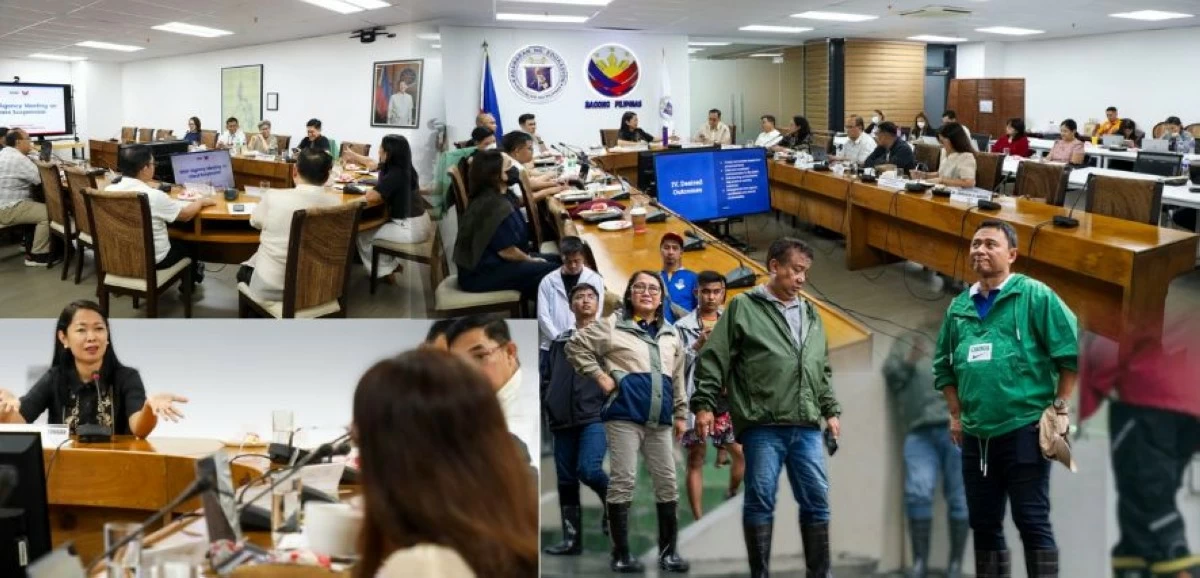
DepEd officials, guided by President Ferdinand R. Marcos Jr. and Education Secretary Sonny Angara, meet with DILG, CHED, DOST-PSHS, and EDCOM II representatives to craft a unified and timely guideline for class suspension announcements. (Photo from DepEd)
The Department of Education (DepEd) on Tuesday, November 4, said it is working with other government agencies to establish a unified and timely protocol for class suspension announcements, emphasizing the need to balance student safety with the continuity of learning.
In an inter-agency meeting with the Department of the Interior and Local Government (DILG), the Commission on Higher Education (CHED), the Philippine Science High School (PSHS), and the Second Congressional Commission on Education (EDCOM II), DepEd moved to craft a national standard for class suspensions to ensure clarity, consistency, and minimal learning disruptions.
As President Ferdinand R. Marcos Jr. highlighted, Education Secretary Sonny Angara underscored the need to confront and prepare for the challenges that disasters pose to education.
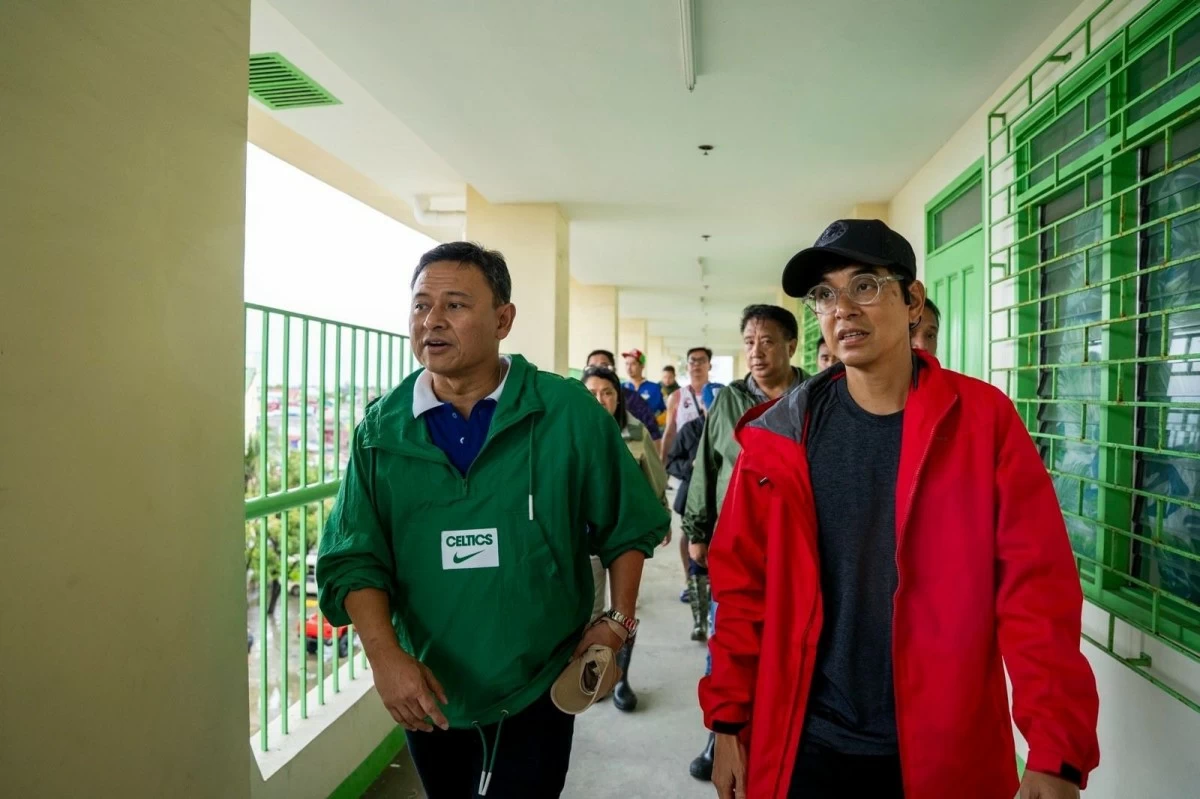
DepEd works with DILG, CHED, and EDCOM II to create unified class suspension guidelines, balancing student safety and learning amid climate disruptions. (Photo from DepEd)
“Hindi natin kayang pigilan ang bagyo, pero kaya nating paghusayin ang ating paghahanda para maging mabilis, malinaw, at maayos ang mga desisyon kapag kaligtasan at kinabukasan na ng mga bata ang nakataya (We cannot stop the storms, but we can improve our preparedness so that decisions are swift, clear, and orderly when the safety and future of our children are at stake),” he said.
READ: 
https://mb.com.ph/2025/10/14/deped-to-lgus-balance-safety-and-learning-in-class-suspension-decisions
Data show link between lost school days and learning gaps
DepEd cited findings from the 2019 Trends in International Mathematics and Science Study (TIMSS), which revealed that every additional day of school closure can lower a Grade 4 student’s achievement by up to 12.4 points in mathematics and 13.9 points in science.

Agencies join forces to strengthen coordination on class suspensions — ensuring that local decisions are guided by clear, consistent, and science-based information for the safety and learning continuity of students. (Photo from DepEd)
Missing just 10 days of learning could drop a child’s science score from 500 to below 380, DepEd pointed out.
EDCOM II data further showed that during School Year 2023–2024, the Philippines lost over 20 school days due to climate-related events, disrupting classes for more than 11 million learners — equivalent to 42 percent of the public school population.
DepEd said this pattern “reflects the worsening impact of the climate crisis on education.”
READ: 
https://mb.com.ph/2025/07/21/why-walangpasok-isnt-always-a-win-for-students-deped-warns-of-serious-learning-loss
Given this, Angara emphasized the urgent need to adapt to these challenges. “Disasters will keep coming, but learning should not stop,” he said. “We need clear, coordinated, and science-based decisions that keep our students both safe and learning,” he added.
Stronger coordination and adaptive learning strategies
During the meeting, agencies agreed to develop a DILG advisory template to help local governments release consistent suspension announcements.
DepEd will also require regional and division offices to report the frequency and impact of class suspensions, and publish official data on lost school days to inform both national and local education policies.

DepEd leads an inter-agency meeting with DILG, CHED, DOST-PSHS, and EDCOM II to enhance communication protocols and balance learner safety with sustained education amid weather disturbances and emergencies. (Photo from DepEd)
The department is likewise enhancing its make-up class policy and expanding Alternative Delivery Modes (ADM) to ensure learning continues even when in-person classes are suspended.
While online and modular learning have helped mitigate disruptions, DepEd noted that these methods cannot fully replace face-to-face instruction, especially for younger learners.
“We understand that safety must always come first,” Angara said. “But we also need to be ready to help students recover from lost time. Our goal is to make every day of learning count — rain or shine,” he added. 
RELATED STORY: 
https://mb.com.ph/2025/10/13/deped-preventive-class-suspensions-ensure-school-safety-disaster-preparedness

Related Tags

DepEd Walang Pasok class suspension guidelines Sonny Angara class suspension policy Philippines make-up classes DepEd education continuity Philippines
ADVERTISEMENT
.most-popular .layout-ratio{ padding-bottom: 79.13%; } @media (min-width: 768px) and (max-width: 1024px) { .widget-title { font-size: 15px !important; } }

{{ articles_filter_1561_widget.title }}

.most-popular .layout-ratio{ padding-bottom: 79.13%; } @media (min-width: 768px) and (max-width: 1024px) { .widget-title { font-size: 15px !important; } }

{{ articles_filter_1562_widget.title }}

.most-popular .layout-ratio{ padding-bottom: 79.13%; } @media (min-width: 768px) and (max-width: 1024px) { .widget-title { font-size: 15px !important; } }

{{ articles_filter_1563_widget.title }}

{{ articles_filter_1564_widget.title }}

.mb-article-details { position: relative; } .mb-article-details .article-body-preview, .mb-article-details .article-body-summary{ font-size: 17px; line-height: 30px; font-family: "Libre Caslon Text", serif; color: #000; } .mb-article-details .article-body-preview iframe , .mb-article-details .article-body-summary iframe{ width: 100%; margin: auto; } .read-more-background { background: linear-gradient(180deg, color(display-p3 1.000 1.000 1.000 / 0) 13.75%, color(display-p3 1.000 1.000 1.000 / 0.8) 30.79%, color(display-p3 1.000 1.000 1.000) 72.5%); position: absolute; height: 200px; width: 100%; bottom: 0; display: flex; justify-content: center; align-items: center; padding: 0; } .read-more-background a{ color: #000; } .read-more-btn { padding: 17px 45px; font-family: Inter; font-weight: 700; font-size: 18px; line-height: 16px; text-align: center; vertical-align: middle; border: 1px solid black; background-color: white; } .hidden { display: none; }
function initializeAllSwipers() { // Get all hidden inputs with cms_article_id document.querySelectorAll('[id^="cms_article_id_"]').forEach(function (input) { const cmsArticleId = input.value; const articleSelector = '#article-' + cmsArticleId + ' .body_images'; const swiperElement = document.querySelector(articleSelector); if (swiperElement && !swiperElement.classList.contains('swiper-initialized')) { new Swiper(articleSelector, { loop: true, pagination: false, navigation: { nextEl: '#article-' + cmsArticleId + ' .swiper-button-next', prevEl: '#article-' + cmsArticleId + ' .swiper-button-prev', }, }); } }); } setTimeout(initializeAllSwipers, 3000); const intersectionObserver = new IntersectionObserver( (entries) => { entries.forEach((entry) => { if (entry.isIntersecting) { const newUrl = entry.target.getAttribute("data-url"); if (newUrl) { history.pushState(null, null, newUrl); let article = entry.target; // Extract metadata const author = article.querySelector('.author-section').textContent.replace('By', '').trim(); const section = article.querySelector('.section-info ').textContent.replace(' ', ' '); const title = article.querySelector('.article-title h1').textContent; // Parse URL for Chartbeat path format const parsedUrl = new URL(newUrl, window.location.origin); const cleanUrl = parsedUrl.host + parsedUrl.pathname; // Update Chartbeat configuration if (typeof window._sf_async_config !== 'undefined') { window._sf_async_config.path = cleanUrl; window._sf_async_config.sections = section; window._sf_async_config.authors = author; } // Track virtual page view with Chartbeat if (typeof pSUPERFLY !== 'undefined' && typeof pSUPERFLY.virtualPage === 'function') { try { pSUPERFLY.virtualPage({ path: cleanUrl, title: title, sections: section, authors: author }); } catch (error) { console.error('ping error', error); } } // Optional: Update document title if (title && title !== document.title) { document.title = title; } } } }); }, { threshold: 0.1 } ); function showArticleBody(button) { const article = button.closest("article"); const summary = article.querySelector(".article-body-summary"); const body = article.querySelector(".article-body-preview"); const readMoreSection = article.querySelector(".read-more-background"); // Hide summary and read-more section summary.style.display = "none"; readMoreSection.style.display = "none"; // Show the full article body body.classList.remove("hidden"); } document.addEventListener("DOMContentLoaded", () => { let loadCount = 0; // Track how many times articles are loaded const offset = [1, 2, 3, 4, 5, 6, 7, 8, 9, 10]; // Offset values const currentUrl = window.location.pathname.substring(1); let isLoading = false; // Prevent multiple calls if (!currentUrl) { console.log("Current URL is invalid."); return; } const sentinel = document.getElementById("load-more-sentinel"); if (!sentinel) { console.log("Sentinel element not found."); return; } function isSentinelVisible() { const rect = sentinel.getBoundingClientRect(); return ( rect.top < window.innerHeight && rect.bottom >= 0 ); } function onScroll() { if (isLoading) return; if (isSentinelVisible()) { if (loadCount >= offset.length) { console.log("Maximum load attempts reached."); window.removeEventListener("scroll", onScroll); return; } isLoading = true; const currentOffset = offset[loadCount]; window.loadMoreItems().then(() => { let article = document.querySelector('#widget_1690 > div:nth-last-of-type(2) article'); intersectionObserver.observe(article) loadCount++; }).catch(error => { console.error("Error loading more items:", error); }).finally(() => { isLoading = false; }); } } window.addEventListener("scroll", onScroll); });

Sign up by email to receive news.