







Another big-time oil price hike looms
Published Oct 31, 2025 09:32 am
|
Updated Oct 31, 2025 04:06 pm


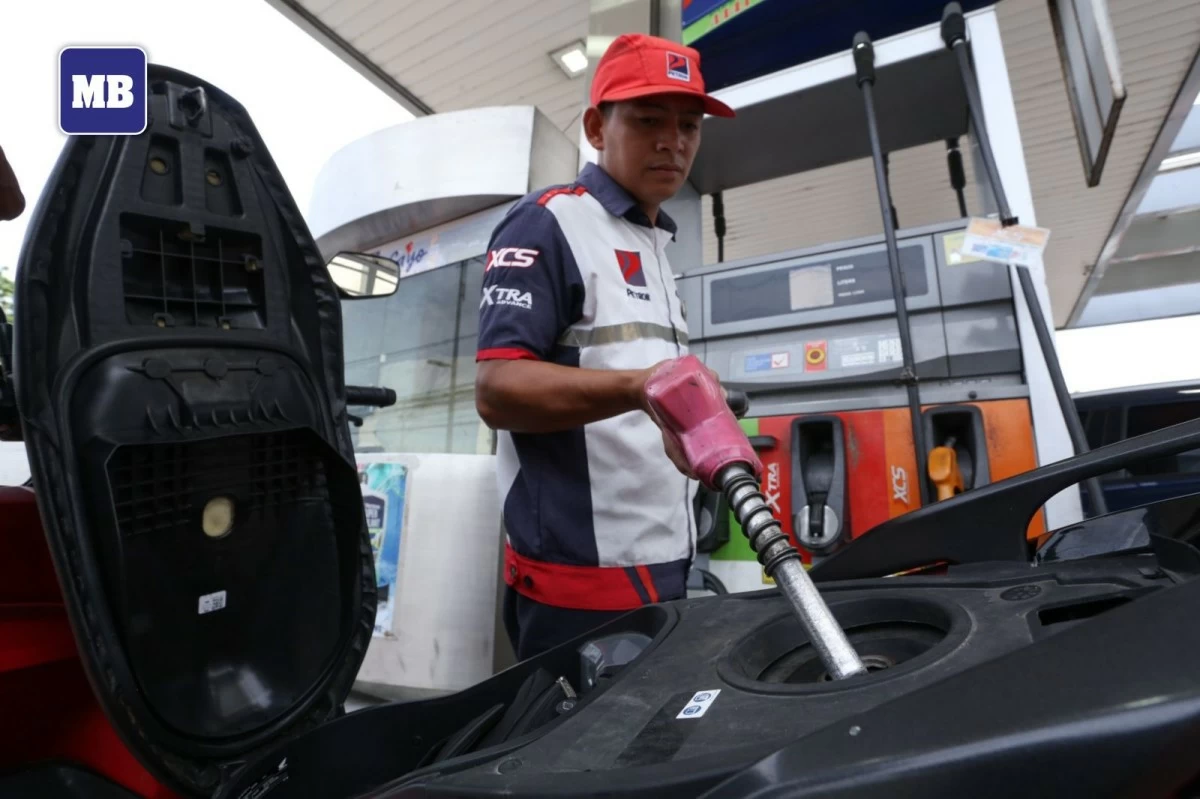
Pump attendants serve motorists in a gasoline station along Commonwealth Avenue in Quezon City on Friday, June 20.
Oil prices are expected to rise again by the first week of November as growing seasonal demand meets tightened global supply due to ongoing sanctions.
Based on the four-day trading average of Mean of Platts Singapore (MOPS), gasoline could climb at around ₱1.2 to ₱1.7 per liter, while diesel may continue its hefty ₱2.15 to ₱2.70 per liter spike.
Kerosene is also projected to increase by approximately ₱1.75 per liter.
The Department of Energy (DOE) Oil Industry Management Bureau (OIMB) attributed the latest price hike to the expected jump in demand driven by the anticipated easing of trade tensions between the United States (US) and China.
While stronger demand typically signals a positive economic outlook, OIMB Director Rodela Romero noted that the sanctions imposed on Russia would likely result in supply disruption.
This month, the US, the United Kingdom (UK), and the European Union (EU) imposed fresh sanctions targeting Russia’s largest oil firms, Rosneft and Lukoil. The measures also hit an Indian oil refinery and several Chinese oil terminals for continuing to purchase and handle Russian oil.
Restricting Russia’s economic activities (particularly in the oil sector) is part of these governments’ broader strategy to pressure Moscow into ending its war in Ukraine.
According to a CNN report, some oil companies are withdrawing from their Russian oil purchases before the November 21 deadline.
Jetti Petroleum President Leo Bellas said that this could lead to some significant shifts in global oil movements.
“Oil prices continued its rally this week as the sanctions on Russian oil producers Rosneft and Lukoil, which together account for more than 5 percent of global oil output, have introduced significant compliance risks and uncertainty into the market,” he said.
“Growing concerns that refined products output will tighten globally due to the US sanctions on key Russian producers have resulted in strengthening diesel and gasoline prices outside of crude movements,” Bellas added.