







Another public hearing on Cebu City WTE facility conducted
Published Oct 24, 2025 08:56 pm


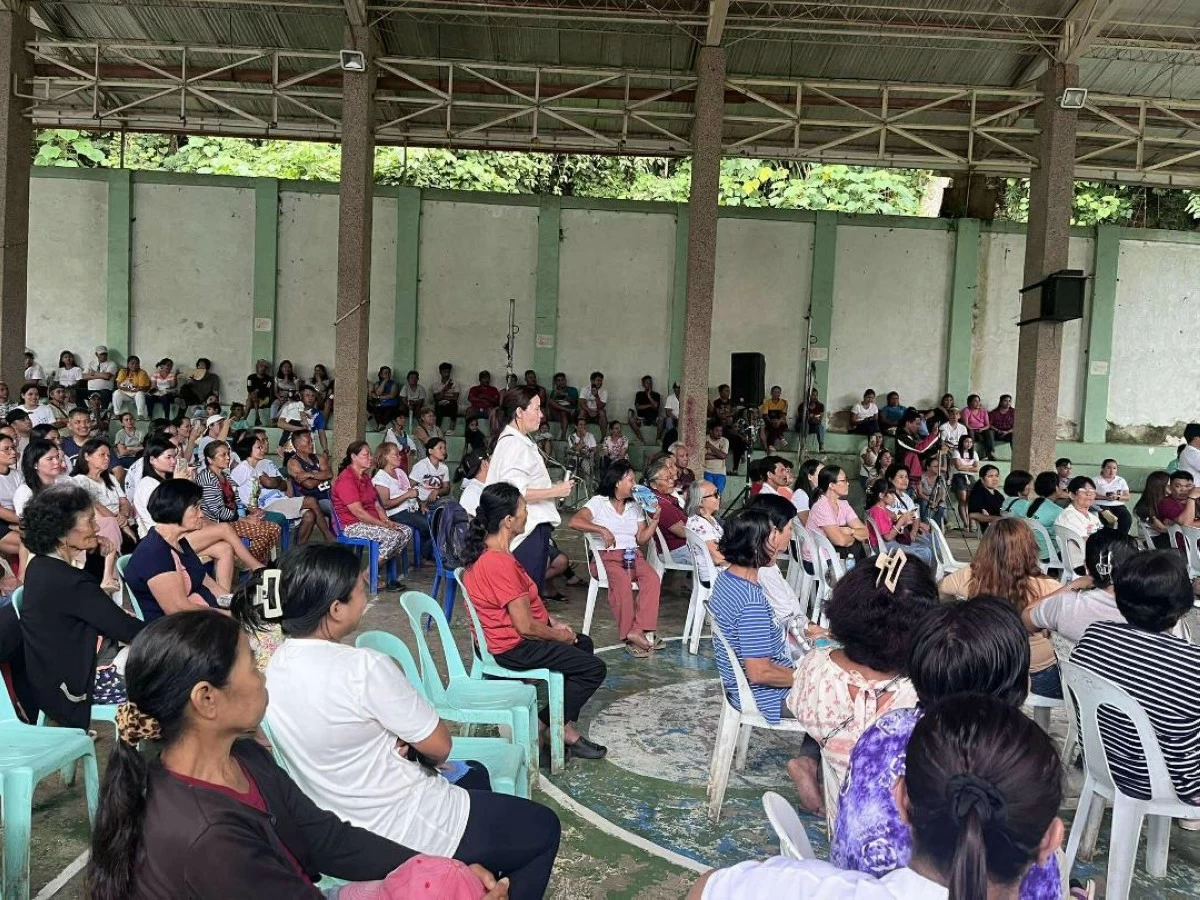
RESIDENTS attend a public hearing on the planned construction of a waste-to-energy (WTE) facility in Barangay Guba, Cebu City. (Photo courtesy of MyTVCebu)
CEBU CITY – Another round of public hearing was conducted as part of efforts to allay fears over the planned construction of a waste-to-energy (WTE) facility in Barangay Guba here.
Officials from various government agencies attended the public hearing at the barangay gymnasium on Friday, Oct. 24.
“We brought here officials from various government agencies because it would not be practical that it would be just me who will explain the project,” said City Councilor Joel Garganera, chairman of the city council committee on environment.
Present during the hearing were officials from the Department of Agriculture (DA), Department of Health (DOH), Department of Environment and Natural Resources (DENR), Department of Interior and Local Government (DILG), Department of Science and Technology (DOST), and Department of Energy (DOE).
At the course of the hearing, some residents jeered as they opposed the P5-billion project.
Garganera explained that the city badly needs the WTE project to address the worsening garbage disposal problem.
The project has yet to commence even after a joint venture agreement (JVA) was approved in 2022. Strong opposition from residents has been cited as the cause of delay.
The project was approved during the administration of then Mayor Michael Rama. The facility, which will convert waste into energy, will occupy a six-hectare area and operate for 40 years.
Garganera defended the project, saying it would benefit future generations.
The councilor said he himself is pro-environment, recalling how he fought for the closure of a landfill in Barangay Inayawan.
Garganera filed a Writ of Kalikasan in 2016 that led to the closure of the landfill. “The landfill was opened in 1998 with a lifespan of only until 2005,” said Garganera.
The official said 2005 passed but the landfill continued to operate even if it reached its maximum capacity.
“Schools, malls, and condominiums complained of the stench coming from the landfill that’s why I fought for its closure,” said Garganera.
In the WTE project, Garganera said 800 tons of trash could power 20,000 to 40,000 homes. He emphasized that the facility is different from a landfill and other countries have adopted similar technologies.
He said the project will help the city manage waste disposal while providing electricity to thousands of homes.
“Frustration from the public is expected but waste-to-energy is a proven technology abroad,” Garganera said.
Officials who attended the hearing assured residents that the project went through the process.
“On our part, we want to make sure that the project will benefit the residents and will not harm the community and the environment,” said Lourdes Artiaga, chief science research specialist of DOE-Visayas.
Engr. Imee Kassandra Cacho of DOST said air, water, and sound quality tests had been conducted. “Every country releases waste and mitigation is very important,” Cacho said.
Grace Devon Gevero of DOH added that unlike landfills, WTE facilities are not harmful to the environment as they do not even show visible trash or stench.