







Hopia lovers celebrate Binondo's first Manila Hopia Day
Binondo's Plaza San Lorenzo Ruiz transforms into a hub of heritage and flavor as the city marks its first-ever celebration dedicated to the beloved Filipino-Chinese pastry
Published Oct 20, 2025 05:35 pm


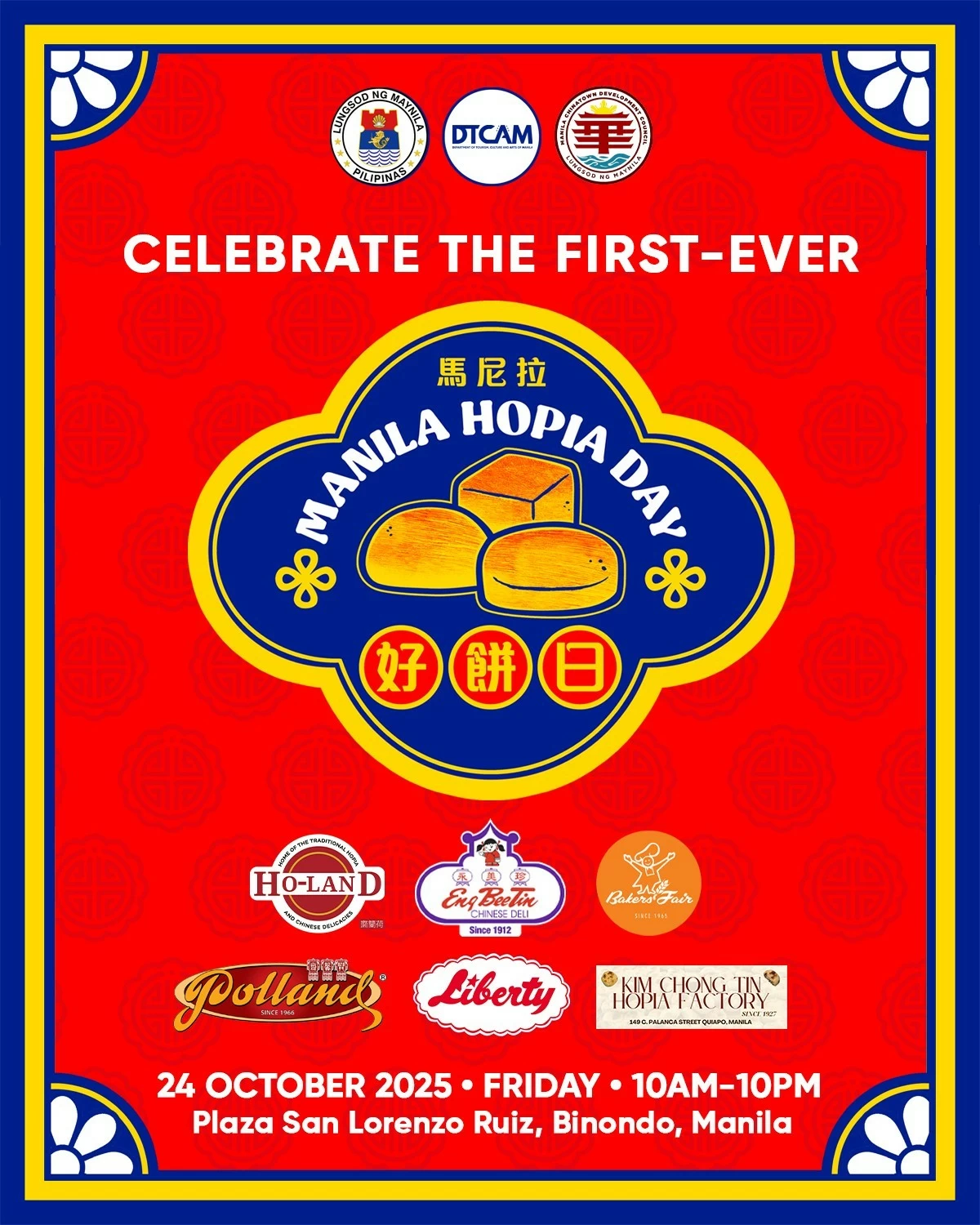
The sweet, flaky hopia, a beloved symbol of Filipino-Chinese heritage, is taking center stage this week as the Department of Tourism, Culture and Arts of Manila (DTCAM) launches the first-ever Manila Hopia Day on October 24 at Plaza San Lorenzo Ruiz in Binondo. The celebration runs from 10 a.m. to 10 p.m., transforming the historic square into a hub of flavor, nostalgia, and community spirit.
A tribute to a timeless treat
The festival brings together the city’s most recognized hopia makers—Ho-Land Hopia, Eng Bee Tin Chinese Deli, Bakers’ Fair, Polland Hopia, Liberty Food Mart, and Kim Chong Tin Hopia Factory—in a collective showcase that honors generations of culinary craftsmanship.
Organized by DTCAM in partnership with Manila’s Chinese-Filipino community, the event pays tribute to the hopia’s enduring place in local culture. What started as a humble pastry filled with mung bean paste has evolved into a symbol of family gatherings, festivals, and shared heritage.
Visitors can expect a day filled with food booths, cultural performances, and hopia tasting sessions, with each participating brand offering their signature versions—from traditional munggo and ube to newer innovations that reflect the creativity of Manila’s bakers.
Beyond the pastries, the event highlights the entrepreneurial spirit of Binondo, where many of these family-run bakeries began. Each brand tells a story of perseverance and adaptation, tracing back to early Chinese settlers who introduced the flaky pastry to local palates.
Set in the heart of Binondo, often called the world’s oldest Chinatown, the event underscores the cultural ties that have shaped the city’s culinary landscape for centuries.
The first Manila Hopia Day is free and open to the public. Attendees are encouraged to come hungry and leave with boxes of hopia as edible souvenirs of Manila’s sweetest new tradition.