






Manila Bulletin
 Business
Trade & Industry
New DOE circular sets rules for energy sector carbon credit trading
Business
Trade & Industry
New DOE circular sets rules for energy sector carbon credit trading
Business
Trade & Industry
New DOE circular sets rules for energy sector carbon credit trading
New DOE circular sets rules for energy sector carbon credit trading
Published Oct 16, 2025 02:10 pm


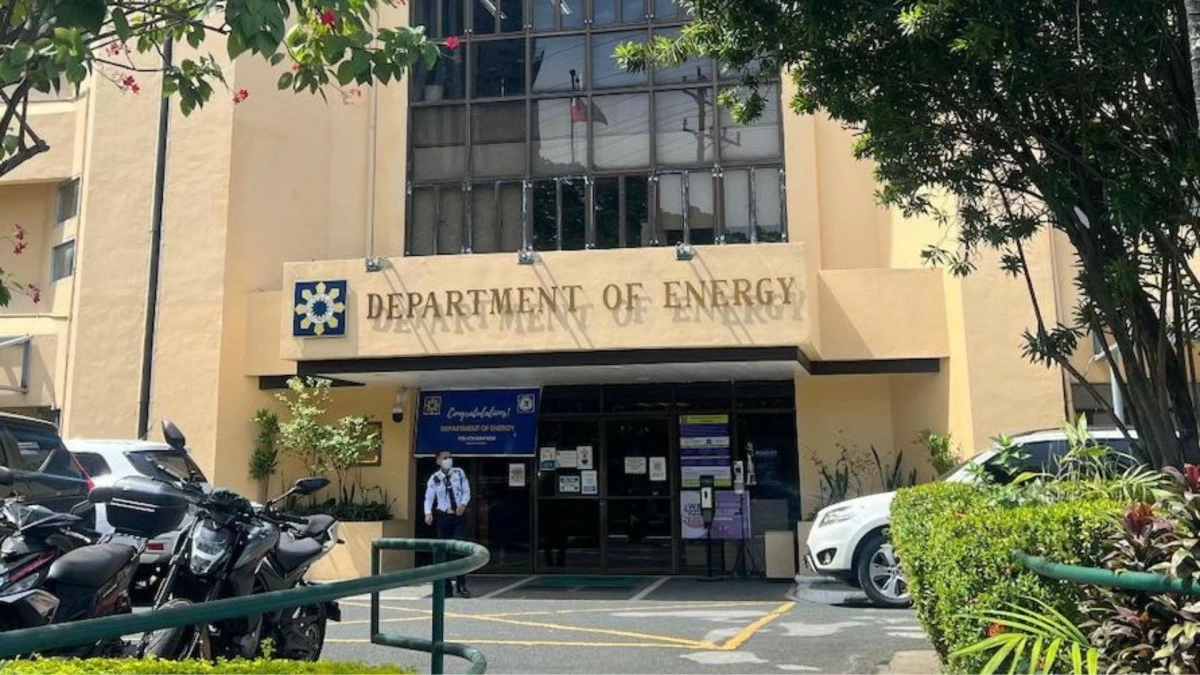
The Department of Energy (DOE) has unveiled a new framework to generate and trade carbon credits, establishing a financial mechanism designed to unlock capital for the early retirement of coal-fired power plants.
Energy Secretary Sharon S. Garin recently signed Department Circular No. DC2025-09-0018, which sets the official guidelines for the generation, management, and monitoring of carbon credits in the energy sector.
Under the new circular, the DOE will be the central authority for certifying Carbon Credit Certificates (CCCs), a tradeable “receipt” for eliminating or reducing one ton of carbon dioxide equivalent (GHG) from the atmosphere.
However, these certificates are only issued after a mitigation project has been confirmed as real, additional, and verified by independent, accredited experts by the DOE.
Based on the circular, the DOE can grant project proponents—from coal operators to clean energy developers—full carbon rights, including the authority to use, sell, trade, or transfer the CCCs they generate.
The DOE, however, prioritized activities eligible for credit generation, including the voluntary early retirement of coal-fired power plants (CFPPs) and their subsequent replacement with renewable energy (RE) systems.
The agency noted this framework provides a formal, market-based path for companies to accelerate asset decommissioning and leverage global transition finance, such as the mechanisms being explored with bilateral partners like Singapore.
Additionally, new investment in low-carbon hydrogen, nuclear energy for power generation, and energy storage systems will now be eligible for CCCs, formalizing an incentive for emerging technologies. Projects focused on energy efficiency improvements and the transition from internal combustion engine vehicles to Electric Vehicles (EVs) are also recognized mitigation activities.
To promote transparency and strict adherence to anti-double-counting measures—a key concern in the voluntary carbon market (VCM)—the DOE has put safeguards in place.
Specifically, for a single renewable energy facility, the output can generate only one type of Energy Certificate—either a CCC or a Renewable Energy Certificate (REC)—but not both.
The DOE-issued CCCs can be traded in the International Compliance Market, the future Domestic Compliance Market (Emissions Trading System), and the Voluntary Carbon Market (VCM).
To manage this new ecosystem, the DOE has converted its existing Greenhouse Gas Inventory Team into the Task Force on Energy Carbon Credits (TFECC). This task force is charged with approving eligibility, recognizing carbon crediting standards, and overseeing project validation.
The circular takes effect 15 days following publication and sets a six-month deadline for the DOE to issue supplementary guidelines for the Domestic Compliance Market and the Voluntary Carbon Market.