






Manila Bulletin
 Business
The Economy
PIDS urges government to adopt circular economy framework amid worsening waste crisis
Business
The Economy
PIDS urges government to adopt circular economy framework amid worsening waste crisis
Business
The Economy
PIDS urges government to adopt circular economy framework amid worsening waste crisis
PIDS urges government to adopt circular economy framework amid worsening waste crisis
Published Oct 13, 2025 12:00 am
|
Updated Oct 11, 2025 01:28 pm


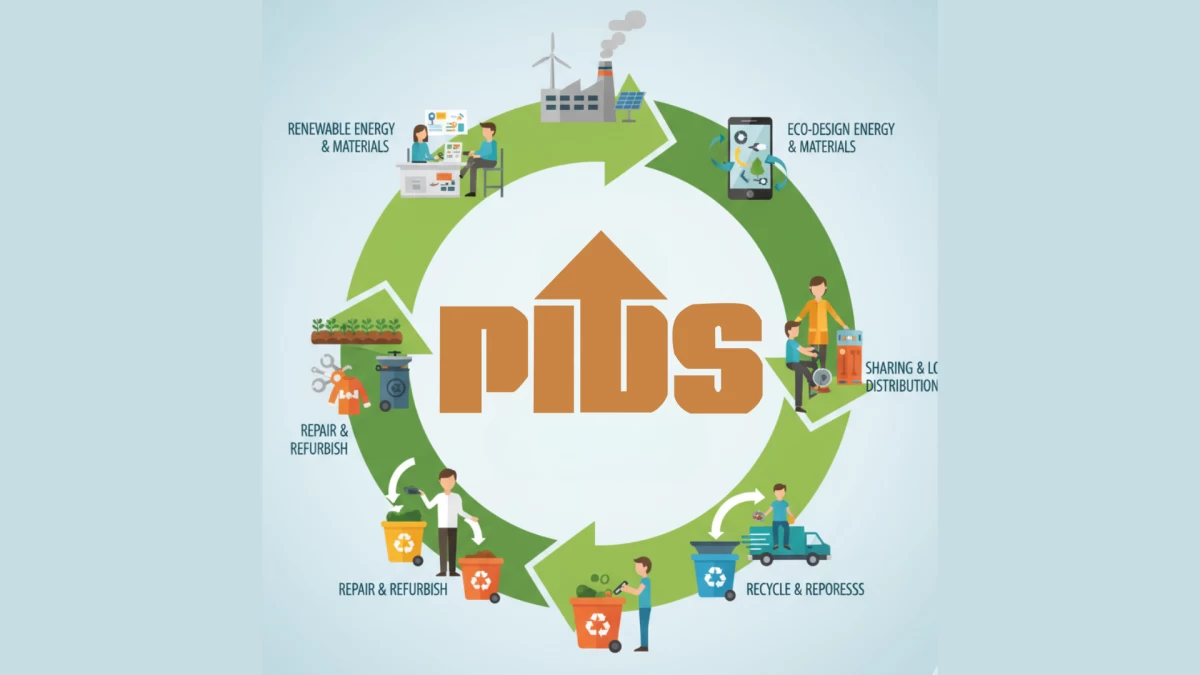
State-run think tank Philippine Institute for Development Studies (PIDS) has urged the Philippine government to implement several key measures to ensure the success and sustainability of the circular economy (CE) transition.
“The state’s desire to promote economic transformation and sustainable development via the CE model is very much welcome,” PIDS senior research fellow Sonny N. Domingo and research analyst Roselle F. Guadalupe said in their comments on House Bill (HB) Nos. 315, 2479, and 4142—collectively known as the CE Act, dated Oct. 7.
The HBs aim to establish a national framework for circularity, decarbonization, resource efficiency, and sustainable behavior.
The think tank noted that the Philippines faces a worsening waste crisis driven by urbanization, population growth, and unsustainable practices.
PIDS recommended that there is a need for a CE model and definition tailored to the Philippines, one that captures the entire process of production, consumption, and waste management across local commodity systems and value chains.
“By situating CE within a localized framework, the model becomes both actionable and contextually relevant, offering a pathway for inclusive and sustainable implementation,” the think tank said, noting that it reflects local economies, industries, and households, while global models overlook the country’s unique socioeconomic and cultural context.
PIDS also noted that it will help shape responsible behavior among Filipinos and guide sustainable practices from production and consumption to material recovery, reuse, and recycling.
“CE is an economic model that espouses a locally appropriate approach to optimal resource utilization within the production-consumption-waste management continuum of commodity systems and value chains, designed to minimize residual waste and sustain the longevity and usability of materials from production, consumption, recovery, reuse, and recycling,” the think tank explained.
The think tank emphasized that pursuing CE in the Philippines is inherently complex but offers opportunities to tackle local sustainability issues and meet global environmental commitments.
The think tank stressed that CE boosts sustainability and resilience by reducing waste and protecting the environment, relying on collaboration among all consumers and producers. It noted that the transition relies on clear policies, efficient resource use, stronger institutions, behavior changes, and targeted actions within value chains.
PIDS said that CE action plans at all levels should align with value chains for accountability and measurable results, with local plans needed across all provinces and cities.
It highlighted that CE must be supported by national government agencies (NGAs), such as the departments of Agriculture (DA), of Trade and Industry (DTI), of Environment and Natural Resources (DENR), of the Interior and Local Government (DILG), of Public Works and Highways (DPWH), of Science and Technology (DOST), of Education (DepEd), and of Economy, Planning, and Development (DEPDev), as well as the Philippine Statistics Authority (PSA) and the Climate Change Commission (CCC), in collaboration other agencies, civil society organizations (CSOs), and industry stakeholders.
PIDS further recommended that the CE policy and framework should unify scattered efforts into a cohesive national strategy, backed by clear regulations, provisions, and institutional mandates.
“This includes strengthening the grounding and enforcement of existing policies, including the Ecological Solid Waste Management Act (Republic Act or RA No. 9003), the Extended Producers Responsibility Act (RA 11898), and Philippine Action Plan for Sustainable Consumption and Production (PAP4SCP), among others,” it added, noting that immediate action is needed, supported by trusted and empowered institutions and stakeholders.
PIDS said that integrating CE into practice requires the active commitment of NGAs, local government units (LGUs), and private-sector stakeholders.
“The main weakness of the Ecological Solid Waste Management Act (RA 9003) was that LGUs were left to fend for themselves,” the think tank said, highlighting that past mistakes should not be repeated, while recognizing the undeniable key role of LGUs in the overall framework.
The think tank also recommended that the establishment of a CE implementation fund is necessary and should complement the CE plan. For PIDS, medium- and long-term CE programs should drive public and private investment in local technologies and advanced waste management infrastructure.
“Targets and milestones must be made tangible by estimating and appropriating the required investment,” the think tank added.
Finally, PIDS said that incorporating enforcement measures and specific penalties, including administrative sanctions and fines, enhances deterrence and enables stronger legal action against noncompliance, while also helping to establish a solid foundation for CE policy and supporting performance monitoring.
(Ricardo M. Austria)