






Manila Bulletin
 Philippines
National
A mother's fight for her child's life, and the cure the Philippines doesn't have yet
Philippines
National
A mother's fight for her child's life, and the cure the Philippines doesn't have yet
Philippines
National
A mother's fight for her child's life, and the cure the Philippines doesn't have yet
A mother's fight for her child's life, and the cure the Philippines doesn't have yet
By Jel Santos
Published Oct 6, 2025 04:03 pm
|
Updated Oct 11, 2025 09:40 pm


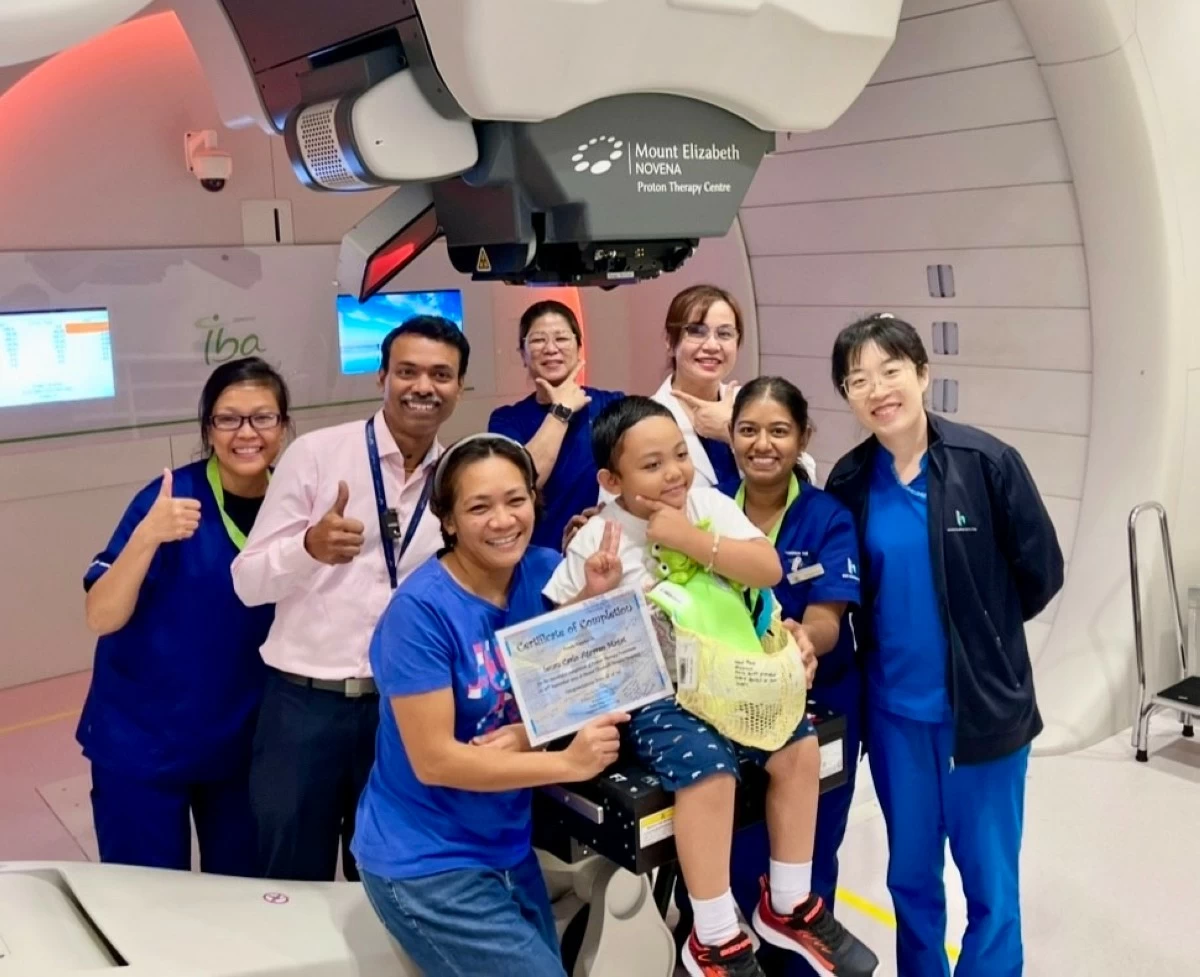
Ieauan Magat poses with the medical staff of Mount Elizabeth Novena Hospital in Singapore after completing his final proton therapy session on Sept. 26. The team presented him with a certificate of completion to mark the milestone. (JEL SANTOS)
SINGAPORE—When doctors told Roda Shane Magat that her seven-year-old son, Ieuan, had a brain tumor pressing on his optic nerves, she refused to give up.
Sleepless nights became months of relentless search for a treatment that could save him- - -a treatment she would later discover didn’t exist yet in the Philippines.
“Since si Ieuan po kasi na-diagnose na po siya noong four years old pa siya, nalaman na namin na may tumor siya for MRI ‘yun nga po may craniopharyngioma po siya (Ieuan was already diagnosed when he was just four years old. We found out through an MRI that he had a tumor; he was diagnosed with craniopharyngioma),” Roda said.
“Nalaman din po namin nung four years old siya na hindi na nakakakita yung right niya, so ‘yun po ‘yung una, pero nakakakita pa po yung left (We also found out when he was four years old that he could no longer see with his right eye — that was the first sign, but he could still see with his left eye).”
Reporters from Manila first met Roda and Ieuan at Mount Elizabeth Novena Hospital in Singapore before her son’s last proton treatment on Sept. 26.
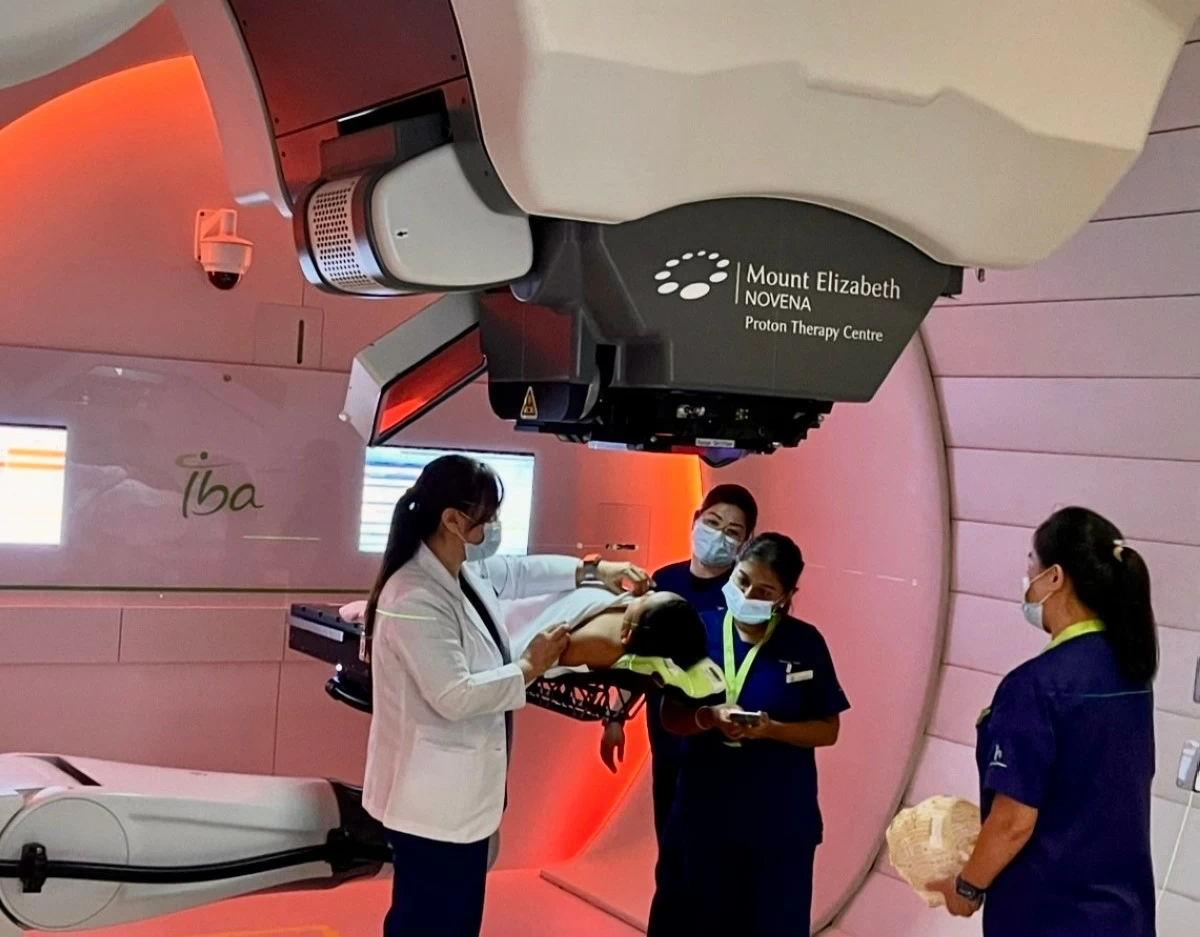
Medical staff of Mount Elizabeth Novena Hospital in Singapore prepare Ieauan Magat for his final proton therapy session. (JEL SANTOS)
Need for radiation
According to Dr. Lee Kuo Ann, radiation oncologist at Mount Elizabeth Novena Hospital in Singapore, craniopharyngioma, a rare benign brain tumor, affects only about two in a million people.
In children, he explained it accounts for roughly five percent of all brain tumors.
“We use radiation to treat tumors, and radiation is frequently used for tumors in the brain because of the sensitive structures,” Dr. Lee said.
“The surgeon cannot always remove everything, so radiation is frequently called to treat what the surgeon cannot remove, to provide tumor control.”
For years, Ieauan’s condition was managed medically. But his growth soon slowed as the tumor interfered with hormone production.
When his vision began to fail, Roda knew she was running out of time.
“Syempre bilang nanay po, ayaw ko naman pong magkaroon ng iba pang complications (Of course, as a mother, I don’t want him to develop any more complications) ,” she said.
“Habang nag-aano po kami ng other medical options, nag-start po akong mag-research sa internet nung mga bagong ano, para ma-lessen po yung risk sa kanya (While we were exploring other medical options, I started researching on the internet about new treatments to lessen the risks for him).”
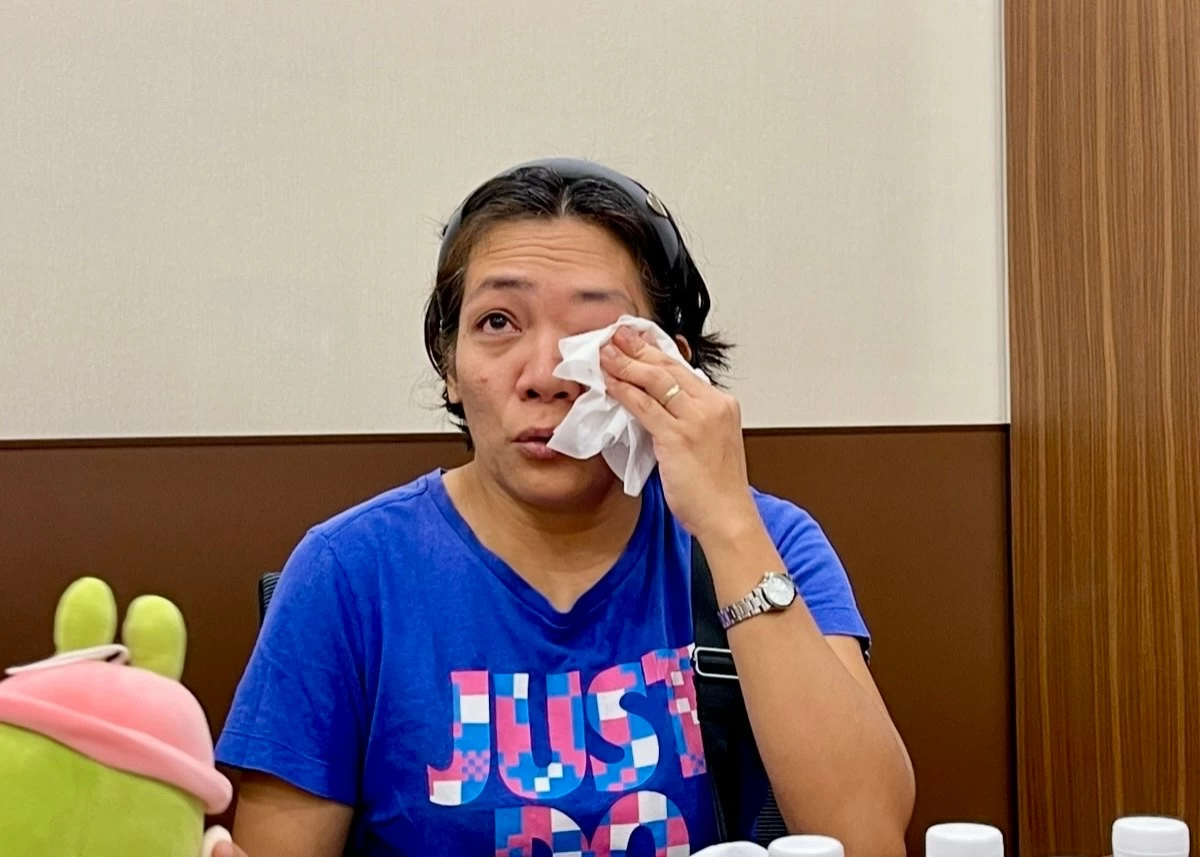
Roda Shane Magat wipes her tears as she recalls her son Ieauan’s long and difficult medical journey. (JEL SANTOS)
New hope
Her online search in 2024 led her to a new hope - - -proton therapy, an advanced form of radiation that targets tumors precisely while sparing surrounding tissues.
Desperate for help, Roda began writing e-mails to hospitals across the world in search of someone who would take her son’s case.
“Inemail ko po lahat halos ng ospital na may proton dahil wala po sa Philippines. Si Mount Elizabeth lang po yung sumagot. Praise God, siya lang po yung sumagot sa email ko (I emailed almost all the hospitals that offer proton therapy because it isn’t available in the Philippines. Only Mount Elizabeth replied. Praise God, it was the only one that responded to my email),” she narrated in between sobs.
Roda added that she also emailed hospitals in the United States and Europe.
That single reply changed everything. Dr. Lee, who happened to be visiting Manila for a medical talk, reviewed Ieuan’s scans and offered to help.
“When I was in Manila to give a talk, the representative brought the boy’s case to me,” Dr. Lee recalled.
“There was a tumor in the brain, quite a big tumor, maybe the size of an egg. Because of the large tumor pressing on the nerves of the eye, I recommended initial surgery, followed by radiation.”
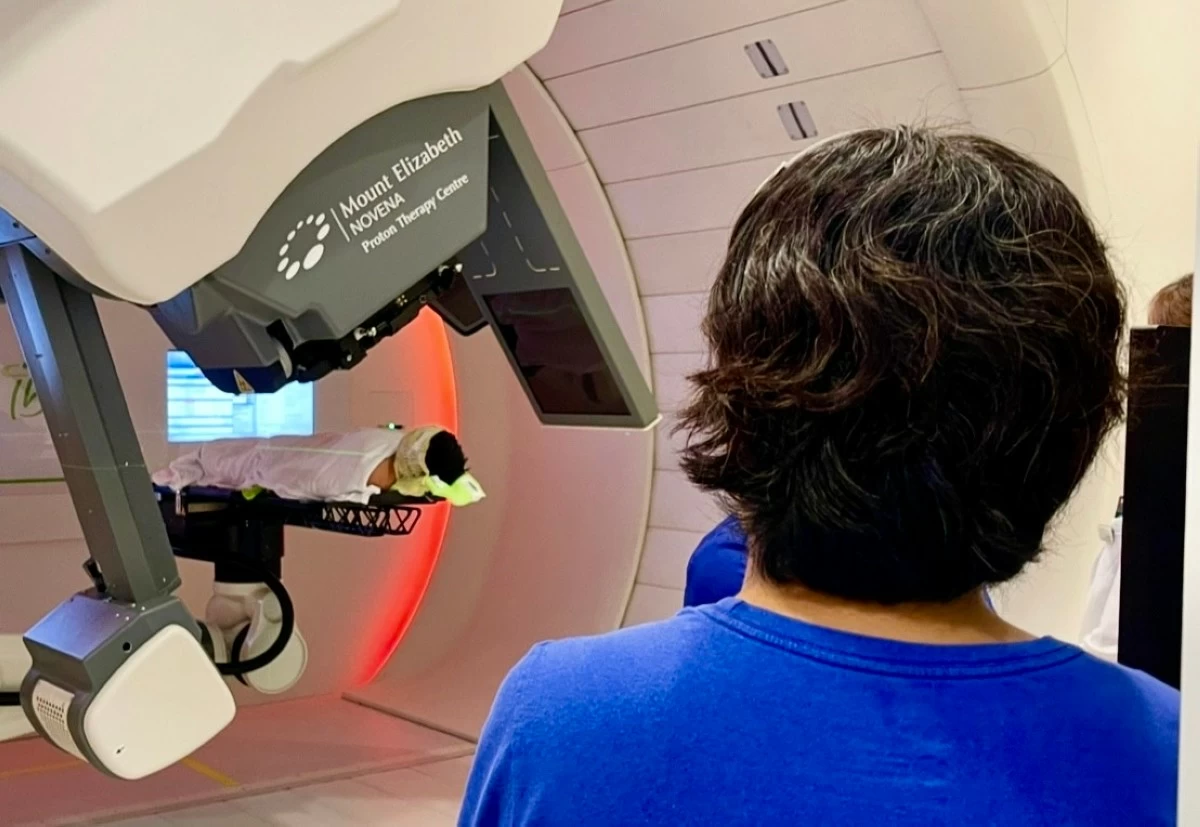
Roda Shane Magat watches as her son Ieauan undergoes his final proton therapy session. (JEL SANTOS)
Long road ahead
The surgery, performed at Philippine General Hospital, was delayed nearly 10 months as Roda struggled to find help amid long hospital queues.
“Ang dami po kasing pasyente, sobra po (There were so many patients, really so many),” she said.
When the surgery finally pushed through, it saved Ieuan’s life, but sadly, took his remaining sight.
“Sabi niya, ‘Mommy, paki-on yung light. Brownout po ba, Mommy?’ (He said, ‘Mommy, please turn on the light. Is there a brownout, Mommy?’)” Roda recalled through tears.
“Sabi ko, ‘Anak, naoperahan ka na… pero ‘yung eyes mo kasi, hindi na makakakita.’ (I told him, ‘Son, you’ve already undergone surgery… but your eyes can no longer see.’) Sabi niya, ‘Opo, Mommy, magpipray ako kay Lord Jesus, ibalik na lang ‘yung eyes ko.’ (He said, ‘Yes, Mommy, I’ll pray to Lord Jesus to give my eyesight back’).”
Despite losing his vision, Ieuan recovered swiftly.
In August, with the help of Mount Elizabeth Hospital, he and his mother flew to Singapore for treatment.
“Lahat po plantsado na nung dumating po kami dito (Everything was already well-prepared when we arrived here),” Roda said.
“From airport po, sinundo po kami, dinala po kami sa hotel. God is so good, as in very smooth po lahat nung journey namin from Day 1 (We were picked up from the airport and brought to the hotel. God is so good. Everything about our journey from Day 1 went so smoothly).”
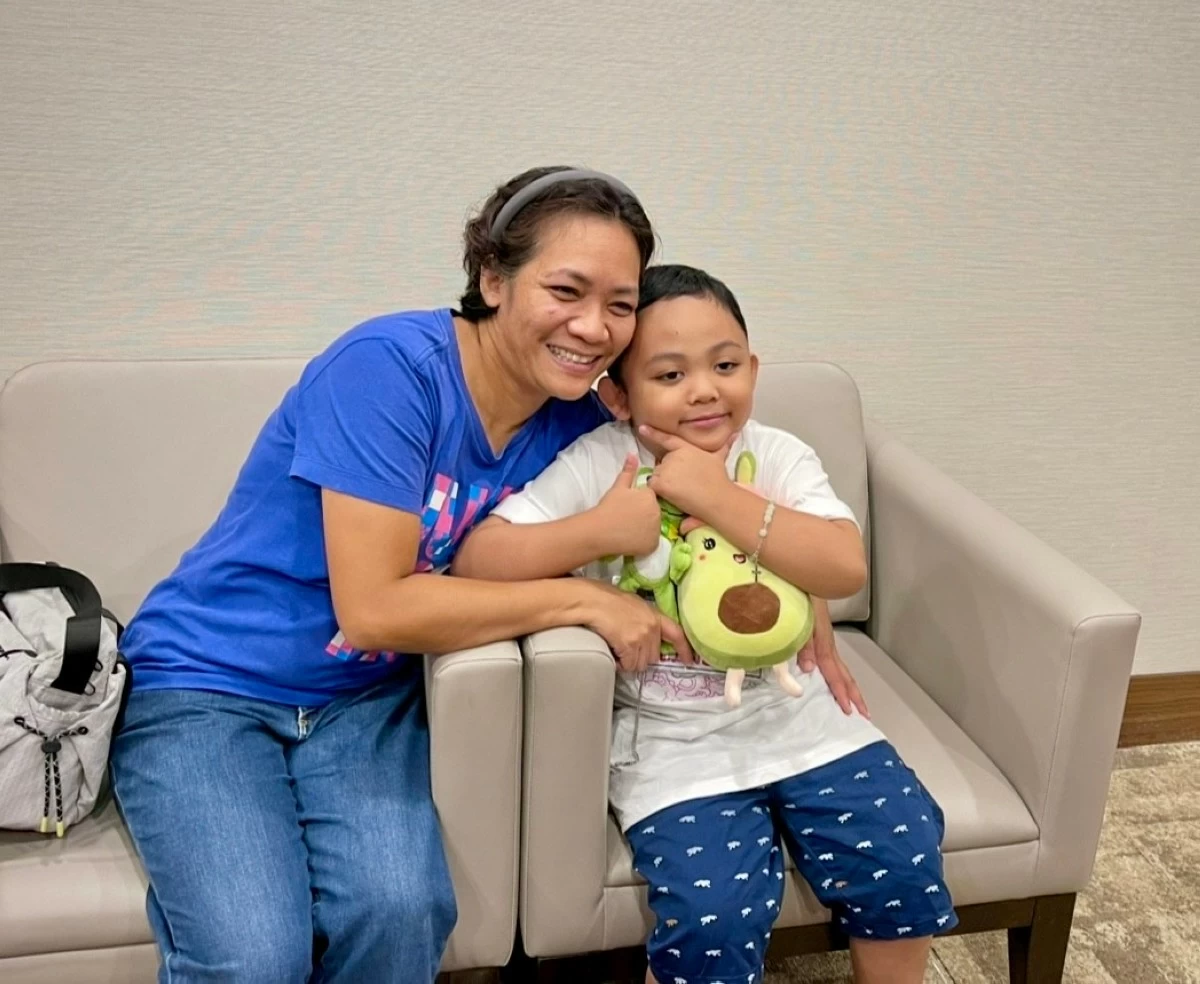
Roda Shane Magat and her son Ieauan pose for a photo before his last proton therapy session. (JEL SANTOS)
Dr. Lee began Ieauan’s pencil-beam scanning proton therapy, which is a cutting-edge treatment available only in a few centers across Asia.
“We aim for tumor control,” Dr. Lee said.
“Statistically speaking, with radiation we should be able to control the tumor about 85 percent of the time. Control means that the tumor shrinks or stays the same size. Lack of control means it grows.”
At Mount Elizabeth, proton therapy is used for tumors with complex anatomy or surrounded by sensitive tissues, particularly in children.
The treatment is painless, typically lasting 30 minutes per session, five days a week for several weeks.
“It allows for the sparing of healthy tissues and organs,” the hospital noted.
“It can minimize radiation exposure of healthy tissues, lower the dose per treatment, and potentially reduce the risk of secondary cancers.”
As Ieuan returns home to the Philippines, his story stands as both a miracle and a message—that access to advanced, life-saving care like proton therapy should not depend on one mother’s desperation or one hospital’s charity.