






Manila Bulletin
 Business
Trade & Industry
DOE backs private sector's carbon credit plan for coal plant retirement
Business
Trade & Industry
DOE backs private sector's carbon credit plan for coal plant retirement
Business
Trade & Industry
DOE backs private sector's carbon credit plan for coal plant retirement
DOE backs private sector's carbon credit plan for coal plant retirement
Published Oct 2, 2025 04:02 pm


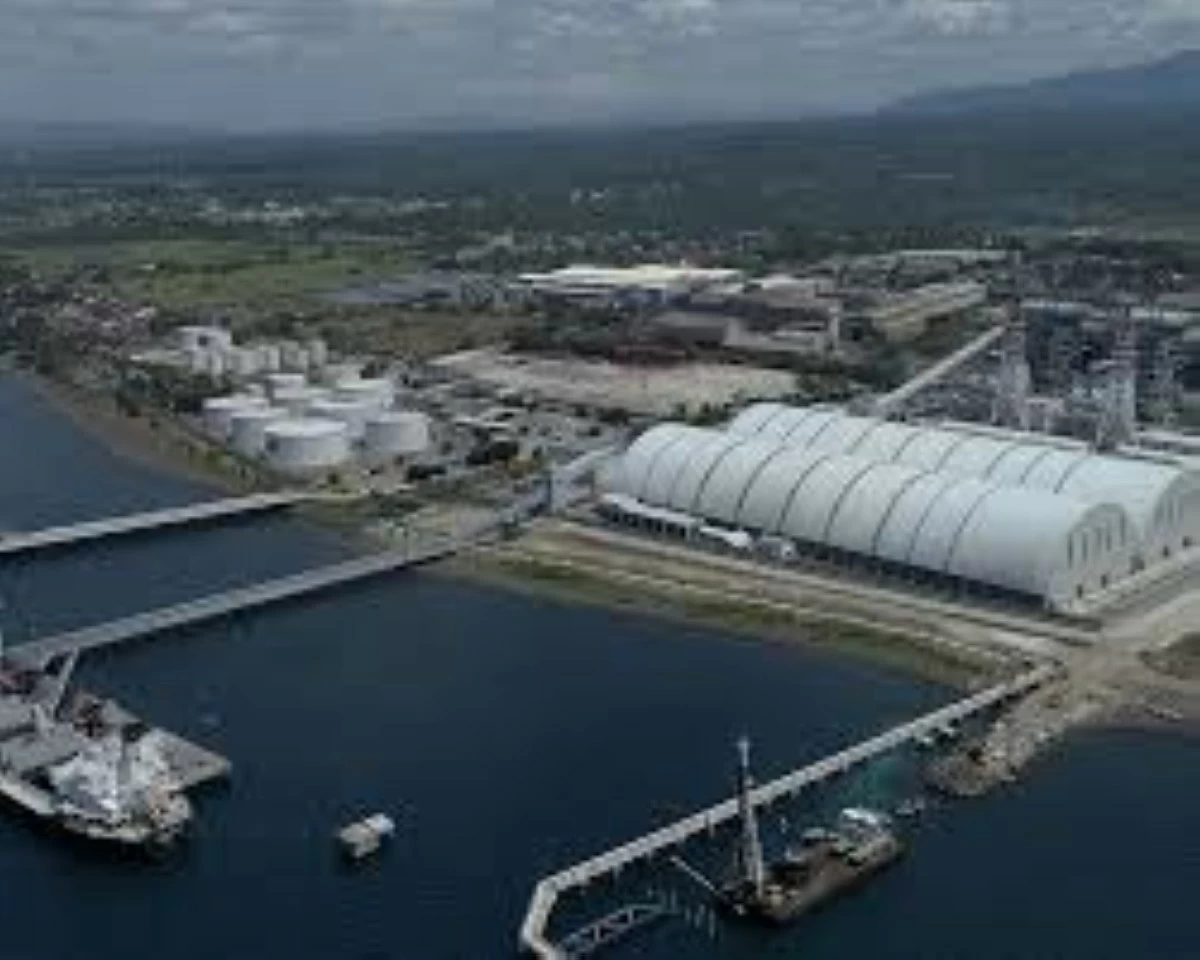
The Department of Energy (DOE) has expressed full support for the private sector’s ongoing efforts to proceed with carbon credit trading, as two coal-fired power plants are slated for retirement and repurposing.
During a High-Level Forum on Carbon Credits on Thursday, Oct. 2, Energy Undersecretary William Fuentebella presented the power plants that would pioneer market-based solutions for early coal retirement.
These plants include the 246-megawatt (MW) South Luzon Thermal Energy Corp. (SLTEC) coal plant, operated by Ayala-led ACEN Corp., and the 210-MW STEAG State Power, Inc. coal plant of Aboitiz Power Corp.
“If these pilots succeed, they will demonstrate the viability of a new class of carbon credits—transition credits—that could be scaled up not only in the Philippines, but across Asia,” Fuentebella said on behalf of Energy Secretary Sharon Garin.
ACEN had earlier planned to explore repurposing strategies for its facility, slated for retirement by 2030, including converting it for energy storage installations and potential industrial estate development.
Meanwhile, the Power Sector Assets and Liabilities Management Corp. (PSALM) is planning to retire the 210-MW STEAG plant by repurposing it into a $476 million investment.
While these facilities have yet to yield results, the DOE outlined three key elements that would make carbon credit trading viable: credible methodologies, innovative financing, and global demand.
“If the system is not credible, it will collapse under its own weight," Fuentebella warned. "That is why the Philippines is committed to working with partners like Singapore to ensure that our frameworks are rigorous, transparent, and practical for large-scale application.”
The DOE also called for increased interest from banks and investors in carbon credits. Fuentebella stressed: “We must move beyond traditional models that only back projects with long-term supply contracts... Our banks and investors need to view the transition not as a risk, but as an opportunity. Carbon credits can serve as the bridge — lowering risk, attracting private capital, and enabling projects that would otherwise never get off the ground.”
According to the DOE, international trade and finance are increasingly rewarding low-carbon production. Therefore, carbon and transition credits would be helpful in attaining the increasing demand from consumers and supply chains.