






Manila Bulletin
 Business
The Economy
DOE seeks ₱58-billion budget to power 3.17-million unenergized homes
Business
The Economy
DOE seeks ₱58-billion budget to power 3.17-million unenergized homes
Business
The Economy
DOE seeks ₱58-billion budget to power 3.17-million unenergized homes
DOE seeks ₱58-billion budget to power 3.17-million unenergized homes
Published Oct 1, 2025 02:02 pm


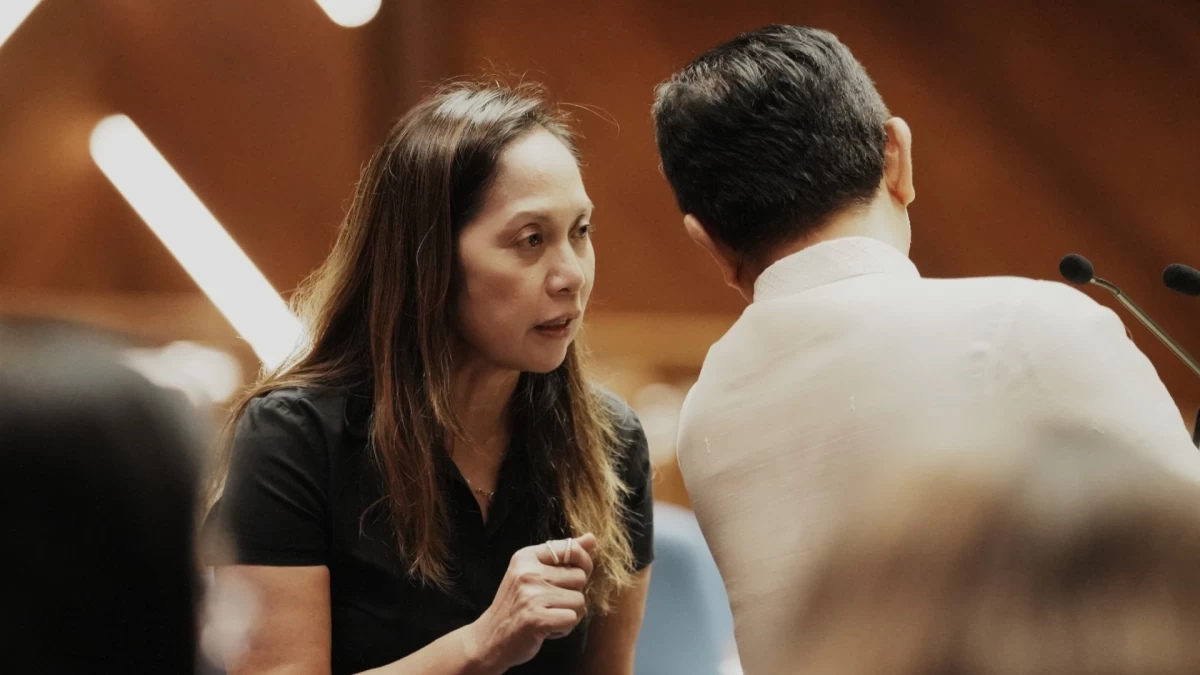
Energy Secretary Sharon Garin
The Department of Energy (DOE) is pushing for bigger budget for the National Electrification Administration (NEA) to support ongoing efforts to bring electricity to households nationwide.
During a plenary session with the Commission on Appointments (CA) on Wednesday, Oct. 1, Energy Secretary Sharon Garin expressed the need for at least ₱57.8 billion to power 3.17 million unenergized households in the country.
This amount is significantly lower than previous estimates made earlier this year, wherein former Energy Secretary Raphael P.M. Lotilla eyed about ₱85 billion to ₱100 billion for 100 percent household electrification.
“There are plans already; we have the line extension, the solar home systems, the microgrid systems,” she listed.
Garin also expressed that NEA has about ₱5 billion in electrification allotment, adding, “There’s been a proposal from the House to add another ₱4 billion. Hopefully, by 2026, there would be about ₱9 billion for NEA... That’s a big improvement from these years.”
Senator Joel Villanueva, CA Minority Floor Leader, is in full support of this call to raise the electrification funding, emphasizing that the flood-control finances could be utilized to energize communities instead.
“I mentioned ₱1.44 billion a day is being allotted for flood-control budget, and look where it has gone? I would like to point out that we are in full support [of] DOE’s plans in electrifying the National Total Electrification Roadmap (NTER),” he stressed. “It’s quite ambitious, but we’re in full support.”
According to the NTER, the majority of unserved households would be energized via regular service connections, such as engaging with their respective distribution utilities (DUs) and other service providers. Those that are outside of the DUs’ service areas will then be subject to distribution line extensions, as well as other flagship programs by NEA, including the Sitio Electrification Program (SEP) and Barangay Line Enhancement Program (BLEP).
Apart from the government’s goal to extend power to far-flung areas, the DOE is also pursuing waste-to-energy (WTE) as a way to increase the nation’s power capacity and, at the same time, address the long-standing issue of flood control.
While optimistic that the WTE Act will move forward after the third reading in the House of Representatives and has reached the Senate, the pressing concern is pricing and how viable this will be.
“We’ve been looking for investors, not just for this year or the previous years… [But] the hindrance in investing in waste-to-energy are two things: the price that is set by ERC (Energy Regulatory Commission) on how much they should charge, and the sustainability of garbage,” Garin said.
“We know how much Manila produces waste, so we can already calculate how many megawatts (MW) it can produce and in which areas [there are] landfills. We have a team already studying on making a more specific, targeted plan.”