Tiny chef, big flavors
An immersive dining adventure with Le Petit Chef at Grand Hyatt Manila
Published Sep 30, 2025 07:32 am


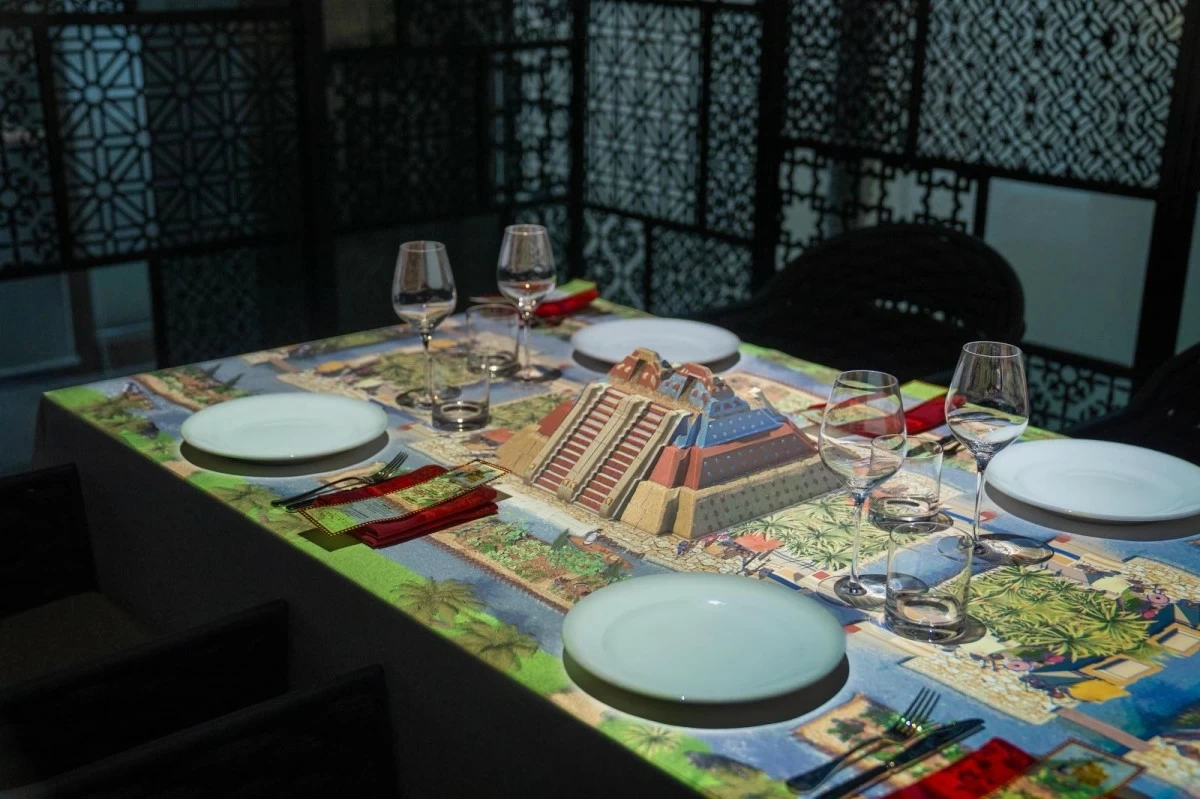
The room is dark when we enter. Tables glow faintly, lit by ghostly white light projected across their surfaces. Families settle in with children fidgeting in their seats, couples lean close, and groups of friends whisper with anticipation. There is a hush, the kind of silence that falls before a performance begins.
Then, with a burst of color and movement, he appears. Le Petit Chef, the world’s smallest chef, springs to life on the tabletop. Barely two inches tall, he commands the room with the confidence of a culinary master. The story begins with a live narrator who does not simply introduce the show but performs it with theatrical flair. He speaks to each table, engaging children and adults alike, and guides everyone through a journey of food and art history that is both whimsical and surprisingly moving.
The technology is seamless. Using 3D projection mapping, the table becomes both stage and canvas. Flames leap across plates, waves ripple across the surface, and landscapes transform before our eyes. Le Petit Chef scurries across the setting, cooking, mixing, and narrating, always one step ahead of us. The performance is not just a spectacle. It is an invitation to imagine, to recall, and to connect.
The meal unfolds in five courses, each paired with a chapter in the chef’s story.
The first course arrives almost as if conjured by his tiny hands. A ball of Italian burrata sits in the center of the plate, creamy and yielding, surrounded by marinated cherry tomatoes. A sprinkle of parmesan crumble provides texture while basil oil streaks across the plate in vivid green. A scoop of tomato sorbet delivers a cool shock of acidity. The combination is fresh and precise, the flavors familiar but sharpened by contrast.
The second course turns to the sea. A fillet of Scottish salmon is pan-seared, its skin crackling and crisp. The flesh underneath is tender, with a buttery finish. The accompaniments are carefully chosen: asparagus bathed in butter, roasted beetroot for sweetness, a touch of basil for freshness, and a lemon pepper emulsion that brightens each bite. It is a dish that feels light yet confident, as if reminding us that simplicity in cooking can be profound.

The third plate shifts to comfort. A French chicken roulade is rolled tightly with porcini mushrooms and truffle. The sauce is a roasted chicken jus that deepens the earthiness, while a mushroom purée smooths everything into a soft, savory echo. It is rustic and luxurious at the same time, the kind of dish that draws silence from a table as each diner considers its depth.
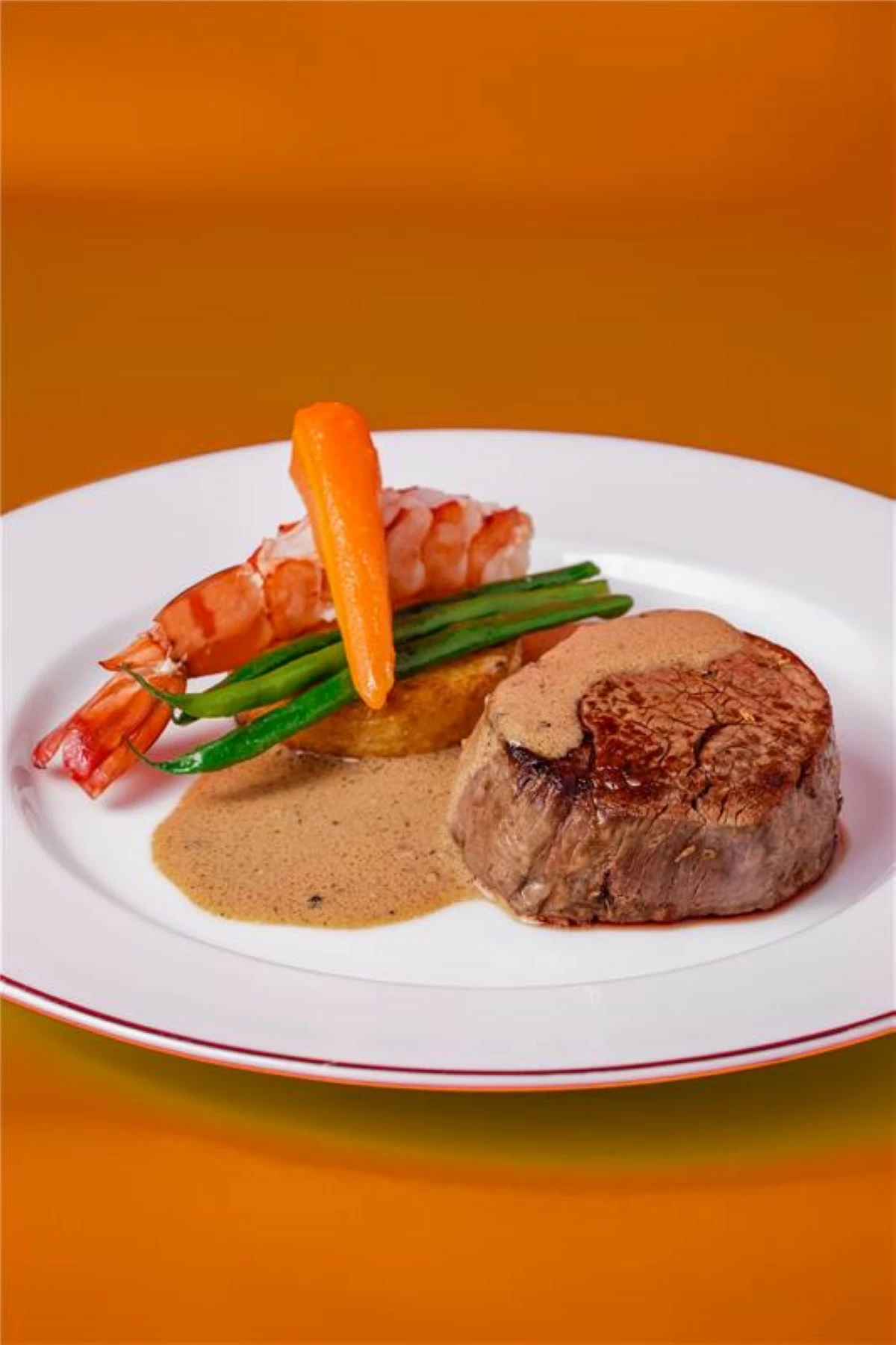
Then comes the centerpiece. The Surf and Turf is both theatrical and nostalgic. The Australian grass-fed beef tenderloin is perfectly seared, tender with just the right resistance. The black peppercorn brandy sauce that pools beneath it is rich, creamy, and fiery in just the right way. Beside it, a grilled king prawn glistens in garlic butter. Fondant potato, glazed carrot, and French beans complete the plate with balance and restraint.
It is at this moment that the show crosses into memory. That black peppercorn brandy sauce is more than a flavor. It is a bridge to the past, recalling evenings at Bon Appetit in Shangri-La Plaza, a restaurant long gone but remembered with fondness. My late parents would take us there, and their roast beef, especially the sauce, has lived on in memory for decades. With one bite, Le Petit Chef brings back those halcyon days. It is what the French call a Proustian moment, a sudden rush of remembrance where taste unlocks memory. That is the true magic of the evening, proof that food is not just sustenance but a vessel for our most treasured stories.
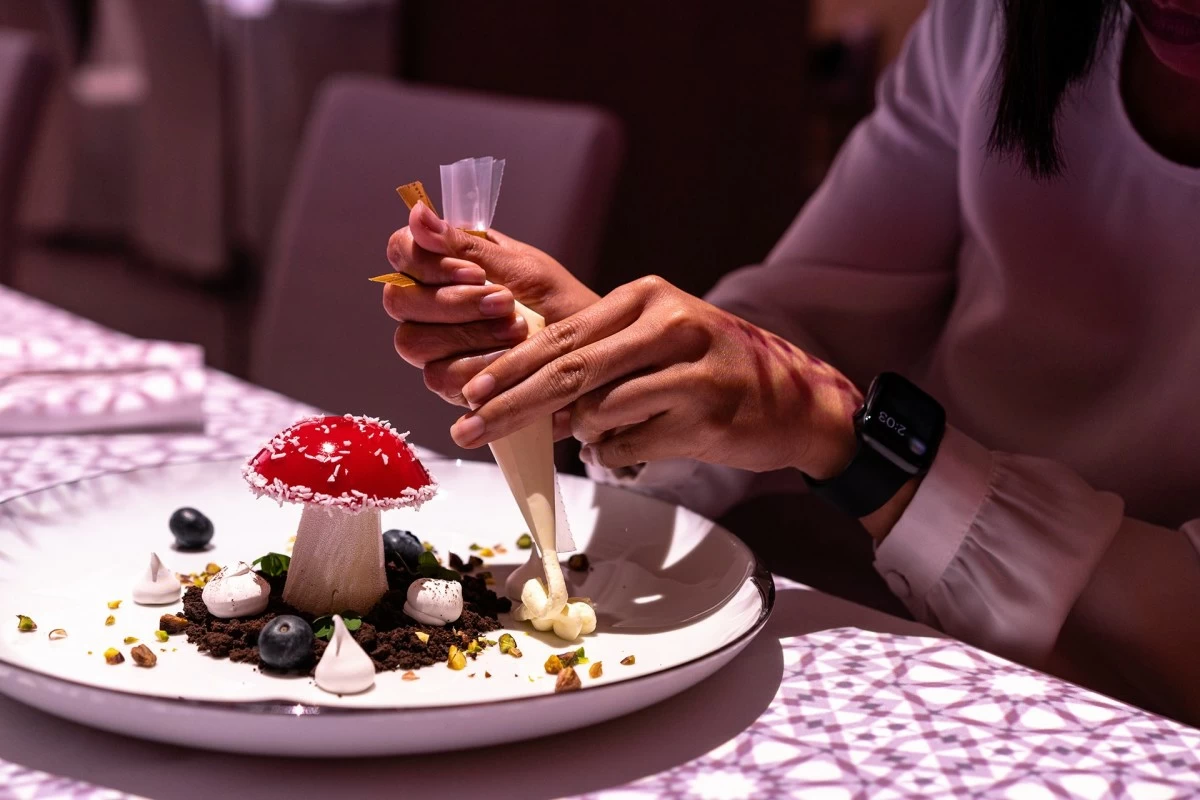
Dessert turns the stage back to the audience. Plates arrive bare except for the foundation of a strawberry shortcake. Around it are the tools of creation: Italian meringue, red fruit coulis, chocolate pearls, and slices of fresh strawberry. Guests are asked to decorate their own plate. Grown men lean forward with the concentration of pastry apprentices, children giggle as they scatter pearls, couples collaborate with quiet laughter. It is playful and communal, a closing act that binds the room together.
Le Petit Chef at The Peak is not a dinner to be rushed. It is a performance that unfolds slowly, measured in chapters rather than courses. The narrator’s voice, the chef’s antics, the transformation of the table, and the food itself come together in a rhythm that blurs theater and dining. At the end, applause fills the room.
The setting makes it even more memorable. On the 60th floor of Grand Hyatt Manila, The Peak overlooks the city skyline, but for two hours the view is forgotten as diners look down at their tables instead. Only 20 seats are available for each of the two nightly showings, a design that ensures intimacy and guarantees every guest a front-row seat.
This is the third season of Le Petit Chef at Grand Hyatt Manila, and it is called “How to Become the World’s Greatest Chef.” The adult menu, known as the Grand Chef Menu, is priced at P7,500 net per person. Children aged 12 and below can enjoy a five-course Kid’s Menu for P4,000 net. For those who wish to extend the experience, Stay and Dine packages offer overnight accommodations paired with dinner.
There is also the chance to take the adventure abroad. Guests who dine at Le Petit Chef Manila from September to October 2025 can join a raffle to win a fly, stay, and dine package in Kuala Lumpur. The prize includes round-trip airfare for two, airport transfers, two nights at Grand Hyatt Kuala Lumpur, and a dining experience at Le Petit Chef’s Malaysian counterpart.
For us, the true prize was already at the table. The evening was not only a showcase of technology and theater, but also of how food can remind us of who we are and where we come from. The world’s smallest chef managed to tell a story that felt larger than life, one bite at a time.