ADVERTISEMENT

PIDS: Amend education laws to fix access, funding gaps

Published Sep 29, 2025 03:30 pm
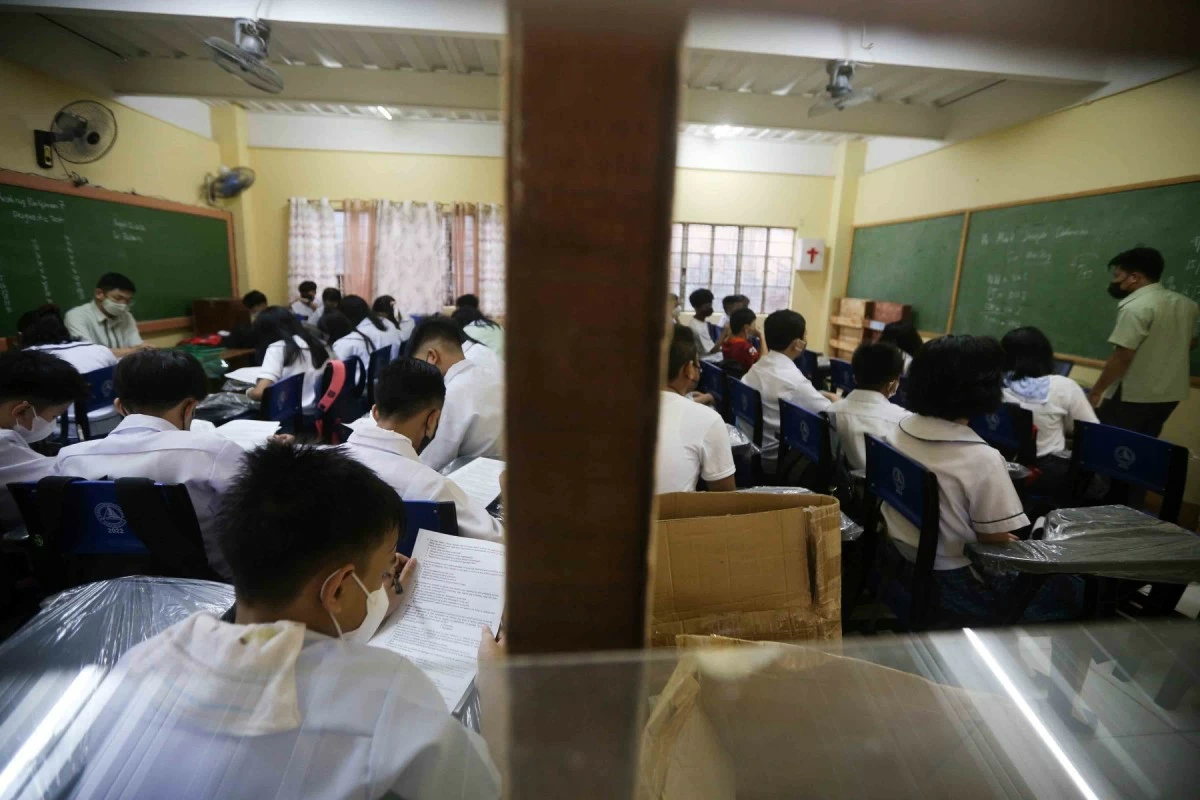
DepEd flags 165,000-classroom backlog, digital divide as top education challenges; pushes public-private partnerships, digitalization reforms to improve Philippine schools. (Manila Bulletin / file photo)
State-run think tank Philippine Institute for Development Studies (PIDS) is urging lawmakers to expand and amend major education-related bills to address persistent gaps in access, funding, and governance across the sector.
In a statement, PIDS Senior Research Fellow Connie B. Dacuycuy outlined proposals that cover three legislative priorities: the expansion of the Second Congressional Commission on Education (EDCOM II), amendments to the Universal Access to Quality Tertiary Education Act (UAQTEA), and measures to strengthen the governance of local universities and colleges (LUCs).
PIDS recommended the creation of an EDCOM III to continue the work of the previous commission and ensure the long-term implementation and monitoring of educational reforms.
The think tank stressed the importance of aligning education with industry needs and proposed strengthening collaboration with the Department of Trade and Industry (DTI) to help close skills gaps.
It also recommended that the commission lead the collection of data necessary to conduct impact and process evaluations of education programs and reforms. PIDS noted that increasing the commission’s lifespan is essential, as implementing reforms and achieving measurable outcomes requires significant time.
PIDS identified amendments to the UAQTEA as critical legislative measure to improve efficiency, equity, and accountability in the tertiary education subsidy program.
The think tank also noted the need for standard prioritization tool to create a centralized and consistent system for identifying and ranking eligible beneficiaries. It cited the Listahanan database, integrated with data from the Pantawid Pamilyang Pilipino Program (4Ps), as a possible mechanism.
According to PIDS, combining these datasets would ensure assistance is directed to vulnerable and deserving students. Any remaining funds could then be distributed based on a national or regional ranking system that considers both income and non-income factors.
To help students make informed decisions, PIDS also recommended that eligibility information, along with the list of qualified higher education institutions (HEIs) and their program offerings, be released at least one semester before the start of the academic year.
In a move to address disbursement delays, the think tank suggested that HEIs be allowed to charge learner support services—such as counseling and bridging programs—to the program’s Administrative Support Cost (ASC). PIDS noted that delays in ASC liquidation have been a major factor behind payment delays.
PIDS further emphasized the need for legislation governing LUCs to help them adapt to the increasing demand for quality tertiary education.
The think tank pointed out that LUCs often face greater challenges in terms of budget and staffing due to their governance and financing structures. It recommended clear and uniform guidelines on LUC funding, noting that while local government units (LGUs) typically allocate 5 percent of the budget, this may depend on the local chief executive’s discretion, which introduces operational uncertainties.
The think tank also called for clarity on the classification of LUCs as Local Economic Enterprises (LEEs). Under this arrangement, LGUs fund only infrastructure, and institutions are expected to finance operations through their own income. PIDS noted that some LUCs have been treated as LEEs since they began receiving funds under the Free Higher Education Law.
Finally, PIDS stressed the need to secure a sufficient permanent workforce, both teaching and non-teaching, to ensure institutional stability. It observed that many LUCs rely on part-time instructors as a workaround to the personnel services spending cap imposed on LGUs.
To recall, the Department of Budget and Management (DBM) announced that a large portion of the ₱255-billion cut in the Department of Public Works and Highways (DPWH) budget was reallocated to education and other “reprioritized” programs.
“A large portion of the funds was allocated to education,” DBM Secretary Amenah F. Pangandaman said, noting that allocations for basic and higher education have been raised to ₱1.224 trillion. The DBM chief stated this is the first time the Philippines will meet the UNESCO-recommended 4 percent of gross domestic product (GDP) spending on education. (Ricardo M. Austria)

Related Tags

Philippine Institute for Development Studies (PIDS) Department of Education (DepEd)
ADVERTISEMENT
.most-popular .layout-ratio{ padding-bottom: 79.13%; } @media (min-width: 768px) and (max-width: 1024px) { .widget-title { font-size: 15px !important; } }

{{ articles_filter_1561_widget.title }}

.most-popular .layout-ratio{ padding-bottom: 79.13%; } @media (min-width: 768px) and (max-width: 1024px) { .widget-title { font-size: 15px !important; } }

{{ articles_filter_1562_widget.title }}

.most-popular .layout-ratio{ padding-bottom: 79.13%; } @media (min-width: 768px) and (max-width: 1024px) { .widget-title { font-size: 15px !important; } }

{{ articles_filter_1563_widget.title }}

{{ articles_filter_1564_widget.title }}

.mb-article-details { position: relative; } .mb-article-details .article-body-preview, .mb-article-details .article-body-summary{ font-size: 17px; line-height: 30px; font-family: "Libre Caslon Text", serif; color: #000; } .mb-article-details .article-body-preview iframe , .mb-article-details .article-body-summary iframe{ width: 100%; margin: auto; } .read-more-background { background: linear-gradient(180deg, color(display-p3 1.000 1.000 1.000 / 0) 13.75%, color(display-p3 1.000 1.000 1.000 / 0.8) 30.79%, color(display-p3 1.000 1.000 1.000) 72.5%); position: absolute; height: 200px; width: 100%; bottom: 0; display: flex; justify-content: center; align-items: center; padding: 0; } .read-more-background a{ color: #000; } .read-more-btn { padding: 17px 45px; font-family: Inter; font-weight: 700; font-size: 18px; line-height: 16px; text-align: center; vertical-align: middle; border: 1px solid black; background-color: white; } .hidden { display: none; }
function initializeAllSwipers() { // Get all hidden inputs with cms_article_id document.querySelectorAll('[id^="cms_article_id_"]').forEach(function (input) { const cmsArticleId = input.value; const articleSelector = '#article-' + cmsArticleId + ' .body_images'; const swiperElement = document.querySelector(articleSelector); if (swiperElement && !swiperElement.classList.contains('swiper-initialized')) { new Swiper(articleSelector, { loop: true, pagination: false, navigation: { nextEl: '#article-' + cmsArticleId + ' .swiper-button-next', prevEl: '#article-' + cmsArticleId + ' .swiper-button-prev', }, }); } }); } setTimeout(initializeAllSwipers, 3000); const intersectionObserver = new IntersectionObserver( (entries) => { entries.forEach((entry) => { if (entry.isIntersecting) { const newUrl = entry.target.getAttribute("data-url"); if (newUrl) { history.pushState(null, null, newUrl); let article = entry.target; // Extract metadata const author = article.querySelector('.author-section').textContent.replace('By', '').trim(); const section = article.querySelector('.section-info ').textContent.replace(' ', ' '); const title = article.querySelector('.article-title h1').textContent; // Parse URL for Chartbeat path format const parsedUrl = new URL(newUrl, window.location.origin); const cleanUrl = parsedUrl.host + parsedUrl.pathname; // Update Chartbeat configuration if (typeof window._sf_async_config !== 'undefined') { window._sf_async_config.path = cleanUrl; window._sf_async_config.sections = section; window._sf_async_config.authors = author; } // Track virtual page view with Chartbeat if (typeof pSUPERFLY !== 'undefined' && typeof pSUPERFLY.virtualPage === 'function') { try { pSUPERFLY.virtualPage({ path: cleanUrl, title: title, sections: section, authors: author }); } catch (error) { console.error('ping error', error); } } // Optional: Update document title if (title && title !== document.title) { document.title = title; } } } }); }, { threshold: 0.1 } ); function showArticleBody(button) { const article = button.closest("article"); const summary = article.querySelector(".article-body-summary"); const body = article.querySelector(".article-body-preview"); const readMoreSection = article.querySelector(".read-more-background"); // Hide summary and read-more section summary.style.display = "none"; readMoreSection.style.display = "none"; // Show the full article body body.classList.remove("hidden"); } document.addEventListener("DOMContentLoaded", () => { let loadCount = 0; // Track how many times articles are loaded const offset = [1, 2, 3, 4, 5, 6, 7, 8, 9, 10]; // Offset values const currentUrl = window.location.pathname.substring(1); let isLoading = false; // Prevent multiple calls if (!currentUrl) { console.log("Current URL is invalid."); return; } const sentinel = document.getElementById("load-more-sentinel"); if (!sentinel) { console.log("Sentinel element not found."); return; } function isSentinelVisible() { const rect = sentinel.getBoundingClientRect(); return ( rect.top < window.innerHeight && rect.bottom >= 0 ); } function onScroll() { if (isLoading) return; if (isSentinelVisible()) { if (loadCount >= offset.length) { console.log("Maximum load attempts reached."); window.removeEventListener("scroll", onScroll); return; } isLoading = true; const currentOffset = offset[loadCount]; window.loadMoreItems().then(() => { let article = document.querySelector('#widget_1690 > div:nth-last-of-type(2) article'); intersectionObserver.observe(article) loadCount++; }).catch(error => { console.error("Error loading more items:", error); }).finally(() => { isLoading = false; }); } } window.addEventListener("scroll", onScroll); });

Sign up by email to receive news.