






Manila Bulletin
 Philippines
National
Marcos orders palay floor price, stronger farmer support measures
Philippines
National
Marcos orders palay floor price, stronger farmer support measures
Philippines
National
Marcos orders palay floor price, stronger farmer support measures
Marcos orders palay floor price, stronger farmer support measures
Published Sep 26, 2025 07:39 am


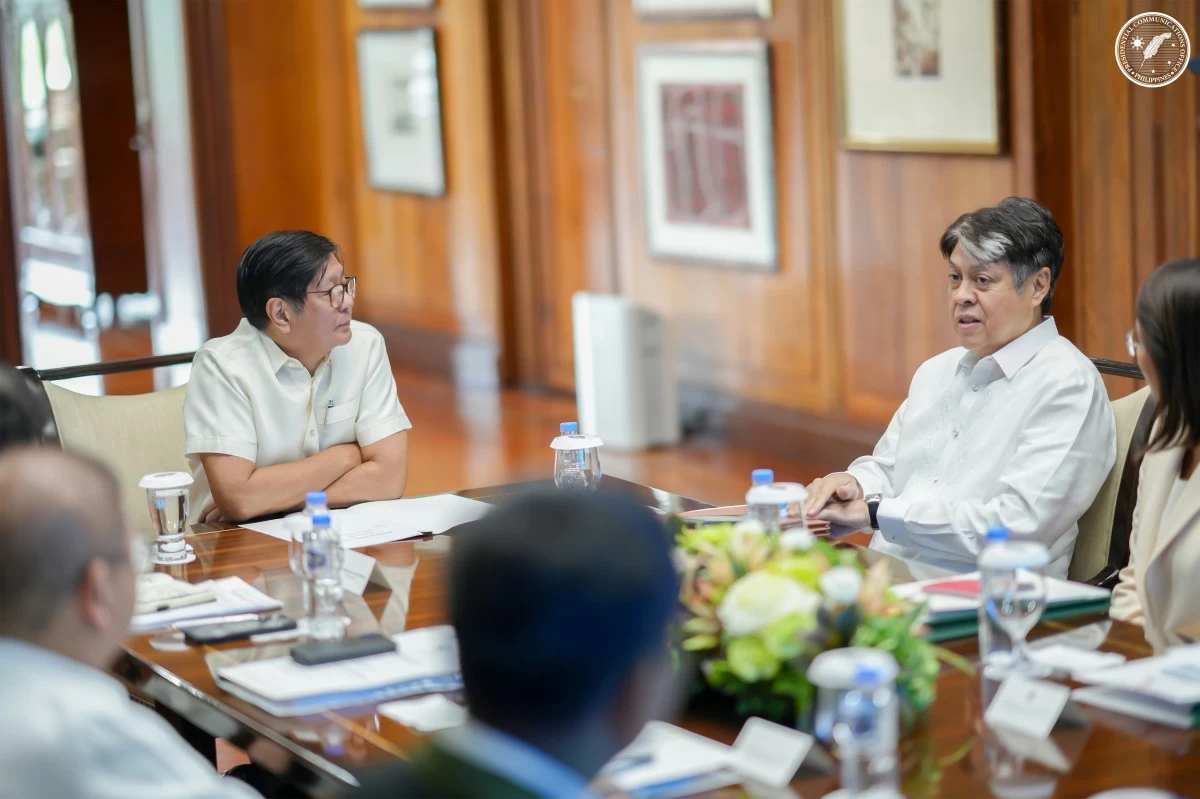
President Ferdinand 'Bongbong' Marcos Jr. meets Senator Francis 'Kiko' Pangilinan and other government officials in Malacañan to discuss the establishment of a floor price for the buying of palay, on Sept. 25, 2025. (PCO)
President Marcos has ordered the establishment of a floor price for palay to protect farmers from traders who buy their harvest at unreasonably low rates.
In a Palace meeting on Thursday, Sept. 25, Marcos directed the Department of Agriculture (DA) to coordinate with the Office of the Executive Secretary and the office of Senator Francis “Kiko” Pangilinan in drafting an executive order setting the minimum buying price for palay.
The President stressed that while retail prices of rice have gone down, farmers continue to suffer from low farmgate prices during the peak harvest season.
Pangilinan, who chairs the Senate Committee on Agriculture, Food, and Agrarian Reform, proposed the measure during the meeting, citing the vulnerability of farmers to traders who exploit harvest-time oversupply.
Marcos likewise ordered the full implementation of the Sagip Saka Act of 2019, which allows government agencies and local government units (LGUs) to buy produce from accredited farmers and fisherfolk directly.
The program complements the administration’s “Benteng Bigas, Meron Na!” initiative that makes rice available at P20 per kilo, a campaign promise the President has repeatedly affirmed.
He said the strong support from LGUs must be matched with better farmer protections to ensure that lower rice prices do not come at the expense of producers.
Revisiting NFA’s mandate
Meanwhile, President Marcos instructed a review of the National Food Authority’s (NFA) charter, saying the agency must return to its original role of stabilizing prices rather than relying on importation.
He also called for amendments to the Agricultural Tariffication Law of 2024, which extended the Rice Competitiveness Enhancement Fund until 2031, to strengthen provisions on farmer support services.
According to Marcos, the NFA should go back to its original mandate of stabilizing prices, adding that importation was never meant to be its core function.
Congressional commission proposal
During the meeting, Marcos said sustained coordination between the executive branch and Congress is necessary to address the long-standing challenges facing farmers and the rice industry.
With this, he directed the DA and the Department of Agrarian Reform (DAR) to work with Congress on creating the Congressional Commission on Agriculture, Fisheries, and Food Security (AGRICOM).
Modeled after the Congressional Commission on Education, the AGRICOM would assess the state of agriculture and fisheries and recommend reforms to lawmakers.
Marcos said the commission could provide a long-term institutional mechanism to address structural problems in the agricultural sector.
Support for cooperatives
The President likewise emphasized the need to strengthen the Cooperative Development Authority and the DA’s extension services to help farmers consolidate into cooperatives and clusters.
He said consolidation would enable producers to scale up operations, invest in mechanization, and reduce production costs, making local rice more competitive against imports.
Thursday’s meeting was attended by Executive Secretary Lucas Bersamin, Agriculture Secretary Francisco Tiu Laurel, Agrarian Reform Secretary Conrado Estrella III, Quezon City Rep. Mark Enverga, and Apayao Rep. Eleanor Bulut-Begtang.