ADVERTISEMENT

Corruption, fiscal strains flagged as risks to Philippine growth

Published Sep 26, 2025 02:35 pm
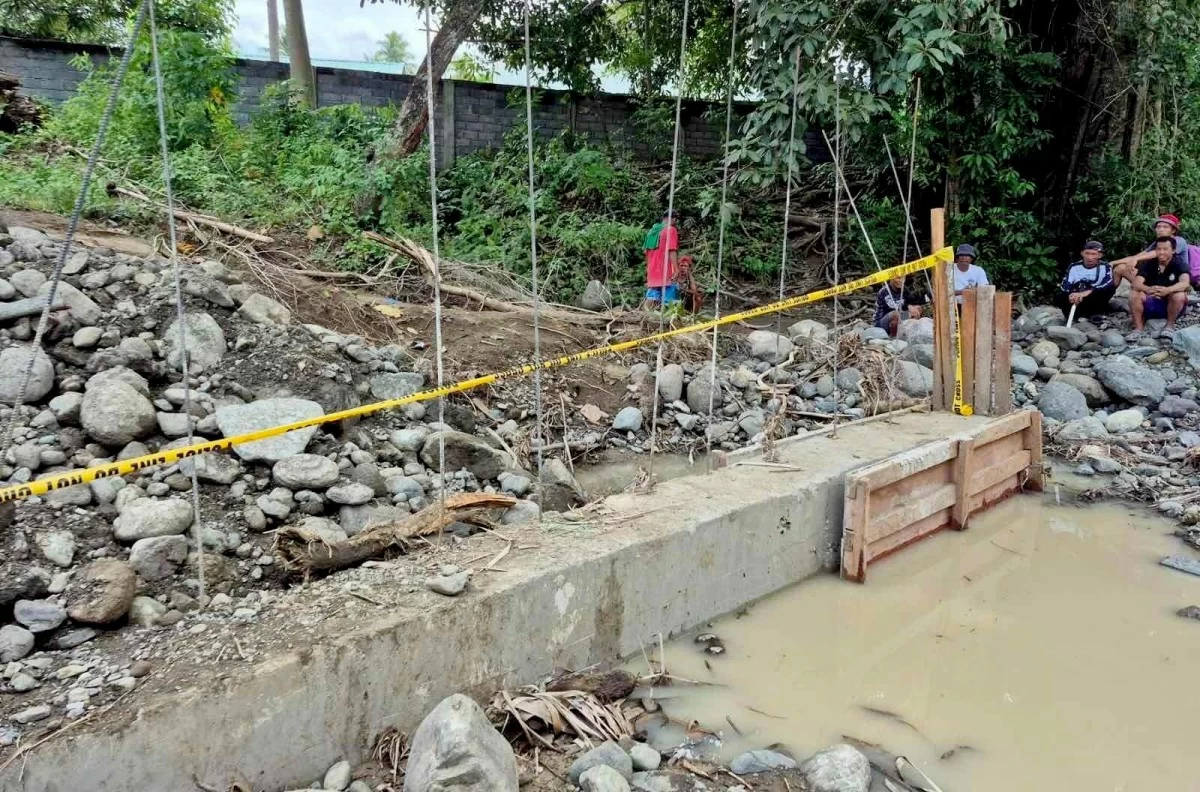
A PART of the unfinished flood control project in Jose Abad Santos town, Davao Occidental province. (ICI photo)
Pervasive corruption in the Philippines is preventing the country from realizing its full economic potential, despite President Ferdinand R. Marcos Jr. making “steady progress” on his reform agenda, according to the think tank Capital Economics.
In its Asia Economic Outlook report for the fourth quarter of 2025, Capital Economics said that while the midterm of the Marcos Jr. administration saw the passage of key reforms aimed at improving the ease of doing business and infrastructure development in the country, “corruption and political instability remain a concern for foreign investors.”
“Unless these areas are addressed, the Philippines risks not fully capitalizing on the significant opportunities arising from the realignment of global supply chains driven by United States (US)-China decoupling,” Capital Economics warned in its Sept. 25 report.
Finance Secretary Ralph G. Recto, who heads the economic team, had lamented that the Philippine economy could have grown by six percent if flood control projects had not been hijacked by corruption, resulting in a loss of as much as ₱119 billion in economic output.
On top of massive losses to corruption, Capital Economics cautioned that “tighter fiscal policy will weigh on economic growth in both Malaysia and the Philippines,” referring to their narrower space for spending on public goods and services.
“Fiscal policy is due to be tightened as the government tries to bring down the debt-to-GDP [gross domestic product] ratio, which rose sharply during the pandemic,” the think tank noted.
The country’s debt ratio climbed to the 60-percent level during the prolonged pandemic, reversing the record low of 39.6 percent in 2019, as the government borrowed heavily to fight the health and socioeconomic crises wrought by Covid-19. As of end-June 2025, the ratio stood at a 20-year high of 63.1 percent.
Despite these headwinds, Capital Economics expects Philippine GDP to expand at a steady pace of around 5.5 percent over the coming quarters, at the lower end of the government’s 5.5- to 6.5-percent target for the year.
“GDP growth has held steady at around 5.5 percent year-on-year in recent quarters, and we expect growth to remain at around this pace over the coming year,” it said.
Consumption is projected to remain resilient, supported by lower interest rates. However, this will be offset by weaker external demand and fiscal tightening, the think tank said.
The report showed that Capital Economics forecasts GDP expansion slowing to a below-goal 5.3 percent this year from 5.7 percent last year, before climbing to 6.5 percent next year.
Capital Economics also cautioned that export sales are likely to struggle due to the weaker economic outlook for the country’s top trading partners, China and the US, which are also embroiled in intensifying trade tensions. For net importer Philippines, China is the No. 1 source of the goods it consumes, while the US is the leading destination of Philippine exports.
The think tank added that US tariffs on Philippine exports, at 19 percent, pose an additional risk.
While the Bangko Sentral ng Pilipinas (BSP) has already cut interest rates by 150 basis points (bps) so far in this easing cycle, Capital Economics expects more reductions in the months ahead given weak inflation.
“The headline rate was just 1.5 percent year-on-year in August, below the BSP’s two- to four-percent target and is likely to remain subdued over the forecast period,” the report said. “We are forecasting a further two 25-bp cuts this cycle.”
With headline inflation projected by Capital Economics falling to a below-target 1.6 percent in 2025, it expects the BSP’s policy-setting Monetary Board (MB) to cut the policy rate to 4.75 percent, from the current five percent, before year-end.
After another 25-bp cut next year, the key borrowing rate is expected by the think tank to stay at 4.5 percent for the rest of 2026.
(Ricardo M. Austria)

Related Tags

Capital Economics Ralph G. Recto flood control gross domestic product (GDP) growth Bangko Sentral ng Pilipinas (BSP) interest rates inflation rate debt-to-gross domestic product (GDP) ratio
ADVERTISEMENT
.most-popular .layout-ratio{ padding-bottom: 79.13%; } @media (min-width: 768px) and (max-width: 1024px) { .widget-title { font-size: 15px !important; } }

{{ articles_filter_1561_widget.title }}

.most-popular .layout-ratio{ padding-bottom: 79.13%; } @media (min-width: 768px) and (max-width: 1024px) { .widget-title { font-size: 15px !important; } }

{{ articles_filter_1562_widget.title }}

.most-popular .layout-ratio{ padding-bottom: 79.13%; } @media (min-width: 768px) and (max-width: 1024px) { .widget-title { font-size: 15px !important; } }

{{ articles_filter_1563_widget.title }}

{{ articles_filter_1564_widget.title }}

.mb-article-details { position: relative; } .mb-article-details .article-body-preview, .mb-article-details .article-body-summary{ font-size: 17px; line-height: 30px; font-family: "Libre Caslon Text", serif; color: #000; } .mb-article-details .article-body-preview iframe , .mb-article-details .article-body-summary iframe{ width: 100%; margin: auto; } .read-more-background { background: linear-gradient(180deg, color(display-p3 1.000 1.000 1.000 / 0) 13.75%, color(display-p3 1.000 1.000 1.000 / 0.8) 30.79%, color(display-p3 1.000 1.000 1.000) 72.5%); position: absolute; height: 200px; width: 100%; bottom: 0; display: flex; justify-content: center; align-items: center; padding: 0; } .read-more-background a{ color: #000; } .read-more-btn { padding: 17px 45px; font-family: Inter; font-weight: 700; font-size: 18px; line-height: 16px; text-align: center; vertical-align: middle; border: 1px solid black; background-color: white; } .hidden { display: none; }
function initializeAllSwipers() { // Get all hidden inputs with cms_article_id document.querySelectorAll('[id^="cms_article_id_"]').forEach(function (input) { const cmsArticleId = input.value; const articleSelector = '#article-' + cmsArticleId + ' .body_images'; const swiperElement = document.querySelector(articleSelector); if (swiperElement && !swiperElement.classList.contains('swiper-initialized')) { new Swiper(articleSelector, { loop: true, pagination: false, navigation: { nextEl: '#article-' + cmsArticleId + ' .swiper-button-next', prevEl: '#article-' + cmsArticleId + ' .swiper-button-prev', }, }); } }); } setTimeout(initializeAllSwipers, 3000); const intersectionObserver = new IntersectionObserver( (entries) => { entries.forEach((entry) => { if (entry.isIntersecting) { const newUrl = entry.target.getAttribute("data-url"); if (newUrl) { history.pushState(null, null, newUrl); let article = entry.target; // Extract metadata const author = article.querySelector('.author-section').textContent.replace('By', '').trim(); const section = article.querySelector('.section-info ').textContent.replace(' ', ' '); const title = article.querySelector('.article-title h1').textContent; // Parse URL for Chartbeat path format const parsedUrl = new URL(newUrl, window.location.origin); const cleanUrl = parsedUrl.host + parsedUrl.pathname; // Update Chartbeat configuration if (typeof window._sf_async_config !== 'undefined') { window._sf_async_config.path = cleanUrl; window._sf_async_config.sections = section; window._sf_async_config.authors = author; } // Track virtual page view with Chartbeat if (typeof pSUPERFLY !== 'undefined' && typeof pSUPERFLY.virtualPage === 'function') { try { pSUPERFLY.virtualPage({ path: cleanUrl, title: title, sections: section, authors: author }); } catch (error) { console.error('ping error', error); } } // Optional: Update document title if (title && title !== document.title) { document.title = title; } } } }); }, { threshold: 0.1 } ); function showArticleBody(button) { const article = button.closest("article"); const summary = article.querySelector(".article-body-summary"); const body = article.querySelector(".article-body-preview"); const readMoreSection = article.querySelector(".read-more-background"); // Hide summary and read-more section summary.style.display = "none"; readMoreSection.style.display = "none"; // Show the full article body body.classList.remove("hidden"); } document.addEventListener("DOMContentLoaded", () => { let loadCount = 0; // Track how many times articles are loaded const offset = [1, 2, 3, 4, 5, 6, 7, 8, 9, 10]; // Offset values const currentUrl = window.location.pathname.substring(1); let isLoading = false; // Prevent multiple calls if (!currentUrl) { console.log("Current URL is invalid."); return; } const sentinel = document.getElementById("load-more-sentinel"); if (!sentinel) { console.log("Sentinel element not found."); return; } function isSentinelVisible() { const rect = sentinel.getBoundingClientRect(); return ( rect.top < window.innerHeight && rect.bottom >= 0 ); } function onScroll() { if (isLoading) return; if (isSentinelVisible()) { if (loadCount >= offset.length) { console.log("Maximum load attempts reached."); window.removeEventListener("scroll", onScroll); return; } isLoading = true; const currentOffset = offset[loadCount]; window.loadMoreItems().then(() => { let article = document.querySelector('#widget_1690 > div:nth-last-of-type(2) article'); intersectionObserver.observe(article) loadCount++; }).catch(error => { console.error("Error loading more items:", error); }).finally(() => { isLoading = false; }); } } window.addEventListener("scroll", onScroll); });

Sign up by email to receive news.